
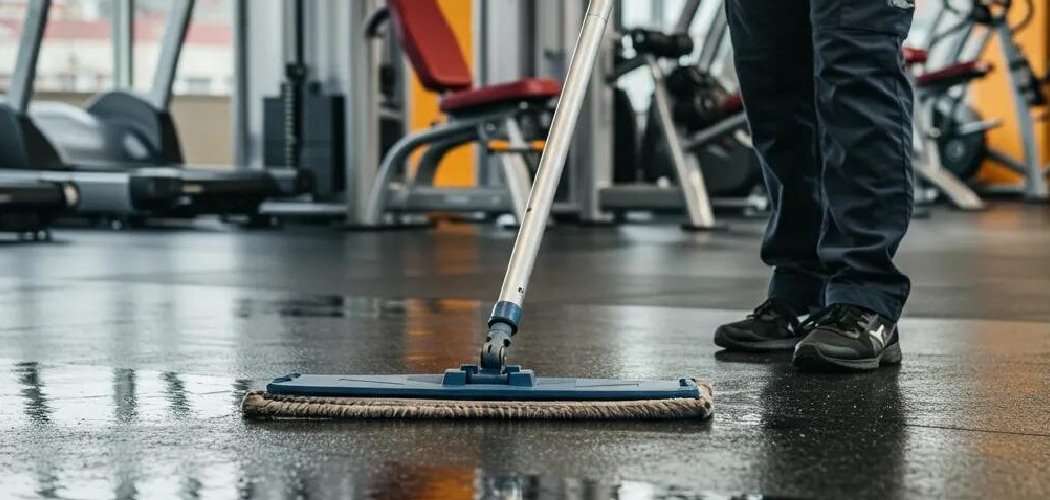
The fastest way I ever watched someone ruin a rubber gym floor was with a bottle of pine-scented cleaner and good intentions. They mopped the whole space every night with an oil-based product, and within a few months the mats went tacky, then swelled at the seams, then started peeling up at the edges.
Oil and solvent cleaners are the number one killer of rubber flooring — they break down the material from the surface in, and by the time you see the damage, it’s already permanent.
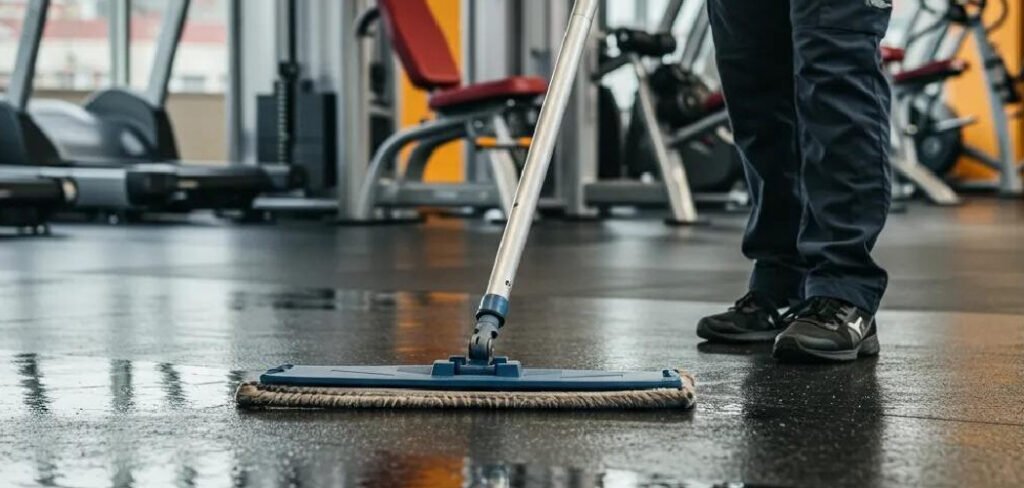
Learning how to clean rubber floor surfaces the right way is mostly about restraint: the correct cleaner, lukewarm water, and a gentle touch beat harsh chemicals every time. Rubber is durable underfoot but chemically fussy, so the goal is to lift dirt and grime without stripping or softening the material. Do it right and a rubber floor will outlast almost everything else in the room.
What You’ll Need
Rubber flooring doesn’t ask for much, and that’s the point. Grabbing the wrong product does more harm than skipping a cleaning altogether.
- Soft-bristle push broom or a dust mop
- Vacuum with a hard-floor setting (no beater bar)
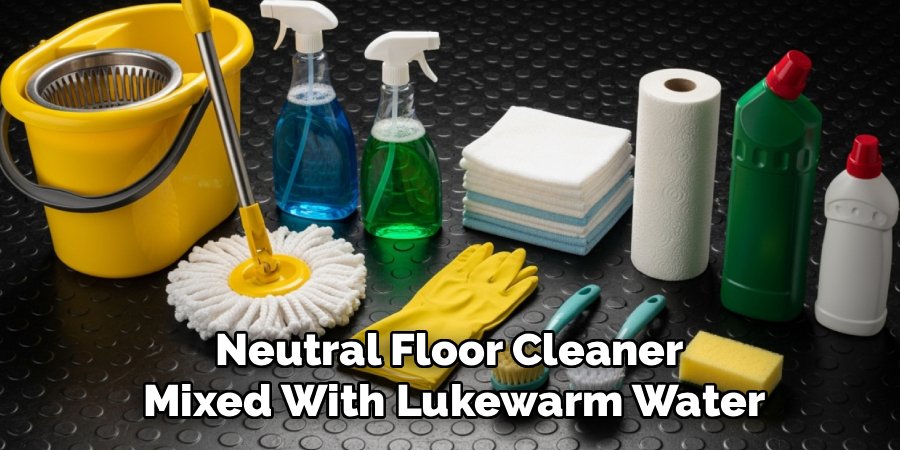
- pH-neutral floor cleaner made for rubber or all-surface use
- Two buckets — one for cleaning solution, one for rinse water
- Microfiber mop or a soft string mop
- Soft nylon scrub brush or a non-abrasive scrub pad for stubborn spots
- Clean microfiber cloths or towels
- Lukewarm water (not hot)
- Wet floor signs if you’re cleaning a shared space
Keep a soft nylon brush around specifically for textured rubber. The little raised studs and diamond patterns trap grit that a flat mop glides right over.
Sweep Away Loose Debris First
Grit is abrasive, and rubber holds onto it — especially the textured kind. Drag a wet mop across a gritty floor and you’re basically sanding it. Start dry every single time.
Run a dust mop or soft-bristle broom across the whole floor, working toward one exit so you’re not walking dirt back over clean sections. For textured or studded rubber, follow up with a vacuum on the hard-floor setting to pull grit out of the grooves. Skip any vacuum with a rotating beater bar — those bristles chew at the surface and fling debris instead of collecting it.
Mop With a pH-Neutral Cleaner
Once the loose stuff is gone, mix your pH-neutral cleaner with lukewarm water at the ratio on the label. Hot water sounds like it should clean better, but on rubber it softens the material and can loosen adhesive at the seams over time. Lukewarm is the sweet spot.
Dip your microfiber or soft string mop, wring it out until it’s damp rather than dripping, and work in sections. Rubber doesn’t like standing water — it can seep into seams and under the edges where it has nowhere to dry. A damp mop lifts dirt just fine without flooding the floor.
Scrub Textured and High-Traffic Spots
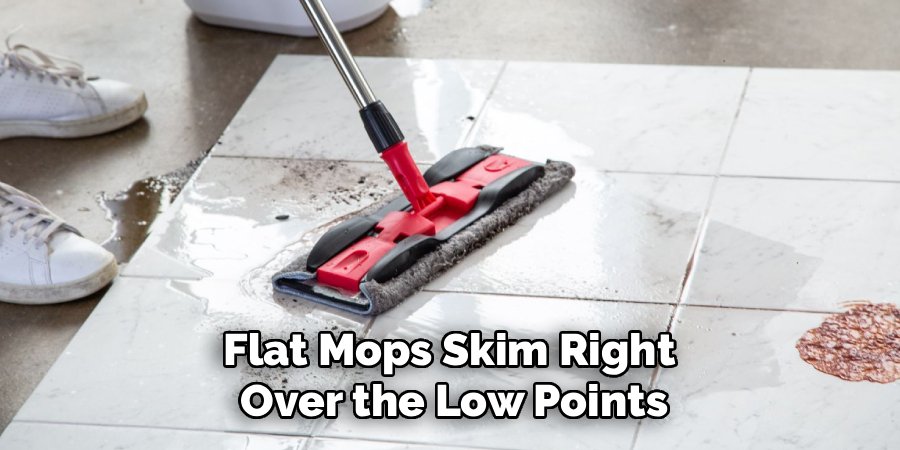
Flat mops skim right over the low points of textured rubber, so the grime in the grooves stays put. For those areas, and for scuffs or ground-in dirt, switch to a soft nylon brush or a non-abrasive pad.
- Apply a little cleaning solution directly to the spot.
- Let it sit for a minute so it can loosen the dirt.
- Scrub in small circles with the nylon brush, following the direction of the texture.
- Wipe the loosened grime away with a damp microfiber cloth.
- Move on before the solution dries and leaves a film.
Clients used to ask me why their gym floor looked hazy no matter how often they mopped. Every time, it was cleaner residue sitting down in the texture that a flat mop never reached. Once you scrub those grooves and rinse properly, the haze lifts and the color comes back.
Rinse and Dry to Prevent Residue
This is the step people skip, and it’s why so many rubber floors end up dull or sticky. Any cleaner left behind dries into a film that grabs dirt and turns slick when wet.
Empty your dirty solution, refill with clean lukewarm water, and go over the whole floor with a well-wrung mop. Then dry it — either towel it off with microfiber or let it air-dry with good airflow. Don’t reopen a rubber floor to foot traffic while it’s damp; it’s slippery, and shoes will track fresh dirt straight into the surface you just cleaned.
Safe Cleaners vs. Damaging Cleaners
The single biggest factor in a rubber floor’s lifespan is what you pour on it. Here’s what protects the material versus what quietly destroys it.
| Use This | Avoid This |
| pH-neutral floor cleaner | Oil-based or pine-oil cleaners |
| Lukewarm water | Hot water |
| Mild dish soap in a pinch | Solvents, acetone, paint thinner |
| Rubber-specific cleaning products | Bleach and strong acids |
| Soft nylon brush | Abrasive scouring pads or steel wool |
| Damp microfiber mop | Waxes and floor polishes |
Oil-based cleaners and solvents break rubber down and make it swell or go tacky. Bleach and acids discolor it and can turn the surface brittle. Waxes never bond properly to rubber and just build into a slippery, peeling mess. When in doubt, pH-neutral and gentle wins.
Common Mistakes to Avoid
Using oil-based or pine cleaners. These degrade rubber from the surface in. It’s the fastest way to ruin an expensive floor.
Skipping the dry sweep. Wet-mopping over grit grinds it into the surface and wears down textured patterns.
Flooding the floor. Standing water seeps into seams and under edges, loosening adhesive and hiding out where it can’t dry.
Cleaning with hot water. Heat softens rubber and weakens seam adhesive over time. Keep it lukewarm.
Skipping the rinse. Leftover cleaner dries into a hazy, sticky film that attracts dirt and gets slick when damp.
Reaching for abrasive pads. Steel wool and rough scouring pads scratch the finish permanently. Soft nylon only.
Adding wax or polish. Rubber doesn’t take wax. It builds up, peels, and turns dangerously slippery.
Safety and Warnings
Rubber floor cleaning is one of the lower-risk jobs I’ve done, but a few real hazards are worth respecting.
- Test any new cleaner on a hidden patch first. Pick a corner or a spot under equipment, apply the product, and check it after it dries before doing the whole floor. This catches discoloration and softening before it ruins visible areas.
- Never mix cleaning products. Combining bleach with ammonia or acidic cleaners releases toxic gas. Use one product at a time and rinse between different cleaners.
- Watch your footing. A wet rubber floor is slippery, and most slips happen to the person doing the cleaning. Wear grippy shoes and put out wet floor signs in shared spaces.
- Ventilate the room. Even mild cleaners are better with airflow. Open a door or run a fan, especially in a closed gym or basement.
- Read the label on any specialty product. Some rubber-specific cleaners still call for gloves. Follow whatever PPE the manufacturer lists.
Maintenance and Prevention Tips
The rubber floors that stayed looking new were never the ones getting deep-cleaned constantly — they were the ones kept from getting dirty in the first place. A little routine care means fewer scrubbing sessions.
- Sweep or dust-mop daily in busy spaces. Grit is the main thing that wears rubber down. Clearing it each day protects the texture and finish.
- Put down entrance mats. A good mat at the door traps dirt and moisture before shoes track it across the floor. This one change cuts your cleaning load dramatically.
- Wipe spills right away. Rubber resists water, but sugary drinks and oils left to sit can stain or degrade the surface. Blot them fast.
- Use furniture pads and glides. Dragging equipment or heavy furniture gouges and scuffs rubber. Felt pads under legs prevent most of it.
- Deep-clean on a schedule, not a whim. A pH-neutral mop-down weekly for high-traffic areas and monthly for quiet ones keeps buildup from ever starting.
- Protect it from prolonged sun. Direct sunlight can fade and harden rubber over months. Blinds or shades help in sun-exposed rooms.
FAQ
What is the best cleaner for rubber flooring?
A pH-neutral floor cleaner mixed with lukewarm water is your safest, most effective option. It lifts dirt without breaking down the material. Avoid anything oil-based, solvent-based, or acidic — those degrade rubber and shorten its life.
Can you use vinegar to clean rubber floors?
You can, but dilute it heavily — a small splash in a bucket of water at most. Vinegar is mildly acidic, and using it straight or too often can dull and dry out the rubber over time. For regular cleaning, a pH-neutral product is the gentler choice.
How do you get scuff marks off a rubber floor?
Put a little pH-neutral cleaner on the mark, let it sit a minute, then rub with a soft nylon brush or a non-abrasive pad. Most scuffs lift with gentle scrubbing. Never use steel wool or abrasive pads — they scratch the surface permanently.
Why is my rubber floor sticky after cleaning?
Almost always it’s leftover cleaner. Too much product or a skipped rinse leaves a tacky film behind. Go back over the floor with clean lukewarm water and a well-wrung mop, then let it dry fully. The stickiness should disappear.
How often should you clean a rubber floor?
Dust-mop or sweep daily in high-traffic areas to clear grit. Do a full pH-neutral mop weekly where foot traffic is heavy and monthly in quieter rooms. Wipe spills as they happen rather than waiting for the next cleaning.
Can you use a steam mop on rubber flooring?
Skip the steam mop. The heat and moisture soften rubber and can loosen seam adhesive over time, leading to lifting edges. A damp microfiber mop with lukewarm water cleans just as well without the risk.
Stick with pH-neutral cleaner, lukewarm water, and a soft touch, and rubber will reward you by lasting for years. Keep grit swept up and spills wiped fast, and you’ll rarely need more than a quick mop to keep it looking new.
