
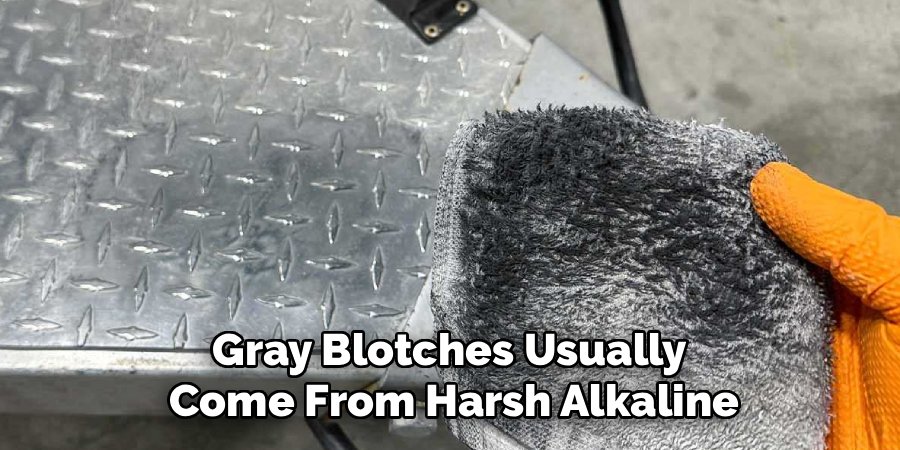
I once watched a guy attack the diamond plate running boards on his pickup with oven cleaner because he read somewhere it “cuts grease fast.” It cut grease, all right — and left ugly gray blotches burned into the metal that no amount of polishing ever fully lifted.
Harsh alkaline cleaners like oven spray, some degreasers, and anything caustic will etch and stain bare aluminum permanently, and that raised diamond texture makes the damage even harder to hide.
Learning how to clean diamond plate aluminum comes down to respecting one thing: the metal is soft and reactive, so gentle products and the right brush beat brute force every time. The tread pattern traps grime in every little valley, which is exactly where a rag can’t reach. Get your technique right and you can bring a filthy, oxidized plate back to a bright, near-mirror shine.
What You’ll Need
Diamond plate doesn’t need a cabinet full of specialty chemicals — it needs the right few. Grabbing something too harsh causes more damage than skipping the cleaning altogether.
- Mild dish soap or a pH-neutral aluminum-safe cleaner
- Two buckets — one for wash solution, one for clean rinse water
- Soft nylon scrub brush and an old toothbrush for the grooves
- Non-abrasive sponge or microfiber cloths
- Garden hose or spray bottle for rinsing
- Aluminum polish or metal polish made for bare metal (optional, for shine)
- White vinegar (for light oxidation and water spots)
- Clean, dry microfiber towels
- Nitrile gloves and safety glasses
Keep that toothbrush handy. The whole reason diamond plate looks grubby even after a wipe-down is that the raised pattern shields dirt in the low points, and only a small stiff brush digs it out.
Rinse Off Loose Dirt and Grit First
Before any soap touches the surface, blast the plate with plain water. Aluminum is soft, and dragging a brush across dry grit is how you put swirl scratches into metal you were trying to make prettier.
Hose the whole surface down, or wipe it with a wet sponge if you’re working indoors on something like a stair tread or toolbox lid. Let the water sit for a few seconds on caked-on mud so it loosens before you scrub. Work from the top down so runoff carries dirt away from areas you’ve already cleaned.
Wash With Mild Soap and a Nylon Brush
Mix a few drops of dish soap into a bucket of warm water. Skip anything labeled heavy-duty degreaser or alkaline cleaner — those are formulated for painted or coated surfaces, not bare aluminum.
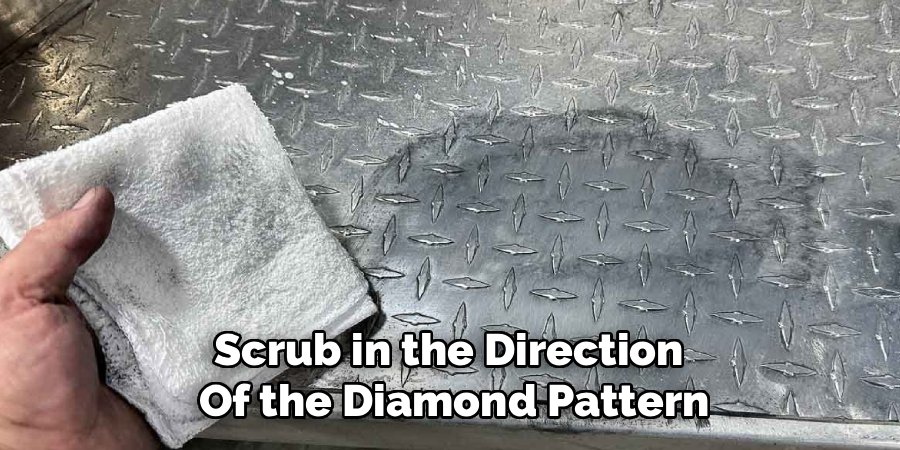
Dip your soft nylon brush, then scrub in the direction of the diamond pattern rather than random circles. This lifts grime out of the grooves and keeps any fine scratching aligned with the texture, where it won’t show. For the deep valleys and corners, switch to the toothbrush and work it back and forth along each channel.
I learned early on that summer is the worst season for diamond plate on trucks and trailers — road tar and bug splatter bake onto the hot metal and set like glue. When you hit those baked-on spots, lay a soap-soaked cloth over them for a minute or two to soften things before you scrub. Patience beats pressure here.
Tackle Oxidation and Water Spots
If the aluminum has gone dull, chalky, or spotted, plain soap won’t cut it. That gray haze is oxidation — the metal reacting with air and moisture.
- Mix equal parts white vinegar and warm water in a spray bottle.
- Mist the oxidized area and let it dwell for two to three minutes.
- Scrub gently with the nylon brush, following the pattern.
- Rinse the vinegar off completely before it dries.
- Check the result — repeat once more for stubborn spots rather than scrubbing harder.
Vinegar’s mild acidity dissolves light oxidation and hard-water spots without gouging the metal. For heavier oxidation that vinegar won’t touch, that’s when you move up to a dedicated aluminum polish, applied after the surface is clean and dry.
Rinse Thoroughly and Dry Immediately
This is the step that separates a spotty finish from a clean one. Any cleaner or vinegar left in the grooves dries into streaks and can keep reacting with the metal.
Rinse the entire plate with clean water until no suds or cloudiness remain. Then dry it right away with microfiber towels — don’t let it air-dry, because standing water on aluminum leaves mineral spots as it evaporates. Press the towel into the grooves to wick out trapped water. On a warm day outdoors, work in the shade so the surface isn’t drying faster than you can rinse it.
Polish for Shine (Optional)
Once the plate is clean and bone-dry, polish brings back that bright, reflective look. Only polish bare, uncoated aluminum — never a plate with a clear coat or anodized finish, since polish will cloud it.
Dab a small amount of aluminum polish onto a microfiber cloth and rub it into the flat areas using firm, straight strokes. Let it haze over, then buff it off with a fresh dry cloth. Use the toothbrush trick again to clear polish residue out of the grooves so it doesn’t dry white.
Safe Cleaners vs. Damaging Cleaners
What you pour on bare aluminum decides whether it shines or stains. Here’s the short version I wish that oven-cleaner guy had seen.
| Use This | Avoid This |
| Mild dish soap and warm water | Oven cleaner and caustic sprays |
| pH-neutral aluminum-safe cleaner | Strong alkaline degreasers |
| Diluted white vinegar | Bleach and chlorine products |
| Aluminum or metal polish | Steel wool and wire brushes |
| Soft nylon brush | Abrasive scouring pads |
| Microfiber cloths | Acidic wheel cleaners on bare metal |
Caustic and alkaline products etch and discolor aluminum on contact. Steel wool leaves iron particles embedded in the surface that rust into little brown freckles later. Bleach corrodes and pits the metal. When you’re unsure, mild and neutral is always the safer call.
Common Mistakes to Avoid
Using oven cleaner or caustic degreasers. These burn permanent gray stains into bare aluminum. It’s the single fastest way to wreck a plate.
Scrubbing dry, gritty metal. Skipping the pre-rinse grinds dirt into the soft surface and leaves swirl marks.
Reaching for steel wool. It scratches the finish and leaves iron behind that rusts into spots weeks later. Soft nylon only.
Scrubbing in circles. Random motion shows every scratch. Always follow the direction of the diamond pattern.
Letting it air-dry. Evaporating water leaves mineral spots, especially with hard water. Towel it dry immediately.
Polishing a coated plate. Anodized or clear-coated aluminum clouds when you polish it. Know what finish you’re working with first.
Mixing cleaners to “boost” power. Combining products doesn’t clean better — it can release dangerous fumes and damage the metal.
Safety and Warnings
Cleaning diamond plate isn’t high-risk, but the products people reach for can be, and the metal itself has a few quirks worth respecting.
- Test any new cleaner on a hidden spot first. Pick an out-of-sight corner, apply the product, let it dry, and check for discoloration before doing the whole surface. This catches etching before it ruins a visible area.
- Never mix cleaning products. Combining bleach with vinegar or ammonia releases toxic gas. Use one product at a time and rinse fully between different cleaners.
- Wear gloves and eye protection. Even vinegar and polish are rough on skin over time, and metal polish can splash. Nitrile gloves and safety glasses are cheap insurance.
- Work with ventilation. If you’re using any polish or specialty cleaner indoors — in a garage or shop — open the door and run a fan. Fumes build up fast in closed spaces.
- Mind the edges. Cut diamond plate often has sharp burrs along the edges. Run your brush carefully near them so you don’t slice a glove or finger.
Maintenance and Prevention Tips
The plates that stayed bright were never the ones getting deep-scrubbed constantly — they were the ones kept from oxidizing in the first place. A little upkeep saves you the hard scrubbing sessions.
- Rinse regularly. A quick hose-down every couple of weeks clears road salt, dirt, and grime before it sets into the grooves.
- Dry after every wash or rain exposure. Standing water is what drives oxidation and spotting. Wicking it out of the pattern makes the biggest difference.
- Apply a protectant. A coat of aluminum sealant or even a quality carnauba wax on bare plate slows oxidation and makes the next cleaning far easier.
- Deal with road salt fast in winter. Salt is brutal on aluminum. If you drive on treated roads, rinse the plate down as soon as you can rather than letting it sit.
- Keep it out of standing water. Toolboxes and trailer plates left sitting in puddles or damp storage corrode faster. Store them somewhere dry.
- Spot-clean tar and sap quickly. The longer baked-on gunk sits, the harder it fights back. Catch it early with soap and a soft cloth.
FAQ
What is the best cleaner for diamond plate aluminum?
Mild dish soap and warm water handle most jobs, and a pH-neutral aluminum-safe cleaner works for tougher grime. For dullness and oxidation, diluted white vinegar followed by an aluminum polish restores the shine. Steer clear of oven cleaner, caustic degreasers, and bleach — they permanently stain the metal.
Can you use vinegar to clean diamond plate aluminum?
Yes, and it’s one of the better tricks for light oxidation and water spots. Mix it equal parts with warm water, let it dwell a couple of minutes, scrub gently along the pattern, then rinse thoroughly. Don’t leave it sitting on the metal to dry, since it’s mildly acidic and will streak.
How do you make diamond plate shine again?
Clean it fully, dry it completely, then apply an aluminum or metal polish with a microfiber cloth using straight strokes. Let it haze, buff it off with a clean cloth, and clear any residue from the grooves with a toothbrush. Only polish bare aluminum — not anodized or clear-coated plate.
Why does my diamond plate have gray or brown spots?
Gray blotches usually come from harsh alkaline cleaners etching the surface, while small brown freckles are rust from steel wool or wire brushes leaving iron behind. Both are tough to reverse once they set in. Switching to a nylon brush and gentle cleaner prevents them going forward.
How do you clean oxidized diamond plate aluminum?
Start with diluted white vinegar for light oxidation, scrubbing along the pattern with a nylon brush. For heavier, chalky oxidation, move up to a dedicated aluminum polish after the surface is clean and dry. Work in sections and reapply rather than scrubbing harder, which just scratches soft metal.
Can you pressure wash diamond plate aluminum?
You can, but keep it on a low setting and hold the nozzle back at least a foot. Too much pressure up close can dent thin plate and drive water under trim or seams. A gentle rinse to clear loose dirt before hand-washing is the safest use.
Stick with mild soap, a soft nylon brush, and a fast towel-dry, and diamond plate stays bright far longer than it has any right to. Keep road salt rinsed off and add a coat of protectant, and you’ll trade those brutal scrubbing sessions for a quick wipe-down.
