
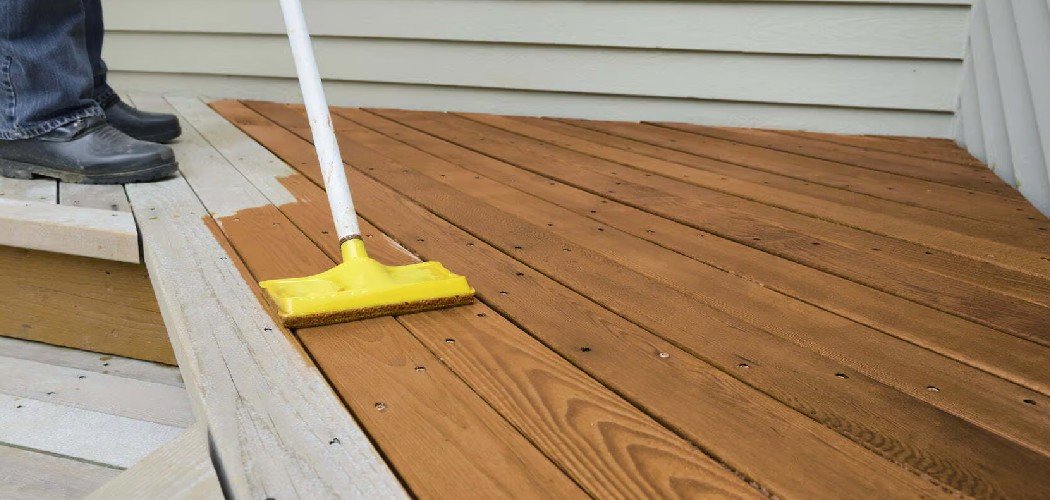
Someone hands you a brand-new pressure treated deck, and the first thing you want to do is scrub it and slap on a stain. That’s the mistake I saw over and over: people cleaning and sealing fresh lumber that was still soaking wet with preservative, then wondering why the finish peeled off in sheets a month later. Pressure treated wood arrives loaded with moisture and chemicals, and it needs to dry out before it’s ready for anything.
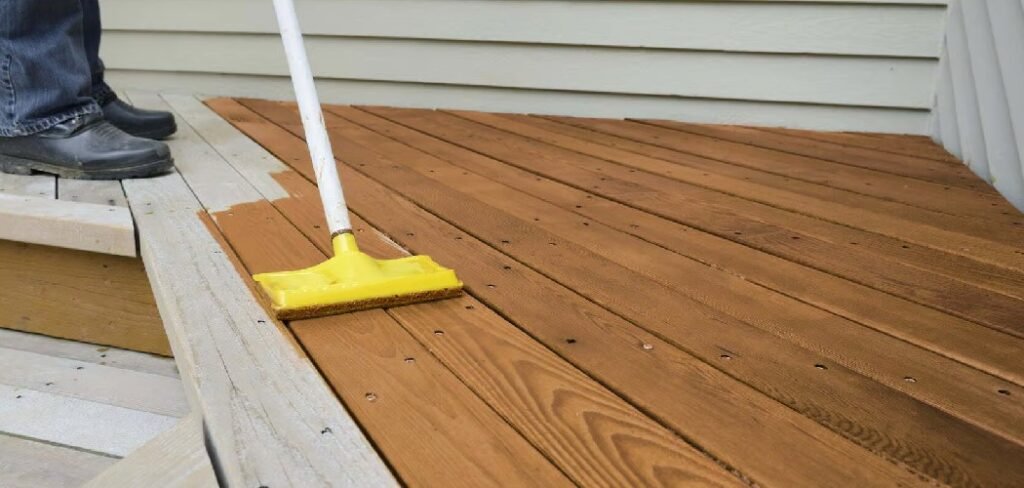
Once the wood has settled, though, keeping it clean is straightforward work. Knowing how to clean pressure treated wood the right way means matching the method to the grime — a light rinse for dust, an oxygen bleach mix for mildew, and a careful hand with any power washer. Get the sequence right and the wood stays sound for years instead of graying and splitting early.
What You’ll Need
- A stiff-bristle deck brush or scrub brush (not a wire brush)
- A garden hose with a spray nozzle
- A pump sprayer or a plastic bucket
- Oxygen bleach (sodium percarbonate) — the powdered kind
- A mild dish soap for light cleaning
- A wood-safe deck cleaner for tougher jobs
- Rubber gloves and safety goggles
- An old long-sleeve shirt you don’t mind ruining
- A pressure washer (optional — with the right tip and technique)
- A putty knife or plastic scraper for stuck debris
- A broom for dry sweeping first
Skip the chlorine bleach and the wire brush. Both show up in a lot of online advice, and both do more harm than good on this wood. I’ll explain why further down.
Sweep and Rinse Off the Loose Dirt First
Before any cleaner touches the boards, clear the dry stuff. Sweep the whole surface with a stiff broom, working leaves and grit out from between the deck boards and along the edges where debris packs in. Trapped leaves hold moisture against the wood, and that’s where rot and dark staining start.
Then give the surface a plain water rinse with your hose. This knocks off surface dust and, just as important, wets the wood down before you apply cleaner. Dry wood drinks up cleaning solution too fast and dries it out in patches, leaving you with streaks. A damp surface holds the cleaner evenly so it can actually work.
Wash Light Grime with Soap and Water
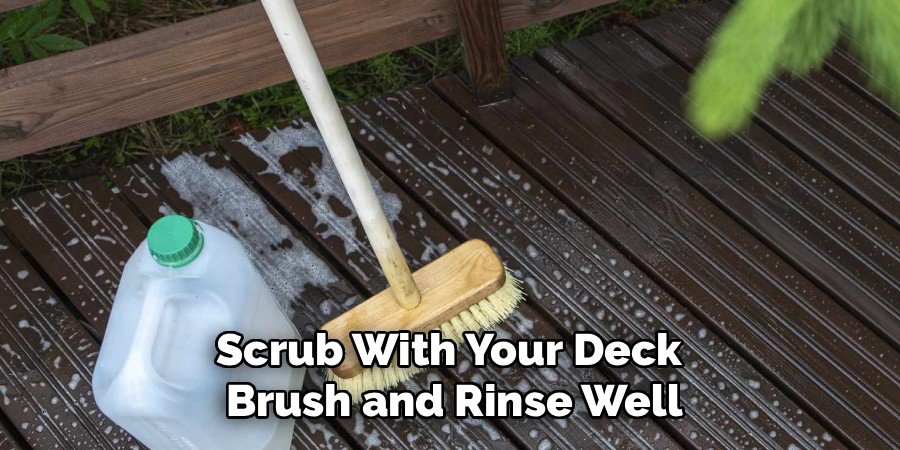
For a deck that’s just dusty or lightly soiled, you don’t need anything harsh. Mix a squirt of mild dish soap into a bucket of warm water, dip your deck brush, and scrub along the grain of the wood. Work in sections so the soap doesn’t dry before you rinse.
Scrubbing with the grain matters more than people think. Going against it or in circles pushes dirt into the wood fibers and can raise a fuzzy texture that catches more dirt later. Once you’ve scrubbed a section, rinse it thoroughly with the hose before moving on, so no soapy film dries on the surface.
Knock Down Mildew and Green Growth with Oxygen Bleach
Gray patches, green algae, and black mildew spots need more than soap. Mix oxygen bleach with warm water following the label — usually a few ounces of powder per gallon. Apply it with a pump sprayer or brush it on, then let it sit for 10 to 15 minutes. Keep the surface wet the whole time; if it starts drying, mist it again.
Oxygen bleach is the one I reached for on nearly every job. Unlike chlorine bleach, it lifts organic staining without stripping the wood’s natural color or corroding the fasteners underneath. After the dwell time, scrub with your deck brush and rinse well. Stubborn spots may want a second pass.
Power Wash Only If You Respect the Pressure
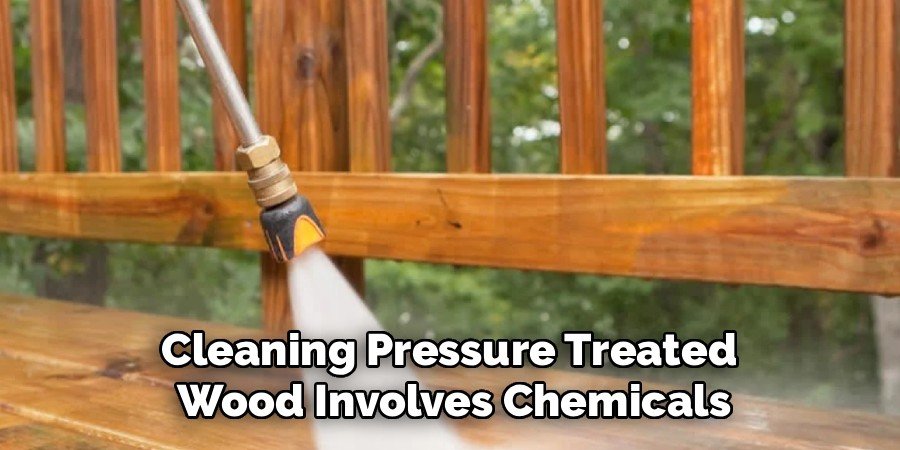
A pressure washer speeds things up, but it’s also the fastest way to gouge pressure treated wood into a furry mess. Use a wide fan tip — a 25- or 40-degree nozzle — never the pinpoint zero-degree tip. Keep the pressure under about 1,500 PSI for softwoods like pine.
Hold the wand at least a foot from the surface and keep it moving in long, even strokes along the grain. Stopping in one spot for even a second digs a visible line. If you’ve never used one on wood, practice on an offcut or a hidden section first. Follow the whole wash with a clean-water rinse to clear any lifted fibers.
Let the Wood Dry Fully Before Sealing
After cleaning, the wood needs to dry — usually 24 to 48 hours of dry weather. Do a splash test before sealing: sprinkle water on the boards. If it beads up, the wood is still too wet or sealed to take a new finish. If it soaks in within a few seconds, the wood is ready.
Newly installed pressure treated lumber is a different story. It can need several weeks to a few months to release its factory moisture before it’ll accept a stain or sealer at all. Rushing this is what causes that peeling finish I mentioned up top.
What to Use vs. What to Avoid
Half the damage I saw on decks came from the wrong product or tool, not from dirt. Here’s the quick reference worth keeping in the garage.
| Do Use | Avoid |
| Oxygen bleach (sodium percarbonate) | Chlorine bleach |
| Stiff-bristle deck brush | Wire brush |
| Wide 25–40° pressure washer tip | Zero-degree pinpoint tip |
| Mild dish soap for light grime | Harsh degreasers or solvents |
| Scrubbing with the grain | Scrubbing against or in circles |
| Wood-safe deck cleaner | Undiluted concentrated cleaners |
| Rinsing before and after | Letting cleaner dry on the surface |
Chlorine bleach is the big one people get wrong. It looks like it works because it lightens stains fast, but it breaks down the wood’s lignin, corrodes screws and joist hangers, and kills nearby plants when it runs off. Oxygen bleach does the same job without the collateral damage.
Common Mistakes to Avoid
- Sealing wood that’s still wet. Whether it’s factory moisture or rain, sealing over damp wood traps water and causes peeling. Always do the splash test first.
- Using chlorine bleach. It corrodes fasteners, degrades the wood fibers, and harms landscaping. Reach for oxygen bleach instead.
- Blasting with a zero-degree tip. That pinpoint stream carves grooves and raises fuzz that never fully goes away.
- Scrubbing against the grain. It roughens the surface and drives dirt deeper.
- Skipping the pre-rinse. Dry wood absorbs cleaner unevenly and streaks.
- Letting cleaner dry on the boards. Dried oxygen bleach leaves a residue that shows once the deck dries. Keep it wet, then rinse fully.
- Cleaning in direct midday sun. The solution evaporates before it can work.
Safety and Warnings
Cleaning pressure treated wood involves chemicals and often a pressure washer, so a few precautions genuinely matter.
- Wear gloves and eye protection. Oxygen bleach and deck cleaners irritate skin and eyes. Rubber gloves and goggles are non-negotiable, and long sleeves keep splashes off your arms.
- Never mix cleaning products. Don’t combine bleach with ammonia, vinegar, or other cleaners — some combinations release toxic gas. Use one product at a time and rinse between them.
- Work in open air. You’re usually outdoors here, which handles ventilation, but if you’re cleaning in an enclosed porch or shed, open it up and keep air moving.
- Protect your plants. Cover shrubs and grass near the deck, or wet them down before and after so runoff dilutes. Even oxygen bleach can stress plants in concentration.
- Mind the pressure washer kickback. Keep both hands on the wand, never point it at anyone, and wear closed-toe shoes. Wet wood also gets slippery — watch your footing.
- Handle sawdust carefully if you’re sanding treated wood. Wear a dust mask; the preservative dust isn’t something you want to breathe. Never burn treated wood scraps.
Maintenance and Prevention Tips
Keeping pressure treated wood clean is far easier than rescuing it after years of neglect. These habits stretch the time between deep cleans and add real years to the wood:
- Sweep regularly. A quick weekly sweep clears the leaves and grit that trap moisture and grow mildew.
- Rinse a few times a season. A plain hose-down removes pollen, dust, and early algae before it sets in.
- Reseal every 1–3 years. A quality water-repellent sealer keeps water from soaking in, which is what causes graying, cupping, and cracking.
- Clear the gaps between boards. Debris packed in the seams holds water against end grain, the most rot-prone part of the board.
- Move planters and furniture around. Anything sitting in one spot traps moisture and leaves a dark ring. Use feet or pads under heavy pieces.
- Trim back overhanging branches. Shade and dropped leaves keep the wood damp and speed up mildew.
- Address standing water. If puddles linger after rain, the deck may need better drainage or a slight sanding to open the grain back up.
Clients used to ask me why the shaded north side of a deck always looked worse than the sunny side, even though both got cleaned the same day. It’s the drying time — the shaded boards stay damp for hours longer after every rain, and that lingering moisture is exactly what mildew needs. Those boards almost always needed an extra oxygen bleach pass, and a good trim of the branches above them fixed the recurring problem for good.
Frequently Asked Questions
What is the best cleaner for pressure treated wood?
Oxygen bleach (sodium percarbonate) mixed with warm water is the best all-around choice. It lifts mildew, algae, and gray staining without corroding fasteners or damaging the wood fibers the way chlorine bleach does. For light dirt, mild dish soap and water is plenty.
Can you use bleach on pressure treated wood?
You can use oxygen bleach, and you should avoid chlorine bleach. Chlorine bleach corrodes screws and joist hangers, breaks down the wood’s structure over time, and harms nearby plants. Oxygen bleach cleans just as effectively without the damage.
How long should you wait to clean new pressure treated wood?
New treated lumber usually needs several weeks to a few months to release its factory moisture before it’s ready for staining or sealing. You can rinse off surface dirt anytime, but hold off on deep cleaning and finishing until a water-drop test shows the wood absorbing quickly rather than beading.
Do you need to pressure wash pressure treated wood?
No, a pressure washer isn’t required — a deck brush and oxygen bleach clean most decks well. If you do use one, keep it under about 1,500 PSI with a wide fan tip, hold it a foot away, and move constantly. Too much pressure gouges the soft wood and raises a permanent fuzz.
Why is my pressure treated deck turning gray?
Gray comes from sun and moisture breaking down the wood’s surface over time, often mixed with mildew. Cleaning with oxygen bleach removes the gray layer and brightens the wood, and a water-repellent sealer applied afterward slows the graying from coming back.
How often should you clean a pressure treated wood deck?
A light sweep weekly and a hose rinse a few times a season handles routine upkeep. A deeper cleaning with oxygen bleach once a year — usually in spring or early summer when the weather stays dry — keeps mildew and staining under control.
Pressure treated wood is tough, but it rewards a patient hand: clean it with oxygen bleach, respect the drying time, and keep water from sitting on it. Do that, and you’ll trade the peeling, graying mess for a deck that stays solid and good-looking season after season.
