
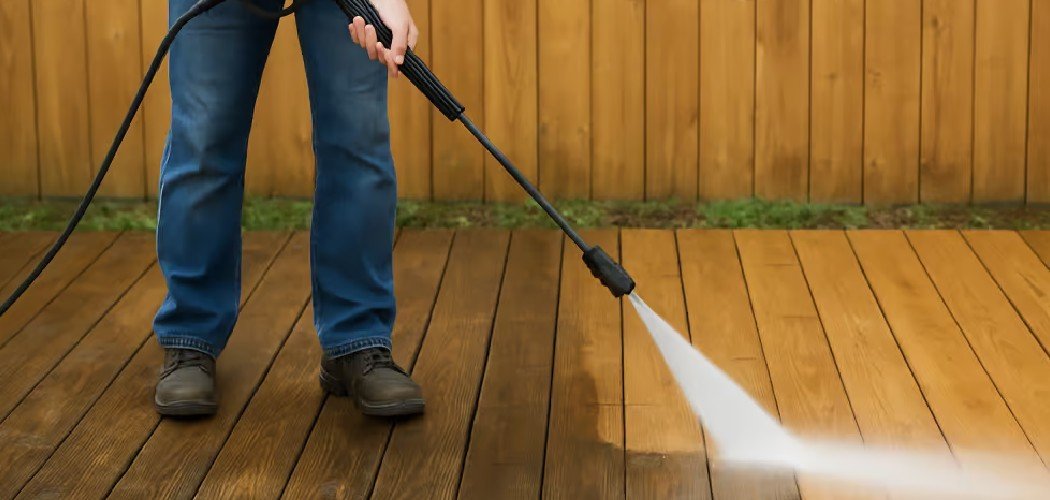
Someone spots a green film and a few gray boards, panics, and reaches for the chlorine bleach and a stiff wire brush. That’s the fastest way I’ve seen a gorgeous ipe deck go from rich brown to blotchy and scratched in a single afternoon. Ipe is one of the densest woods on the planet, and it doesn’t need aggression — it needs the right approach and a bit of patience.
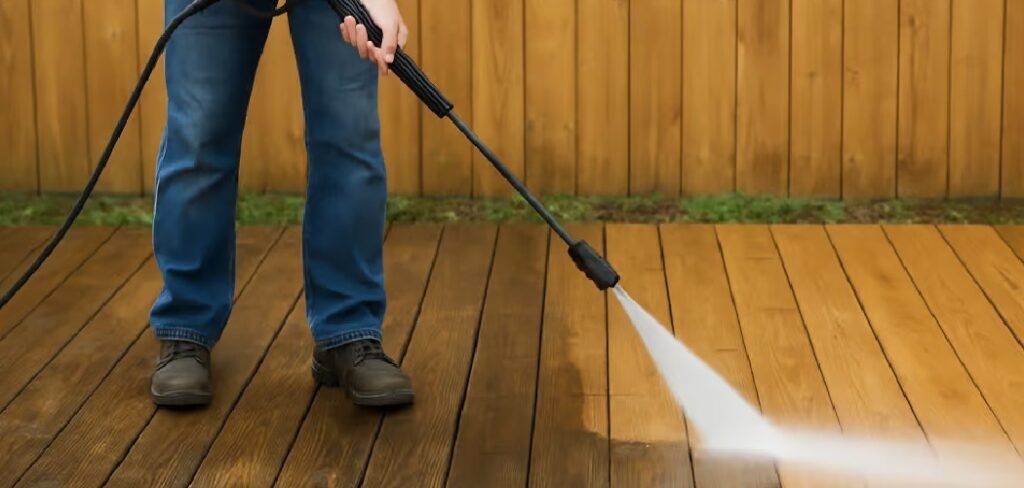
Learning how to clean an ipe deck comes down to matching the method to what you’re actually removing: dust, mildew, or that silvery patina the sun leaves behind. Get gentle with your first pass, respect the wood’s tight grain, and you’ll keep it looking sharp for decades. Ipe rewards restraint far more than muscle.
What You’ll Need
- A soft- to medium-bristle deck brush (never a wire brush)
- A garden hose with an adjustable spray nozzle
- A plastic bucket or a pump sprayer
- Oxygen bleach (sodium percarbonate) — powdered
- Mild dish soap for routine cleaning
- A dedicated ipe or hardwood deck cleaner for tougher jobs
- A wood brightener with oxalic acid (if you’re restoring color)
- Rubber gloves and safety goggles
- A putty knife or plastic scraper for packed debris
- A broom for dry sweeping
- Clean rags or a microfiber cloth
- Ipe oil or a UV-resistant hardwood deck finish (optional, for after cleaning)
Leave the pressure washer in the shed unless you truly know how to feather it. Ipe’s hardness fools people into thinking it can take a beating, but a careless power washer still raises fuzz and leaves wand marks on the surface.
Sweep and Rinse Before Anything Else
Start dry. Sweep the whole deck with a stiff broom, paying attention to the gaps between boards where grit, pollen, and leaf litter pack in. On ipe, those tight seams trap debris hard, and anything left sitting there holds moisture against the wood.
Follow with a plain water rinse from the hose. This clears loose surface dust and wets the boards so your cleaner spreads evenly instead of soaking into dry spots and streaking. Work from one end to the other so runoff carries dirt off the deck rather than back across clean boards.
Wash Routine Grime with Soap and Water
For a deck that’s just dusty or lightly soiled, skip the harsh stuff entirely. Mix a few drops of mild dish soap into a bucket of warm water, dip your soft-bristle brush, and scrub along the grain in manageable sections.
Scrubbing with the grain is not a suggestion — going in circles or across the grain on ipe can burnish the surface unevenly and trap dirt in the fibers. Rinse each section thoroughly before the soap dries, then let the deck air-dry. Nine times out of ten, this is all a well-kept ipe deck needs.
Lift Mildew and Green Growth with Oxygen Bleach
Black mildew spots, green algae, and grimy shaded corners call for oxygen bleach. Mix the powder with warm water per the label — usually a few ounces per gallon — and brush or spray it onto the affected areas. Let it dwell for 10 to 15 minutes, and keep the surface wet the entire time by misting if it starts to dry.
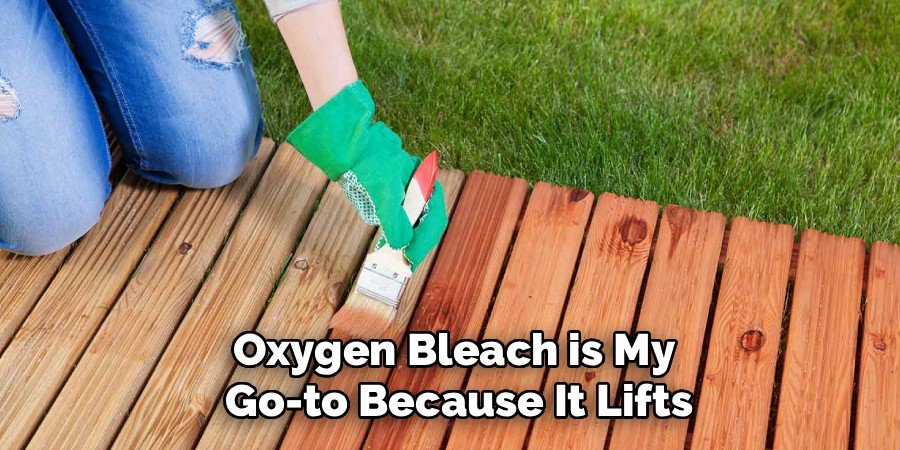
Oxygen bleach is my go-to because it lifts organic staining without stripping ipe’s natural oils or bleaching out its color the way chlorine does. Scrub gently with your brush after the dwell time, then rinse until the water runs clear. Stubborn patches may want a second, lighter pass rather than harder scrubbing.
Restore Faded Color with a Wood Brightener
Ipe grays over time. That silvery patina is purely cosmetic — the wood underneath is still rock-solid — but if you want the deep brown back, you’ll need a brightener containing oxalic acid. Apply it after cleaning, following the product’s dilution and dwell instructions.
The brightener neutralizes the graying and opens the wood’s pores so it’s ready to accept oil. Rinse it off completely and let the deck dry fully before you decide whether to oil it. Some clients loved the weathered silver look and stopped here; others wanted the fresh-cut color and kept going.
Let the Deck Dry, Then Decide on Oil
After cleaning, ipe needs to dry — usually 24 to 48 hours of dry weather. Run a quick water test: sprinkle a little on the boards. If it soaks in within a few seconds, the wood is dry and ready. If it beads, give it more time.
If you want to slow the graying, apply a thin coat of ipe oil or a UV-resistant hardwood finish once the deck is bone dry. Wipe on a thin layer, then wipe off the excess with a clean rag. Ipe is so dense that it won’t absorb much, and any surplus left sitting turns sticky and attracts dirt.
Do vs. Don’t: Cleaning Ipe the Right Way
Most of the damaged ipe decks I saw were ruined by the wrong product or tool, not by neglect. Keep this quick reference handy.
| Do | Don’t |
| Use oxygen bleach for mildew | Use chlorine bleach |
| Use a soft- or medium-bristle brush | Use a wire brush |
| Scrub with the grain | Scrub against or in circles |
| Use mild dish soap for routine dirt | Use harsh solvents or degreasers |
| Wet the wood before applying cleaner | Apply cleaner to bone-dry boards |
| Rinse fully and let it air-dry | Let cleaner dry on the surface |
| Apply thin coats of ipe oil | Flood the wood with oil |
| Clear the gaps between boards | Ignore debris in the seams |
Chlorine bleach is the mistake I saw most. It looks effective because it lightens stains fast, but it strips the wood’s natural oils, drives out the warm color, and can leave ipe looking chalky and lifeless. Oxygen bleach does the cleaning work without any of that fallout.
Common Mistakes to Avoid
- Reaching for chlorine bleach. It bleaches out ipe’s color and strips the oils that make the wood so durable. Use oxygen bleach instead.
- Scrubbing with a wire brush. Even on wood this hard, wire bristles scratch the surface and leave visible marks. Soft or medium bristles are all you need.
- Power washing at full pressure. Ipe’s density tempts people to blast it, but you’ll still raise fuzz and etch wand lines. If you must use one, keep it low and feathered with a wide tip.
- Flooding the deck with oil. Ipe barely absorbs oil. Excess just sits on top, gets tacky, and traps dirt. Thin coats, wiped down, every time.
- Skipping the pre-rinse. Dry boards drink up cleaner unevenly and streak.
- Letting cleaner dry on the surface. Dried oxygen bleach leaves a residue that shows once the deck dries. Keep it wet, then rinse.
- Cleaning in direct midday sun. The solution evaporates before it can do its job.
Safety and Warnings
Cleaning an ipe deck involves chemical cleaners and sometimes acid-based brighteners, so a few precautions genuinely matter.
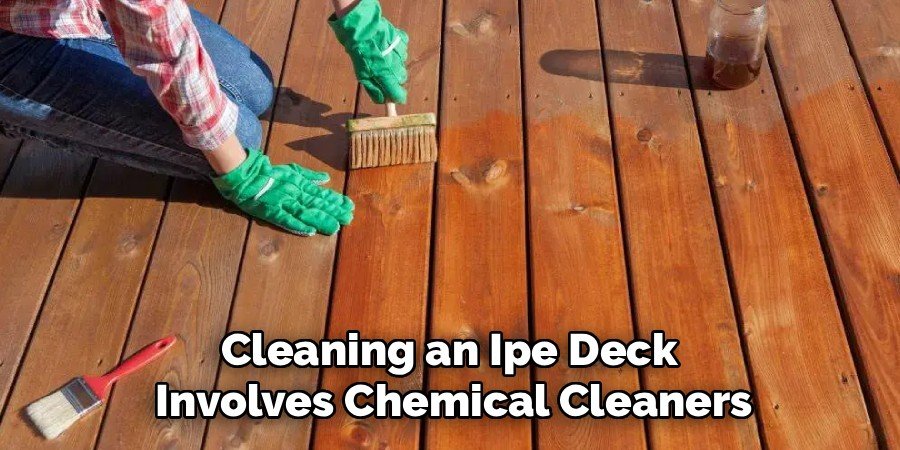
- Wear gloves and eye protection. Oxygen bleach, hardwood cleaners, and especially oxalic acid brighteners irritate skin and eyes. Rubber gloves and goggles are non-negotiable, and long sleeves keep splashes off your arms.
- Never mix cleaning products. Don’t combine bleach with ammonia, vinegar, or any other cleaner — some combinations release toxic gas. Use one product at a time and rinse thoroughly between them.
- Handle oxalic acid brighteners with care. They’re effective but corrosive. Follow the dilution instructions exactly, and never let the concentrate sit on skin or nearby metal.
- Test in an inconspicuous spot first. Try any new cleaner or brightener on a hidden board or an offcut before treating the whole deck, so you know how the wood responds.
- Protect surrounding plants. Cover shrubs and grass near the deck, or wet them down before and after so runoff dilutes. Even oxygen bleach can stress plants in concentration.
- Watch your footing. Wet ipe is genuinely slippery — some of the slickest decking there is when soaped up. Wear closed-toe shoes with grip and move deliberately.
- Ventilate enclosed areas. If you’re cleaning a covered porch or screened section, open it up and keep air moving while you work.
Maintenance and Prevention Tips
Keeping ipe clean is far easier than restoring it after years of buildup. These habits stretch the time between deep cleans and protect the wood:
- Sweep weekly. A quick pass clears the pollen, grit, and leaves that grow mildew and pack into the seams.
- Rinse a few times each season. A plain hose-down removes dust and early algae before it sets in.
- Clear the gaps between boards. Debris trapped in the tight seams holds water against the end grain, the most vulnerable part of any board.
- Move planters and furniture around. Anything sitting in one spot traps moisture and leaves a dark ring. Use feet or pads under heavy pieces.
- Reapply oil as needed. If you’re maintaining the brown color, a light coat every year or two keeps the graying at bay. If you like the silver patina, you can skip this entirely — ipe stays structurally sound either way.
- Trim overhanging branches. Shade and dropped leaves keep the wood damp and speed up mildew.
- Address standing water. If puddles linger after rain, check the deck’s drainage; ipe handles moisture well, but sitting water still encourages growth.
Clients used to ask me why one small stretch of their ipe deck stayed green no matter how often it was cleaned. Nearly every time, it was the section under a downspout or a dripping gutter — that constant trickle kept those boards damp long after the rest dried out, and mildew loves nothing more. Redirecting the water flow fixed the recurring problem far better than repeated scrubbing ever did.
Frequently Asked Questions
What is the best cleaner for an ipe deck?
Oxygen bleach (sodium percarbonate) mixed with warm water is the best all-around choice for mildew, algae, and grime. It cleans thoroughly without stripping ipe’s natural oils or fading its color the way chlorine bleach does. For routine dirt, mild dish soap and water works perfectly well.
Can you pressure wash an ipe deck?
You can, but you have to be careful. Ipe is extremely dense, which tempts people to crank the pressure, yet a hard stream still raises fuzz and etches wand marks into the surface. If you use one, keep it under about 1,500 PSI with a wide fan tip, hold it well back, and keep it moving with the grain. A soft brush and oxygen bleach is safer and usually enough.
How do you get gray out of an ipe deck?
Clean the deck first, then apply a wood brightener containing oxalic acid. The brightener neutralizes the silvery gray caused by sun and moisture and restores the wood’s warm brown tone. Rinse it off completely, let the deck dry, and apply a thin coat of UV-resistant ipe oil to slow the graying from returning.
Should you oil an ipe deck after cleaning?
Only if you want to keep the rich brown color. Ipe is so durable it needs no oil to survive — many people happily let it weather to a natural silver. If you prefer the fresh look, apply a thin coat of ipe oil once the deck is fully dry, and wipe off any excess so it doesn’t turn sticky.
How often should you clean an ipe deck?
A light sweep weekly and a hose rinse a few times a season handle routine upkeep. A deeper cleaning with oxygen bleach once a year — ideally in spring or early summer when the weather stays dry — keeps mildew and staining under control.
Why is my ipe deck turning black in spots?
Those black spots are almost always mildew, thriving in shaded, damp areas or wherever water lingers. Treat them with oxygen bleach, and check whether a gutter, downspout, or overhanging branch is keeping that section wet. Fixing the moisture source stops the spots from coming back.
Ipe is one of the toughest decking materials you’ll ever own, but it looks its best when you clean it gently and keep water from lingering on it. Reach for oxygen bleach over chlorine, respect the grain, and decide up front whether you’re chasing the brown or embracing the silver — either way, the wood will outlast almost everything around it.
