
A guy on my old route once pulled his car in after a road trip, spotted a patch of dried salt and grime, and blasted it with a degreaser he had left over from cleaning his engine bay. By the next morning that corner of his glossy gray floor had gone cloudy and dull, like a fogged-up window that wouldn’t wipe clear. The coating wasn’t damaged all the way through, but the shine was gone for good — and no amount of scrubbing brought it back.
That one mistake is why the wrong cleaner is the fastest way to ruin an expensive floor. Learning how to clean epoxy garage floors is mostly about knowing what not to reach for, because the coating is tougher than people think in some ways and surprisingly touchy in others. Get the products right and the actual cleaning is quick and satisfying.
What You’ll Need
You probably already own most of this. The trick is leaving the harsh stuff on the shelf.
- A soft-bristle push broom or dust mop
- A shop vacuum or regular broom for loose debris
- A flat microfiber mop or a soft-bristle deck brush
- Two buckets — one for wash water, one for rinse
- A pH-neutral floor cleaner or a few drops of clear dish soap
- A garden hose or clean warm water
- Ammonia (for tougher jobs — diluted, more on that below)
- Clean microfiber cloths or old towels for spills and spots
- A squeegee or dry mop for drying
- Kitty litter or a commercial absorbent for fresh oil spills
Skip the citrus degreasers, vinegar, and anything labeled “heavy-duty” or acidic. Those are made to eat through grime, and on a sealed coating they attack the finish instead.
Sweep and Dry-Clear the Whole Floor First
Grit is the enemy of gloss. Sand, road salt, and fine dust act like sandpaper under your mop, and dragging them across the surface leaves swirl marks that show up under garage lights. Clear everything loose before a drop of water touches the floor.
Run a dust mop or soft-bristle broom across the whole slab, working toward the door. For corners and under shelving, a shop vac gets what the broom misses. If you park daily, this quick dry pass two or three times a week does more to protect the shine than any deep clean.
Tackle Oil and Tire Marks Before You Wash
Spot-treat the stubborn stuff first, or you’ll just smear it around during the general wash. Fresh oil drips get a sprinkle of kitty litter — let it sit twenty minutes to pull the oil up, then sweep it away.
For dried spots and dark tire marks, a warm water and pH-neutral cleaner mix on a soft cloth usually lifts them with a little patience. Tire marks are the ones clients always asked me about. They’re not stains soaking into the floor — they’re rubber transferred onto the surface, so they respond to gentle scrubbing and a soft brush, not stronger chemicals. Reaching for a solvent here is how people haze the coating.
Mop with a Gentle, Neutral Solution
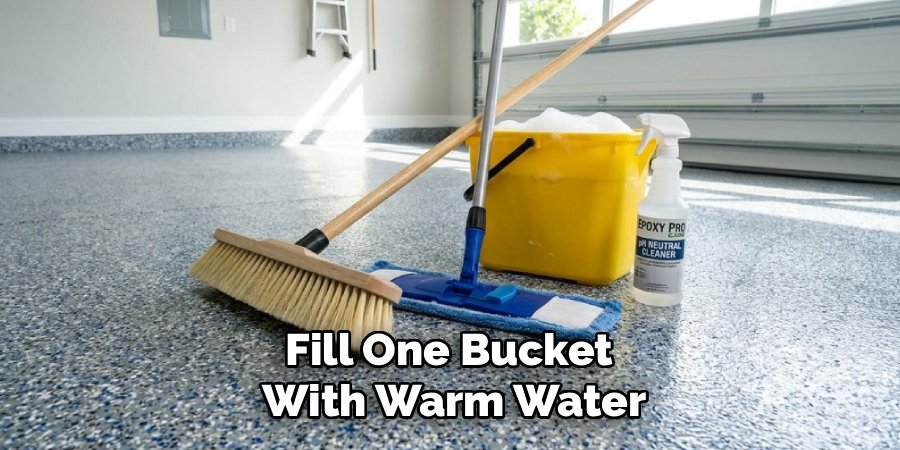
Now the general wash. Fill one bucket with warm water and a squirt of pH-neutral cleaner or clear dish soap — you want barely sudsy, not a foam party. Too much soap leaves a film that dulls the finish and gets slippery.
- Dip your microfiber mop or soft deck brush and wring it so it’s wet, not dripping.
- Work in sections, starting at the back wall and moving toward the door.
- For a floor with light grime, straight warm water on microfiber does most of the job — save the soap for greasy zones.
- On heavier buildup, mix half a cup of clear ammonia into a gallon of warm water instead of soap. Ammonia cuts grime without leaving residue and won’t harm the coating.
- Rinse your mop often in the wash bucket so you’re not spreading dirt back down.
- Go over any spots you pre-treated to blend them into the clean surface.
Keep the mop moving in overlapping strokes rather than scrubbing one area to death. Epoxy responds better to steady, even cleaning than to hard localized pressure.
Rinse Away Every Trace of Soap
This is the step that separates a floor that gleams from one that looks streaky. Any cleaner left behind dries into a haze and makes the surface slick.
Dump your wash bucket, refill with clean water, and go back over the whole floor with fresh water and a clean mop. In a garage with a floor drain, a garden hose works even faster — flood it lightly and push the water toward the drain. Rinse until the water running off is clear.
Dry It Down to Avoid Water Spots
Standing water spots a glossy epoxy floor, especially if your tap water is hard. Pull a squeegee across the surface toward the door or drain, then follow with a dry microfiber mop or towels for the last bit of moisture.
In winter, I always told people to dry the floor fully before parking a wet car back on it. Meltwater carrying road salt sits under the tires and leaves a chalky ring that’s a pain to clean once it dries. Two minutes with a squeegee saves that headache.
What to Use vs. What to Avoid
| Use This | Avoid This |
| pH-neutral floor cleaner | Vinegar or any acidic cleaner |
| Clear dish soap, lightly diluted | Citrus-based degreasers |
| Diluted ammonia for heavy grime | Comet or other abrasive powders |
| Warm water for routine cleaning | Bleach used straight or often |
| Microfiber mop or soft deck brush | Steel wool or stiff wire brushes |
| Kitty litter for fresh oil | Harsh solvents on tire marks |
| Squeegee for drying | Letting water air-dry on the surface |
| Walk-off mats at the door | Rubber-backed mats left in one spot |
The vinegar row surprises people most. It gets recommended everywhere as a natural cleaner, but its acidity slowly etches the finish and dulls the gloss over time. Natural doesn’t mean coating-safe.
Common Mistakes to Avoid
Using acidic or citrus cleaners. Vinegar, lemon products, and citrus degreasers eat at the finish and leave permanent dull spots. This is the single most common way people wreck their own floor.
Scrubbing with abrasives. Steel wool, scouring pads, and powdered cleansers scratch the glossy topcoat. Once those micro-scratches are in, the shine is gone.
Over-soaping. Too much detergent leaves a slick film that dulls the surface and turns the floor into a slip hazard. Less soap, more rinse.
Skipping the dry-sweep. Mopping over grit grinds it into the finish and leaves swirl marks. Always clear loose debris first.
Letting water air-dry. Hard-water minerals leave spots and rings. Squeegee and dry, don’t walk away.
Attacking tire marks with solvents. They’re transferred rubber, not deep stains. Gentle scrubbing works; harsh chemicals just haze the coating around the mark.
Ignoring winter salt. Road salt tracked in and left to dry pulls moisture and leaves white residue that’s far harder to remove later.
Safety and Warnings
Epoxy floor cleaning is low-drama chemically, but a few rules keep you and the coating safe.
- Never mix ammonia with bleach. This combination creates toxic chloramine gas that can seriously hurt you. Pick one cleaner and stick with it — and honestly, you rarely need bleach on epoxy at all.
- Ventilate when using ammonia. Even on its own, ammonia fumes are strong. Open the garage door and let air move through while you work.
- Wear gloves. Diluted ammonia and repeated cleaner contact dry out and irritate skin. Rubber gloves are cheap protection.
- Mind the slip risk. A wet epoxy floor is genuinely slick, and a soapy one is worse. Keep foot traffic off until it’s dry, and skip flip-flops while you work.
- Test a new cleaner in a hidden corner first. Before switching products, clean a small patch behind a shelf or in a corner, let it dry, and check that it didn’t dull or discolor the finish.
- Rinse tools that touched other chemicals. A mop that cleaned a garage workbench with solvent can transfer enough residue to matter. Keep your floor tools clean.
Maintenance and Prevention Tips
The floors that still looked showroom-fresh years later belonged to people who did small things often, not big scrubs once a season.
- Dust-mop two or three times a week. Staying ahead of grit is the highest-value habit for protecting gloss. It takes two minutes.
- Wipe spills right away. Oil, brake fluid, and battery acid won’t soak into a sealed coating, but they can dull or discolor it if they sit. Blot fresh, don’t let them dry.
- Put down walk-off mats at the entry. They catch grit, salt, and water before they spread. Move them occasionally so moisture doesn’t get trapped underneath.
- Use cardboard or a mat under the car in winter. It catches the salty meltwater drip that otherwise leaves rings under your tires.
- Set plastic or rubber pads under jack stands and heavy equipment. Metal edges and dropped tools chip the coating; a cheap pad prevents it.
- Do a full wash seasonally. Beyond the quick sweeps, one proper wash-and-rinse each season keeps grime from building into a dull layer you stop noticing.
- Watch hot tires in summer. Tires that heat up on a long summer drive can soften and leave marks, so a quick wipe-down after driving in heat keeps them from setting in.
FAQ
What is the best cleaner for epoxy garage floors?
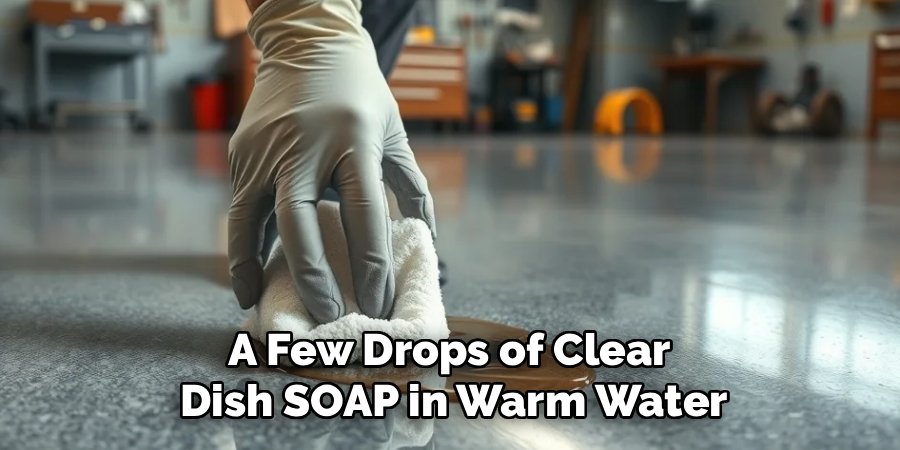
A pH-neutral floor cleaner or a few drops of clear dish soap in warm water handles routine cleaning without harming the finish. For heavier grime, half a cup of clear ammonia per gallon of warm water cuts grease and rinses clean. Avoid vinegar, citrus degreasers, and anything acidic or abrasive.
Can you use vinegar to clean an epoxy floor?
No. Vinegar is acidic, and over time it etches the finish and dulls the gloss. It gets recommended as a natural cleaner everywhere, but “natural” doesn’t mean safe for a coated floor. Stick with pH-neutral products.
How do you get tire marks off an epoxy garage floor?
Tire marks are transferred rubber sitting on the surface, not stains soaked in. Scrub gently with warm water and a pH-neutral cleaner on a soft cloth or brush, and give it a little patience. Skip solvents, which haze the coating around the mark.
How often should you clean an epoxy garage floor?
Dust-mop two or three times a week to keep grit off, wipe spills as they happen, and do a full wash-and-rinse each season. Garages with daily car traffic or winter salt need more frequent attention than a floor that mostly stores tools.
Why does my epoxy floor look cloudy or hazy after cleaning?
Usually it’s leftover soap residue or a harsh cleaner. Too much detergent dries into a film, and acidic or citrus products dull the finish. Rinse thoroughly with clean water, dry with a squeegee, and switch to a pH-neutral cleaner if the haze keeps coming back.
Can you pressure wash an epoxy garage floor?
You can, but keep the pressure low and the nozzle wide and moving. A tight, high-pressure stream held in one spot can lift or chip the coating at seams and edges. For most garages, a mop and hose do the job without the risk.
Get the cleaner right, rinse until the runoff is clear, and dry before you walk away — that’s the whole game. Stay ahead of grit and salt with a quick sweep a couple times a week, and your floor keeps that showroom gloss for years instead of fading into a dull gray you stop noticing.
