

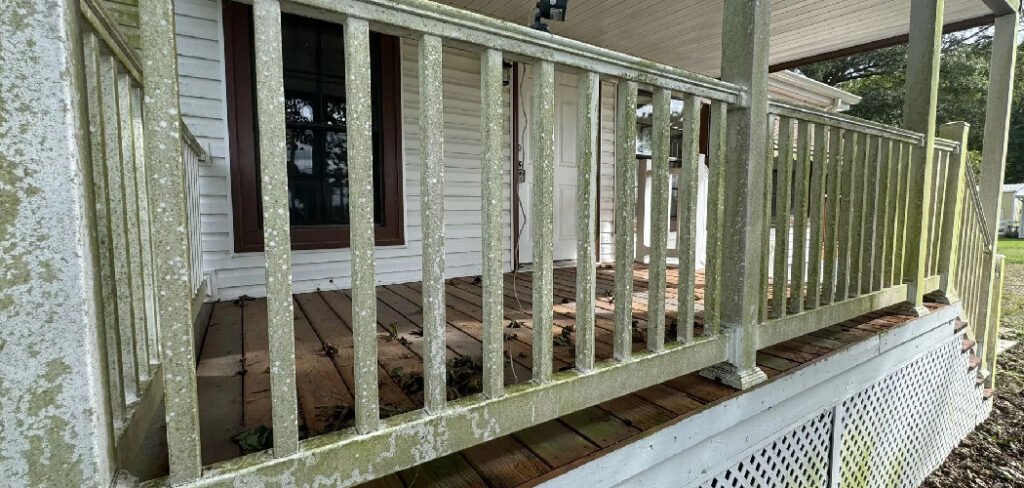
A client once dragged a stiff wire brush across her green, slippery cedar deck, convinced she was scrubbing the algae away. All she did was tear up the soft wood fibers, leaving a fuzzy, splintered surface that soaked up moisture and grew algae back twice as fast within a month. The algae wasn’t the real problem — the aggressive scrubbing was.
Algae shows up as that slick green or black film on shaded, damp boards, and it turns a deck into a slip hazard fast. Knowing how to clean algae off wood deck the right way means going gentle on the wood while being tough on the growth. Get the technique right and you’ll fix both the look and the danger in an afternoon.
What You’ll Need
- Soft-bristle deck brush or stiff-bristle nylon brush (never a wire brush)
- Garden hose with an adjustable spray nozzle
- Two buckets — one for cleaner, one for rinse water
- Oxygen bleach (sodium percarbonate) — the safest algae killer for wood
- Mild dish soap
- White vinegar (for light, spot treatment)
- Plastic putty scraper for clearing gaps
- Push broom
- Rubber gloves and safety glasses
- Old clothes or a waterproof apron
- Plastic sheeting and painter’s tape to protect nearby plants
- Deck sealer or stain (for after the deck fully dries)
Clear the Deck and Sweep It Dry
Pull off the furniture, planters, grill, and rugs first. Anything left in place leaves a clean outline once you’re done, and you’ll be annoyed enough to redo the whole thing.
Sweep the boards with a push broom to lift loose leaves, dirt, and debris. Run your putty scraper along the gaps between boards — trapped organic matter holds moisture, and that’s exactly what algae feeds on. Clearing those channels now stops the growth from creeping right back.
Wet the Boards Before Any Cleaner
Soak the entire deck with a steady spray from your hose before you apply anything. Pre-wetting stops the wood from drinking up your cleaning solution too fast and helps it spread evenly across the surface.
Wet the plants and grass around the deck too, then cover the closest beds with plastic sheeting. Runoff from algae cleaner can stress delicate greenery, and a quick pre-soak dilutes anything that reaches the roots.
Mix and Apply Oxygen Bleach
Oxygen bleach is your best friend here. Mix it with warm water according to the label — usually a cup or two per gallon — and stir until it dissolves. Warm water activates it faster than cold.
Pour or brush the solution over the algae-covered boards, working in sections about four feet wide. Let it dwell for 10 to 15 minutes. Don’t let it dry out — if the sun is baking the boards, mist them lightly to keep the solution active. That dwell time does most of the work, loosening the algae so you barely have to scrub.
Scrub Along the Grain, Not Across It
Work your brush in the direction of the wood grain, following each board end to end. Scrubbing across or in circles grinds grit into the soft fibers and roughens the surface — the same mistake that fuzzes cedar and pine.
Use steady, moderate pressure. On badly infested boards, a second application beats leaning harder on the brush. Let the chemistry do the heavy lifting so you protect the wood.
Handling Stubborn Black Spots
Deep black staining is often algae mixed with mildew that’s worked into the grain. Reapply oxygen bleach directly to those patches and give it another 15 minutes before scrubbing again.
For small, isolated spots, undiluted white vinegar dabbed on and left for 10 minutes cuts through light growth. Vinegar works fine for touch-ups, but it’s too weak for a whole deck coated in green.
Rinse Thoroughly and Let It Dry
Rinse each section with your hose before the cleaner dries, working from the house outward toward the steps. Leftover residue attracts new dirt and can leave a dull film once the boards dry.
Give the deck a full day or two to dry completely before you walk on it much or reseal. Wood that’s still damp underneath won’t take sealer properly, and trapped moisture invites the algae straight back.
Safe vs. Harmful Ways to Clean Algae Off Wood
| Method or Cleaner | Safe for Wood? | Why |
| Oxygen bleach (sodium percarbonate) | ✅ Yes | Kills algae and lifts stains without harming wood fibers or nearby plants |
| Mild dish soap + water | ✅ Yes | Handles light surface film on lightly affected decks |
| White vinegar (spot use) | ✅ Yes | Cuts small patches of light algae; too weak for full coverage |
| Nylon-bristle brush | ✅ Yes | Scrubs effectively without shredding soft wood |
| Chlorine bleach | ⚠️ Caution | Kills algae but strips color, dries out wood, and harms plants |
| Wire brush or steel wool | ❌ No | Tears up wood fibers and roughens the surface, speeding regrowth |
| Pressure washer at high PSI | ❌ No | Gouges and fuzzes soft wood, creating perfect algae habitat |
| Undiluted muriatic acid | ❌ No | Eats into the wood and is dangerous to handle |
Common Mistakes to Avoid
- Reaching for a wire brush. Metal bristles rip up soft wood fibers, and that rough surface holds moisture and algae worse than before.
- Scrubbing across the grain. Always follow the board grain. Cross-scrubbing grinds dirt in and raises the fibers.
- Using full-strength chlorine bleach. It kills algae but bleaches the wood pale, dries it brittle, and kills surrounding plants with runoff.
- Skipping the gaps between boards. Trapped debris in those channels is where algae takes hold first. Miss them and it returns fast.
- Resealing while the deck is still damp. Sealer won’t bond to wet wood, and you’ll trap moisture that feeds new growth.
- Blasting with a pressure washer. High pressure carves grooves into soft wood, and those grooves become algae condos within weeks.
Safety and Warnings
Algae cleaning is manageable at home, but a few rules keep you and your deck out of trouble. Wear rubber gloves and safety glasses any time you handle oxygen bleach, chlorine bleach, or vinegar — even mild solutions irritate skin and sting the eyes.

Never mix cleaning products. Combining chlorine bleach with vinegar or any ammonia-based cleaner releases toxic chlorine gas. Pick one cleaner and stick with it. Since oxygen bleach handles algae safely on its own, there’s no reason to reach for anything harsher.
You’re working outdoors, so ventilation is rarely an issue, but still follow the label’s dwell times and dilution ratios exactly. Test any cleaner on a hidden spot first — a corner under the grill or a step riser — before you commit to the whole deck. Older, weathered wood reacts differently than fresh boards, and a spot test tells you how yours will hold up.
Wet algae is genuinely slippery, so watch your footing the entire time. Protect surrounding plants by rinsing them before and after and laying plastic over close-in beds. Concentrated runoff, especially from chlorine bleach, can scorch grass and stress shrubs.
How to Keep Algae Off Your Wood Deck Longer
The less moisture that lingers, the less algae you’ll ever fight.
- Sweep weekly. A quick pass keeps leaves and debris from packing into the gaps and holding damp against the wood.
- Clear the board gaps each season. Run a putty knife between boards in spring and fall so water drains instead of pooling.
- Trim back overhanging branches. More sunlight and airflow dry the boards faster, and algae hates dry, sunny surfaces.
- Improve drainage underneath. Make sure water isn’t collecting under the deck, since that dampness rises up through the boards.
- Reseal every one to three years. A quality water-repellent sealer stops moisture from soaking in and gives algae nothing to cling to.
- Raise your planters. Pots sitting flat trap water and leave dark rings. Use pot feet so air moves underneath.
- Rinse shaded corners after wet spells. North-facing sections stay damp longest, so a quick hose-down keeps growth from settling in.
One timing note from years of doing this: tackle a full algae cleaning in late spring once the wet season eases, then reseal a couple of dry days later. Decks I treated in that window stayed green-free through summer, while the ones cleaned in damp fall weather were slick again by the next spring. Dry conditions after cleaning make all the difference.

Frequently Asked Questions
What kills algae on a wood deck?
Oxygen bleach (sodium percarbonate) is the most effective and wood-safe option. Mixed with warm water and left to dwell for 10 to 15 minutes, it kills the algae and lifts staining without harming the wood fibers or nearby plants. For small light patches, undiluted white vinegar works as a spot treatment.
Can I use bleach to clean algae off my deck?
Chlorine bleach does kill algae, but it strips the wood’s color, dries it out, and harms surrounding plants through runoff. Oxygen bleach is the safer choice — it clears algae just as well without the damage. If you ever use chlorine bleach, never mix it with vinegar or ammonia.
Will vinegar remove algae from wood?
Yes, for light or isolated growth. Apply undiluted white vinegar to the green patches, let it sit about 10 minutes, then scrub along the grain and rinse. Vinegar is too weak for a whole deck coated in algae, so use oxygen bleach for heavy coverage.
How do I stop algae from coming back on my deck?
Keep the boards dry and clear. Sweep weekly, clean the gaps each season, trim branches to boost sunlight and airflow, and reseal the wood every one to three years. Shaded, damp corners need the most attention, so rinse them after wet weather.
Why is my deck so slippery and green?
That green film is algae, which thrives on damp, shaded wood. It holds water against the surface, making boards dangerously slick. Cleaning it off and improving sunlight, airflow, and drainage fixes both the color and the slip hazard.
How often should I clean algae off my wood deck?
Once a year is enough for most decks, ideally in late spring. Decks under heavy tree cover or in consistently damp, shaded spots may need a second lighter cleaning in early fall to stay ahead of regrowth.
Final Word
Skip the wire brush and the pressure washer — oxygen bleach, a nylon brush, and scrubbing with the grain will clear the green without wrecking the wood. Let the deck dry fully, reseal it, and keep those board gaps clear. Do that, and you’ll spend far less time fighting algae next year.
