
Most people start by climbing into the shower, twisting into an awkward crouch, and soaking one sock the second they lose their footing on the slick tile. Then they end up with wet knees, a sprayed shirt, and a puddle they’ll be mopping up for the next twenty minutes. There’s a smarter way to do this that keeps you dry and actually cleans better.
The trick to learning how to clean a walk-in shower without getting wet is to work from the outside in, use the right long-handled tools, and let your products do the scrubbing instead of your arms. You stay on dry ground the whole time and reach every corner without contorting yourself into the stall.
What You’ll Need
- A long-handled scrub brush or a squeegee with an extendable pole
- A microfiber flat mop (the kind you’d use on floors) with a swivel head
- A spray bottle with an adjustable nozzle for distance spraying
- A pump garden sprayer for wide, even coverage without leaning in
- White vinegar and dish soap, or a fabric-safe daily shower cleaner
- Baking soda for stubborn soap scum
- Rubber gloves and old, waterproof shoes or rubber boots
- A dry towel or two for spot-drying the door frame
- A stepstool for reaching high tile or the showerhead
- A handheld shower wand, if yours has one, for rinsing from a distance
Keep a small bucket near the entrance so you’re not walking back and forth for refills — dripping tools across the bathroom floor defeats the whole purpose.
Clear the Shower and Suit Up First
Pull out every bottle, razor, loofah, and soap dish before you spray a thing. Set them on a towel outside the stall so nothing gets in your way and nothing hides a patch of scum you’ll miss.
Slip on your rubber gloves and waterproof shoes. You’ll still be standing right at the shower’s edge, and the floor just past the threshold catches overspray, so grippy waterproof footwear keeps you steady and dry.
Spray From the Threshold, Working Top to Bottom
Fill your pump sprayer or spray bottle with your cleaning solution — for everyday grime, a 50/50 mix of white vinegar and warm water with a squirt of dish soap works well. Stand at the opening and mist the walls, starting at the top and letting the product run down.
Gravity is doing free labor here. As the solution drips, it loosens soap scum on its way down, so you barely have to touch the lower panels.
Give the Product Time to Dwell
Let the spray sit for five to ten minutes. This dwell time is the part everyone rushes, and it’s exactly why they end up scrubbing so hard they lean into the stall and soak their sleeve.
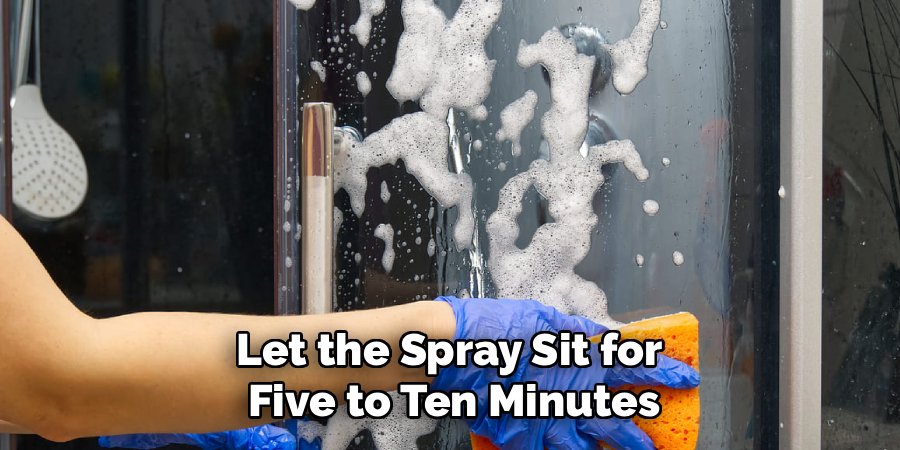
For heavy soap scum, sprinkle baking soda over the vinegar spray while it’s still wet — it’ll fizz and lift the buildup. I once had a client with a glass door so filmed over you couldn’t see through it, and a vinegar soak plus a baking soda paste cleared years of scum in one afternoon without a single hard scrub.
Scrub With Your Long-Handled Brush
Now reach in with your extendable scrub brush. Work the walls in overlapping strokes, following the same top-to-bottom path, and let the bristles ride over the loosened grime.
The long handle is what keeps you dry. You get leverage and reach without stepping onto the wet tile, so your feet stay planted on the bathroom floor the whole time.
Reach the Floor With a Flat Mop
For the shower pan and floor tile, swap to your microfiber flat mop. The swivel head glides into corners and along the base of the walls, and the long handle means you never crouch or kneel in the wet zone.
Push the mop in figure-eight passes to cover the whole floor. If your shower has textured, non-slip tile that traps grime in the grooves, let the solution dwell a little longer and go over it twice.
Rinse From a Distance and Squeegee Dry
Rinse everything down using your handheld shower wand aimed from the doorway, or refill your pump sprayer with clean water and mist the walls until the suds are gone. Keep the water pressure low so it doesn’t bounce back at you.
Finish with your extendable squeegee, pulling top to bottom on the glass and walls to sheet the water toward the drain. A quick squeegee here is the difference between spotless glass and a fresh set of water spots drying in place.
Dry-Method vs. Wet-Method: What Actually Keeps You Dry
| Task | Dry-Reach Method (Recommended) | Traditional Wet Method |
| Applying cleaner | Pump sprayer from the threshold | Wiping by hand inside the stall |
| Scrubbing walls | Long-handled brush | Sponge, arm-deep in the shower |
| Cleaning the floor | Flat mop with swivel head | Kneeling on wet tile |
| Rinsing | Shower wand or sprayer from the door | Cupped hands or standing under spray |
| Drying | Extendable squeegee | Bending in with a towel |
| Your clothes afterward | Dry | Soaked knees and sleeves |
Common Mistakes to Avoid
- Stepping fully into the stall. The moment both feet are on wet tile, you’ve lost the dry advantage — and risked a slip. Stay at the edge.
- Skipping the dwell time. Rushing to scrub means muscling through buildup and leaning in. Let the product loosen the grime for you.
- Using short-handled tools. A regular sponge forces you to reach in. Invest in extendable brushes and a flat mop.
- Spraying at full blast when rinsing. High pressure bounces water straight back onto you. Keep it gentle and aimed low.
- Forgetting the squeegee. Air-drying leaves water spots and mineral film, so you’re back scrubbing sooner than you’d like.
- Cleaning barefoot or in socks. Overspray reaches the bathroom floor. Waterproof, grippy shoes keep you safe and dry.
Safety and Warnings
The biggest hazard here isn’t the cleaner — it’s the wet, slick surface. Wear grippy waterproof shoes and never lean your full weight into the stall, since one slip on freshly wet tile can put you on the floor hard.
On the product side, never mix cleaning agents. Vinegar and bleach create toxic chlorine gas, and bleach with ammonia does the same, so pick one cleaner and stick with it for the whole job. If you’re using anything stronger than vinegar and dish soap, run the bathroom fan or crack a window, because sprayed cleaner hangs in the air of a small, enclosed shower and you’ll be breathing it in.

Wear rubber gloves to protect your skin, and test any new or acidic cleaner on a hidden patch of tile or grout first. Natural stone like marble or travertine reacts badly to vinegar and other acids — it etches and dulls the surface — so check what your shower is made of before you spray. Keep a dry towel handy to wipe up any solution that drips onto the bathroom floor before it becomes a slip risk.
How to Keep Your Shower Clean Longer
- Squeegee after every shower. Thirty seconds of squeegeeing the glass and walls stops water spots and soap scum from ever setting in.
- Keep a daily spray in the shower. A quick mist of diluted vinegar or a store-bought daily cleaner after each use means you rarely need a deep clean.
- Run the fan for 15 minutes. Pulling the humidity out fast starves mildew and mold of the damp they need to grow.
- Wipe the door track weekly. That channel collects gunk and standing water — a quick pass with a cloth keeps it from turning grimy.
- Switch to a liquid body wash. Bar soap leaves far more scum-building residue than liquid, and cutting it makes a real difference over time.
- Deal with hard-water spots early. If you’re on hard water, minerals build fast. A weekly vinegar mist keeps them from cementing onto the glass.
Showers in humid climates or windowless bathrooms need more frequent attention — without airflow, moisture lingers and mildew shows up in the grout much faster.
Frequently Asked Questions
How do you clean a shower without stepping in it?
Work from the threshold using long-handled tools. Spray your cleaner with a pump sprayer or spray bottle, scrub the walls with an extendable brush, clean the floor with a flat mop, then rinse with a handheld wand and squeegee everything dry — all without putting both feet in the stall.
What is the best homemade cleaner for a walk-in shower?
A 50/50 mix of white vinegar and warm water with a squirt of dish soap handles most soap scum and grime. For stubborn buildup, add baking soda over the wet vinegar and let it fizz. Skip vinegar entirely if your shower is natural stone, since the acid will etch it.
How do you clean a shower floor without kneeling?
Use a microfiber flat mop with a swivel head — the same kind you’d use on hardwood or tile floors. The long handle and pivoting head let you reach every corner and scrub the pan while standing safely outside the wet zone.
How do I stop soap scum from building up in my shower?
Squeegee the glass and walls after every shower, keep a daily cleaning spray on hand, and switch from bar soap to liquid body wash. Running the exhaust fan to cut humidity also slows down the film that leads to scum and mildew.
Can you use a mop to clean shower walls?
Yes — a flat microfiber mop works beautifully on walls, not just floors. The flat head glides over tile and glass, and the long handle lets you reach the top of the walls without a stepstool or leaning into the stall.
How often should you deep clean a walk-in shower?
If you squeegee daily and use a quick spray after each shower, a deep clean every two to three weeks is plenty. Bathrooms with poor ventilation or hard water need it more often, closer to weekly, to stay ahead of mineral spots and mildew.
Final Thoughts
Standing at the edge with the right long-handled tools turns a soggy chore into a quick, tidy job you finish in dry clothes. Let your cleaner dwell, scrub and rinse from the threshold, and squeegee everything dry — your shower stays cleaner, and you stay comfortable.
