
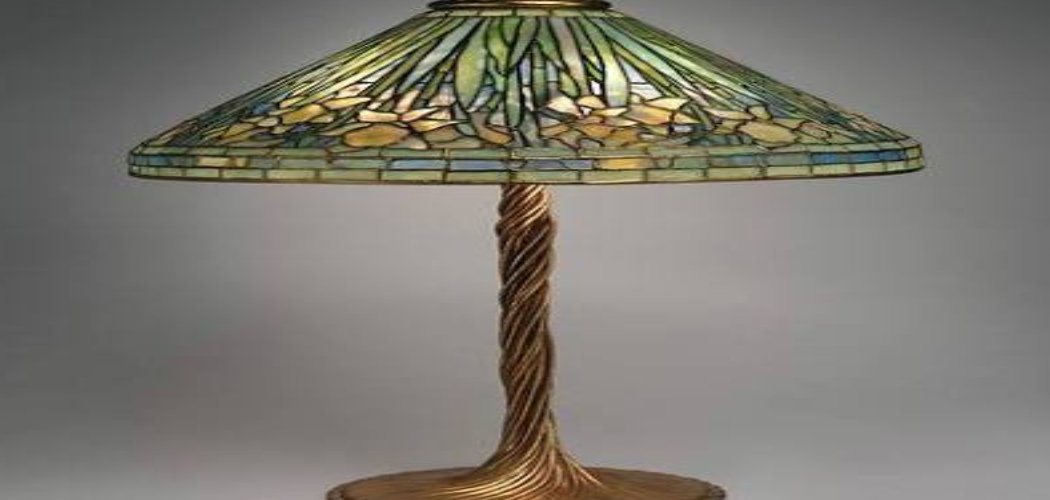
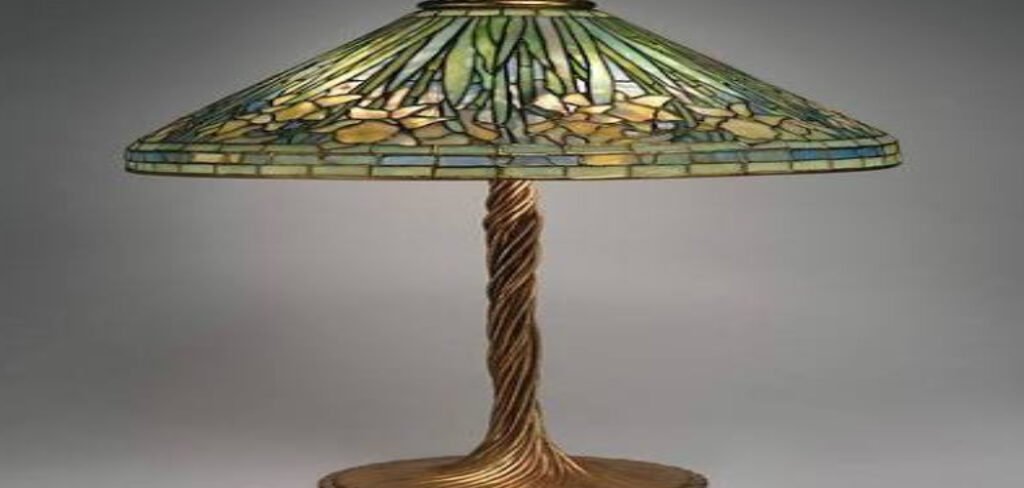
A woman once handed me her grandmother’s 1920s dragonfly lamp with a bottle of blue glass cleaner and asked why the metal lines between the glass had turned chalky and pale. She’d been spritzing it down every few weeks, and that ammonia had eaten straight through the dark patina on the lead came, leaving it dull and blotchy. That one habit is the fastest way to knock hundreds of dollars off an antique, and it’s completely avoidable.
Knowing how to clean a Tiffany lamp starts with understanding that you’re not cleaning one material — you’re cleaning colored glass, metal seams, and often a fragile finish all at once. Each part reacts differently, and the cleaner that shines up the glass can ruin the came holding it together. Get the approach right and your lamp keeps its glow and its value for decades.
What You’ll Need
Set everything out before you start so you’re not hunting for a dry cloth mid-job with wet hands.
- Several soft, lint-free microfiber cloths
- A soft, natural-bristle brush (an old makeup brush or soft paintbrush works)
- Mild dish soap (the plain, non-abrasive kind)
- Distilled water (tap water leaves mineral spots on colored glass)
- Two small bowls — one for soapy water, one for rinse water
- Cotton swabs for the tight corners
- A bulb blower or can of compressed air
- Clean cotton gloves
- A padded towel or blanket to work on
- Renaissance Wax or a quality microcrystalline wax (optional, for the metal)
Notice what’s missing: no glass cleaner, no vinegar, no all-purpose spray. Those come up in the safety section for good reason.
Unplug the Lamp and Let It Cool Completely
Pull the plug from the wall — don’t just switch it off. You’ll be working with damp cloths near sockets and wiring, and a switch alone isn’t a reliable barrier.
If the lamp has been on, give the bulb a good 15 minutes to cool. A hot bulb meeting a droplet of water can crack, and colored glass shades trap heat longer than you’d expect. While you wait, lay down your padded towel and set up your bowls.
Dust the Shade Dry Before Anything Touches It Wet
Always start dry. Colored glass and soldered seams collect fine grit, and wiping that around with a wet cloth turns it into sandpaper against the surface.
Use your soft brush to work dust out of the crevices where the glass meets the came. Follow with a bulb blower or a short burst of compressed air to clear the corners the brush can’t reach. Let the loose dust fall onto your towel, then shake it out before the wet stage.
Clean the Colored Glass Panels
Here’s where most damage happens, so go gently and work small.
- Put on your cotton gloves to keep fingerprints and skin oils off the glass.
- Add a couple of drops of mild dish soap to a bowl of distilled water — you want it barely sudsy, not a bubble bath.
- Dampen a microfiber cloth and wring it out until it’s just moist, never dripping.
- Wipe one glass panel at a time, supporting the shade from behind with your other hand.
- Rinse the cloth in your second bowl of plain distilled water and wipe the panel again to lift any soap film.
- Dry each panel right away with a fresh, dry cloth before moving to the next.
Work section by section so no moisture sits on the glass or seeps toward the came. Slow and methodical beats fast and streaky every time.
Treat the Lead Came Without Stripping the Patina
The metal lines between the glass — the came — carry a darkened finish called patina that’s part of the lamp’s character and value. Wipe it only with your barely-damp soapy cloth, then dry it immediately.
Skip any acidic or ammonia-based cleaner here. I’ve watched patina lift off in seconds under the wrong product, and once it’s gone, you can’t put it back without a specialist re-darkening the whole thing. If the came looks dull after cleaning, a thin coat of microcrystalline wax buffed with a soft cloth brings back a gentle sheen and adds a protective layer.
Wipe Down the Base and Fittings
Dampen a cloth lightly and wipe the metal base, keeping moisture well away from the socket and cord. A cotton swab handles the detailed spots around the fittings without soaking anything.
Dry the base fully. Bronze and patinated metal bases spot and can corrode if water sits on them, so don’t leave it to air-dry.
Safe vs. Unsafe Cleaners for a Tiffany Lamp
Clients used to ask me for the “magic product,” and the honest answer is that the safest option is also the cheapest. Here’s how the common choices stack up.
| Cleaner | Safe on glass? | Safe on lead came? | Verdict |
| Mild dish soap + distilled water | Yes | Yes | Best all-around choice |
| Ammonia glass cleaner (e.g., blue spray) | Yes | No — strips patina | Avoid entirely |
| White vinegar solution | Risky | No — acidic, corrodes came | Avoid |
| All-purpose spray | Varies | No — often too harsh | Avoid |
| Distilled water alone | Yes | Yes | Fine for light dust |
| Microcrystalline wax (came only) | N/A | Yes — protects finish | Good as a finishing step |
Common Mistakes to Avoid
These are the repeat offenders I saw damage otherwise beautiful lamps:
- Reaching for glass cleaner. Ammonia strips the came patina fast. Stick with mild soap and distilled water.
- Soaking the cloth. Excess water runs into seams and toward the wiring. Wring it until it’s barely moist.
- Skipping the dry dusting. Wiping grit around with a wet cloth scratches the glass.
- Using tap water. Minerals dry into cloudy spots on colored glass that defeat the whole cleaning.
- Air-drying the metal. Sitting water spots and corrodes bronze bases and patinated came.
- Scrubbing hard on a stubborn spot. Pressure cracks glass and loosens old solder joints. Patience wins.
Safety and Warnings
This job involves electricity, fragile antique glass, and lead — so treat it with respect.
Unplug it first, every time. Confirm the lamp is fully disconnected before any damp cloth goes near a socket or seam.
Lead came is exactly that — lead. The metal seams in genuine and reproduction Tiffany-style lamps often contain lead solder. Wear gloves while cleaning, keep the lamp away from food-prep areas, and wash your hands thoroughly when you’re done. Never let children handle the came.
Never mix cleaning products. Mild dish soap and distilled water are all you need. Combining cleaners — especially anything with ammonia or bleach — can release harmful fumes and won’t clean the lamp any better.
Ventilate if you wax. If you use microcrystalline wax on the came, open a window and work in a breathable space.
Test in a hidden spot first. On any antique or unfamiliar finish, dab your cleaner on an inconspicuous section of came before doing the whole lamp. If the patina lifts even slightly, stop.
Support the glass as you work. Old solder joints weaken over time. Cradle the shade from behind so you’re not putting stress on a single panel.
Maintenance and Prevention Tips
A little routine care means you’ll almost never face a heavy cleaning session:
- Dust every two weeks with a soft brush. A quick dry pass stops dust from bonding into a sticky film, especially in rooms near a kitchen where cooking grease drifts and settles.
- Keep it out of direct sun. Prolonged sunlight can fade certain colored glass over the years and dry out old lead came. A spot away from a south-facing window protects the color.
- Wax the came once a year. A thin annual coat of microcrystalline wax shields the patina from moisture and handling, and it’s the step that keeps antique lamps looking rich instead of dull.
- Handle by the base, not the shade. Every touch on the glass leaves oils, and lifting by the shade stresses the seams.
- Do a light clean before humid summer months. Dust that’s built up over winter grabs moisture once the air turns damp and turns into stubborn grime. A late-spring wipe-down heads that off.
- Check the wiring during cleaning. While you’re up close, glance at the cord and socket for fraying. Antique lamps often have aging wiring that’s worth replacing before it becomes a hazard.
Frequently Asked Questions
Can you use Windex on a Tiffany lamp?
No — this is the mistake that damages the most lamps. Windex and similar glass cleaners contain ammonia, which strips the dark patina off the lead came and leaves it chalky and pale. Once that finish is gone, only a specialist can restore it. Use mild dish soap and distilled water instead.
How do you clean a genuine antique Tiffany lamp safely?
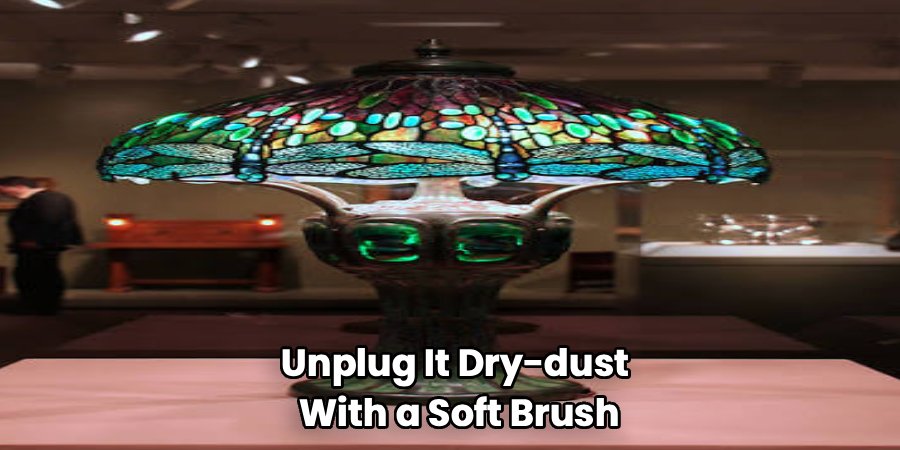
Unplug it, dry-dust with a soft brush, then wipe the glass panels one at a time with a barely-damp cloth of mild soap and distilled water. Dry each section immediately and keep moisture away from the came and wiring. Always test any product on a hidden spot first, and cradle the shade to protect fragile old solder joints.
What is the best cleaner for stained glass lamps?
Plain mild dish soap diluted in distilled water is the safest and most effective option. It lifts dust and grime from the colored glass without touching the patina on the metal came. Skip vinegar, ammonia, and all-purpose sprays — they’re either acidic or too harsh for the seams.
How often should you clean a Tiffany lamp?
Dust it lightly every two weeks and do a full wet clean two or three times a year. Lamps in rooms near a kitchen need more frequent attention because cooking grease drifts and settles on the glass. Regular dusting keeps you from ever needing an aggressive deep clean.
Why has the metal on my stained glass lamp turned white or dull?
That chalky look usually means an ammonia-based cleaner has stripped the patina from the lead came. It can also come from moisture sitting on the metal and starting to corrode it. Stop using any glass cleaner, dry the came fully after cleaning, and consider a thin coat of microcrystalline wax to protect what patina remains.
Is it safe to get a Tiffany lamp wet?
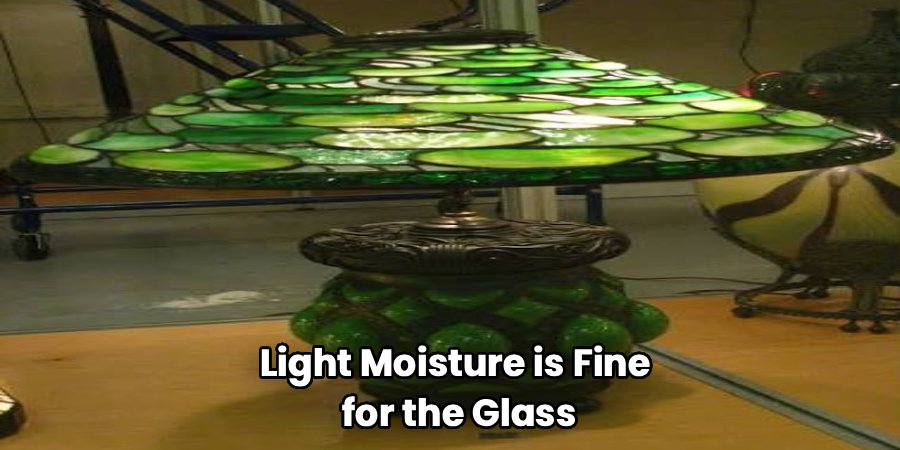
Light moisture is fine for the glass, but never soak the lamp. Use a well-wrung cloth, dry each section right away, and keep water away from the socket, cord, and the seams where it can seep in. Standing water spots the glass and corrodes the metal.
The Bottom Line
Skip the glass cleaner, keep your cloth barely damp, and dry every section the moment you finish it — that protects both the color and the came. Treat the patina as part of the lamp’s value, not dirt to scrub away, and your lamp will keep glowing for another generation.
