
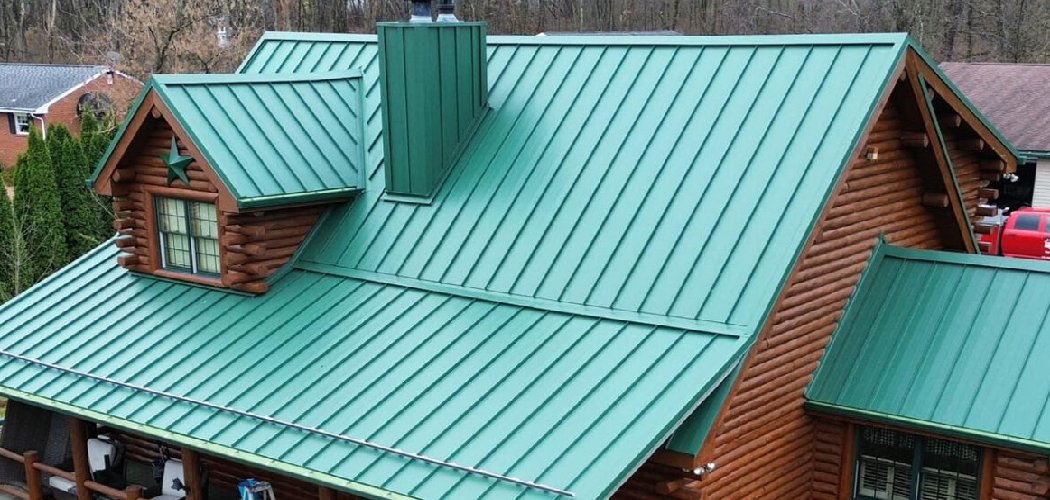
A neighbor of mine grabbed a wire brush on an extension pole and scoured the dirt off his standing-seam roof in one afternoon. He was thrilled until the next hard rain, when rust bloomed in every scratch line he’d carved through the factory coating. That paint finish is the only thing standing between your metal roof and corrosion, and abrasives destroy it fast.
The good news is you don’t need to climb a thing. Learning how to clean metal roof from the ground is mostly about the right sprayer, a gentle detergent, and letting the chemistry do the work. I spent 12 years cleaning roofs and gutters, and for single-story metal, I’d often skip the ladder entirely.
What You’ll Need
Set everything out first so you’re not hunting for a nozzle mid-rinse.
- Garden hose with an adjustable spray nozzle, or a pressure washer with a wide fan tip
- A hose-end soap applicator or a pump sprayer with an extension wand
- Telescoping extension pole (many reach 20–30 feet)
- Soft-bristle car-wash brush that threads onto the pole
- Mild dish soap or a cleaner labeled safe for painted metal
- White vinegar for hard-water spots and light stains
- Oxygen bleach (not chlorine) for organic streaks and mildew
- Two buckets, one for solution and one for rinse water
- Rubber gloves and safety goggles
- Water to pre-wet plants and shrubs below
- Plastic sheeting or a tarp for delicate flower beds
Rinse the Loose Dirt Before You Touch Anything
Start with plain water from your hose or a low-pressure washer setting. Work from one end of the roof to the other, spraying at a downward angle so water and grit run off the eaves instead of driving up under the panels.
This first rinse knocks off pollen, dust, and cobwebs so your detergent isn’t fighting through a layer of grime. On a hot day, do this early or late. Water dries too fast at noon and leaves you chasing streaks.
Mix a Metal-Safe Cleaning Solution
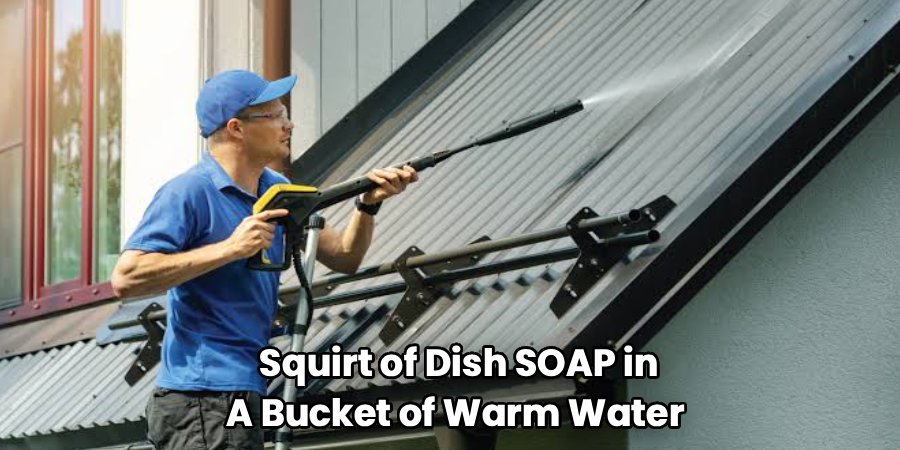
For general dirt, a squirt of dish soap in a bucket of warm water is all you need. Metal roof coatings are tougher than shingle surfaces, but harsh solvents and acidic cleaners can still dull or discolor the finish, so keep it simple.
For mildew, algae, or those dark organic streaks on shaded slopes, mix oxygen bleach with water per the label. It lifts organic growth without the plant-killing punch of chlorine bleach. For chalky hard-water spots, a 50/50 vinegar-and-water mix cuts them without scratching.
A quick note from the field
Clients used to ask me why their brand-new metal roof looked faintly chalky after a couple of summers. That’s the coating oxidizing, a normal surface reaction, not dirt. A gentle wash brings back most of the shine, but scrubbing hard just spreads the chalk around and can burnish the paint unevenly. Light pressure wins here every time.
Apply the Solution From the Ground Up
Load your solution into a hose-end applicator or pump sprayer, then coat the roof working from the bottom edge upward. Spraying upward keeps the cleaner from streaking dry panels below where you’ve reached. Get the surface wet and let it sit.
Give it 10 to 15 minutes of dwell time so the detergent can break down the grime. Don’t let it dry on the metal, especially in sun. If it starts drying, mist it again to keep it working.
Agitate Stubborn Spots With a Soft Brush on a Pole
For the panels you can reach, thread a soft-bristle brush onto your extension pole and work in the same direction as the panel ridges, using long, light strokes. You’re loosening dirt, not sanding it off. Bristles only, never anything metal or stiff.
Keep the brush wet as you go. A dry brush drags grit across the finish and leaves fine scratches you’ll only notice once the sun hits them.
Rinse Thoroughly From Top to Bottom
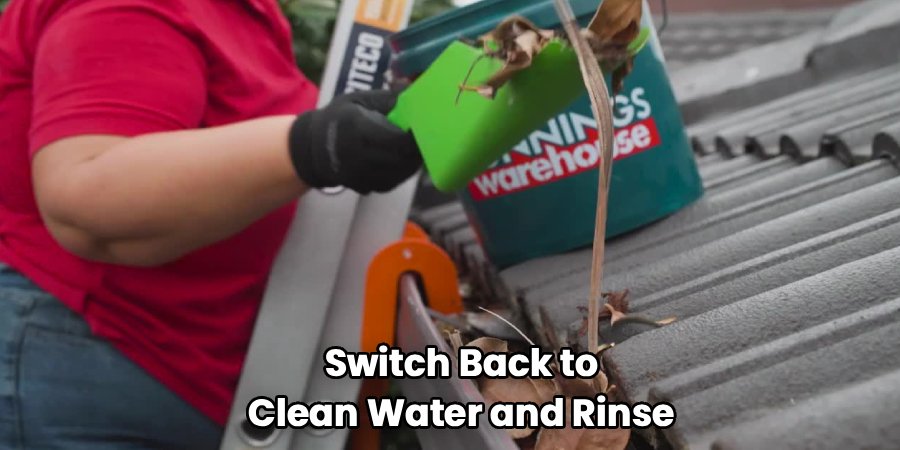
Switch back to clean water and rinse from the highest point you can reach down toward the eaves. Gravity carries the loosened dirt and soap right off the edge. Take your time so you don’t leave detergent behind, which dries into its own set of streaks.
If you’re using a pressure washer, keep it under 1,500 PSI with a wide tip and stay several feet back. Honestly, for most jobs a good hose nozzle does everything you need without any risk of forcing water under the seams.
Soft-Wash vs Pressure-Wash From the Ground
| Factor | Soft-Wash (Hose + Detergent) | Pressure-Wash (High PSI) |
| Coating scratch risk | Very low | Moderate to high |
| Water forced under seams | Minimal | Real risk at close range |
| Removes organic streaks | Yes, with oxygen bleach | Yes, but can gouge |
| Equipment cost | Low | Higher |
| Best for | Most single-story metal roofs | Heavy grime, experienced users |
| Voids some coating warranties | No | Sometimes, check yours |
The short version: soft-washing from the ground handles the vast majority of metal roofs safely. Reach for pressure only when grime is truly baked on, and even then, keep it wide and back off.
Common Mistakes to Avoid
I’ve been called out to fix most of these firsthand.
- Using abrasive pads or wire brushes. They scratch straight through the coating and invite rust. Soft bristles only.
- Spraying pressure water straight up under the panels. This drives moisture beneath the seams where it sits and corrodes.
- Reaching too far off a ladder. If you can’t clean it from the ground, that section is a pro job, not a lean-and-stretch job.
- Letting solution dry on the surface. Dried detergent and cleaner streak worse than the dirt you started with.
- Grabbing chlorine bleach for streaks. It kills your landscaping and can react with metal fasteners over time. Oxygen bleach is the safer pick.
- Skipping the pre-rinse. Dry grit under your brush becomes sandpaper.
Safety and Warnings
Working from the ground removes the biggest hazard, the fall, but a few risks remain.
Never mix bleach with ammonia or any ammonia-based cleaner. The combination releases toxic chloramine gas. Stick to one cleaner at a time and rinse fully between products if you switch.
Wear your PPE. Goggles and rubber gloves matter more than you’d think when you’re spraying overhead. Cleaner and rinse water rain right back down on you, and you don’t want it in your eyes.
Mind the overhead lines and wet ground. Extension poles conduct electricity, so keep them well clear of any power lines running to the house. Water pooling underfoot plus a pressure washer is a slip risk, so wear grippy shoes.
Protect your landscaping from runoff. Soak plants and shrubs with plain water first and tarp the delicate ones. Even mild detergent runoff can stress foliage, and oxygen bleach, while gentler than chlorine, still isn’t plant food.
Test a hidden section first. Pick a low corner, apply your solution, wait, and rinse. Check that the finish looks unchanged before you do the whole roof. Older or repainted coatings sometimes react in ways you can’t predict.
Keep Your Metal Roof Cleaner for Longer
Metal already sheds dirt better than most roofing, so a little upkeep goes a long way.
- Rinse the roof with plain water once or twice a year, especially after pollen season or a dusty stretch.
- Keep gutters and valleys clear so water and debris drain instead of collecting.
- Trim overhanging branches to cut down on leaf litter and the shade that breeds algae.
- Knock down early streaks with a quick oxygen-bleach rinse before they set in.
- Check the sealant around fasteners and flashing each year and touch up as needed.
Stay on top of these and a full cleaning might only come around every few years. A metal roof that gets an occasional rinse rarely needs the deep treatment.
Frequently Asked Questions
How often should you clean a metal roof?
For most homes, once or twice a year is plenty, and often a plain-water rinse is all it takes. If you’re near trees, farmland, or a coast with salt air, lean toward more frequent cleaning. Let the roof guide you, and act when you see streaks or buildup starting.
Can you pressure wash a metal roof?
You can, but carefully. Keep it under 1,500 PSI, use a wide fan tip, stay several feet back, and never aim upward under the panels. For most roofs a garden hose does the job with zero risk of forcing water under the seams or scratching the finish.
What is the best cleaner for a metal roof?
For everyday dirt, mild dish soap and water is hard to beat. Use oxygen bleach for mildew and organic streaks, and a vinegar-water mix for hard-water spots. Skip harsh solvents, acidic cleaners, and abrasive powders, which can dull or damage the coating.
Will cleaning damage the paint or coating on a metal roof?
Not if you’re gentle. Soft brushes, mild cleaners, and low pressure leave the finish intact. Damage comes from wire brushes, abrasive pads, and high-pressure water blasted too close, all of which cut into the protective layer and open the door to rust.
Can you clean a metal roof without getting on it?
For single-story homes, usually yes. A telescoping pole with a soft brush plus a hose-end applicator or pressure washer lets you cover most panels from solid ground. Tall or steep roofs, or spots you simply can’t reach safely, are worth handing to a professional.
Why does my metal roof have chalky white residue?
That chalkiness is the coating oxidizing over time, a normal reaction to sun exposure rather than dirt. A gentle wash restores much of the shine. If it’s heavy and persistent, the finish may be aging and could eventually need recoating.
Final Thoughts
Keep it low-pressure, keep your brush soft, and let mild cleaners do the heavy lifting from where your feet are planted. Protect the plants below, rinse every trace of soap away, and your coating will stay rust-free for years. Do a quick rinse each season and you’ll rarely face a big cleaning job at all.
