

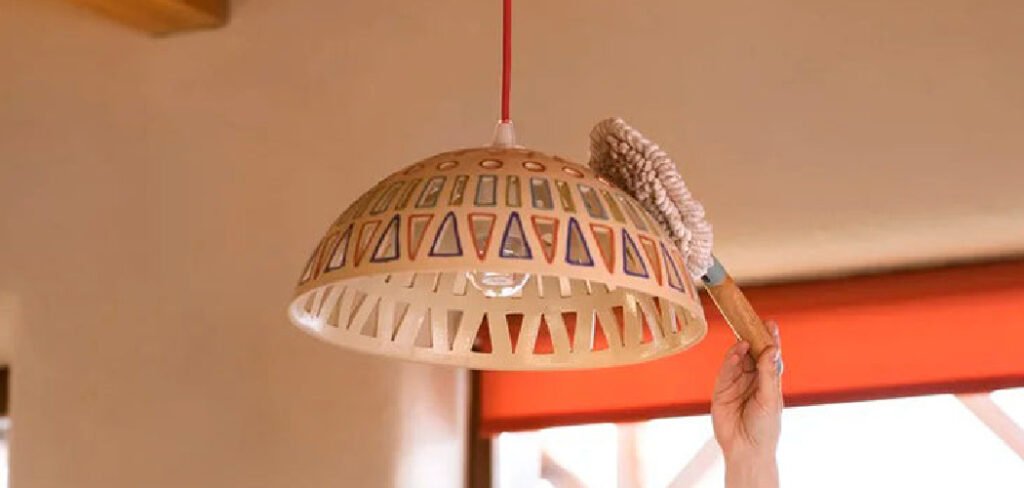
A client once soaked her woven pendant shade in a sink of warm, soapy water, figuring it’d come out fresh like a dinner plate. It came out sagging, warped, and smelling faintly of wet basement — the fibers had swelled, loosened at the weave, and never fully tightened back up. That one mistake is the fastest way to ruin an otherwise sturdy fixture, and it happens because people forget rattan is a natural plant fiber that hates sitting in water.
Learning how to clean a rattan light fixture comes down to one rule: go light on moisture and heavy on patience. You’re clearing trapped dust from a dry, porous material, not scrubbing a bathroom tile. Get the balance right and the weave stays tight, pale, and dust-free for years.
What You’ll Need
Lay everything out first, because you’ll want both hands free once you’re up on a step stool.
- A vacuum with a soft brush attachment
- A soft, dry paintbrush or clean makeup brush for the tight weave
- A can of compressed air (optional, great for detailed lattice)
- Two microfiber cloths — one damp, one dry
- Mild dish soap
- A small bowl of lukewarm water
- A soft-bristled toothbrush for stubborn spots
- Cotton swabs for crevices
- A hairdryer with a cool setting, or a fan
- A stable step stool or ladder
- Clean, dry hands (skip the lotion — it transfers onto pale fibers)
Notice there’s no soaking bucket and no spray bottle here. Rattan and standing water don’t mix, and you’ll see why in the safety section.
Turn Off the Power and Let the Bulbs Cool

Flip the wall switch off, then cut power at the breaker if you’ll be working close to the socket. Damp cloths near a live fixture aren’t worth the risk, even briefly.
Give warm bulbs a solid 10 to 15 minutes to cool. Rattan traps heat, and a hot bulb meeting a damp cloth is both a burn risk and a crack risk. While you wait, set your step stool on level ground and put your bowls and cloths within easy reach.
Dry-Dust the Weave Before Anything Gets Damp
Rattan collects dust deep in the grooves of the weave, and that dust turns to grime the second it meets water. So always start bone dry.
Run your vacuum’s soft brush attachment gently across the whole fixture, letting the suction pull dust out of the crevices rather than pressing hard. Follow up with a dry paintbrush to flick loose the bits the vacuum misses in the tight corners. For heavily detailed lattice work, a short burst of compressed air clears the spots a brush can’t reach. Take your time here — thorough dry-dusting does 80% of the job.
Spot-Clean Grime With a Barely-Damp Cloth
Once the loose dust is gone, deal with any sticky film or discolored patches. This is where cooking grease and hand oils tend to build up, especially on kitchen and dining-room fixtures.
- Add one drop of mild dish soap to your bowl of lukewarm water and swirl it — you want faintly soapy water, not suds.
- Dip a microfiber cloth, then wring it hard until it’s barely moist and not dripping.
- Wipe the fibers gently, following the direction of the weave rather than against it.
- For a stubborn spot, dip a soft toothbrush in the same water, wring the bristles on a towel, and work the area with light circular strokes.
- Use cotton swabs for tight joints and where the rattan meets the metal frame.
- Go back over everything with your second dry cloth to lift any leftover moisture right away.
Work one small section at a time so no part of the fixture stays wet for long. The goal is to touch the grime, not saturate the fiber.
Dry the Fixture Completely Before Restoring Power

This step matters more than the cleaning itself. Damp rattan left to air-dry slowly can develop mildew inside the weave, and you won’t smell it until it’s a problem.
Set a hairdryer to cool — never hot, which can scorch and brittle the fibers — and move it steadily over the fixture until the surface feels dry to the touch. A fan aimed at the fixture for an hour does the same job hands-free. Leave the power off until you’re certain every groove is dry, then switch it back on.
Rattan Cleaning: What to Use vs. What to Avoid
Clients used to ask me for the “one product” that would make rattan look new, and honestly, the winning approach uses almost no product at all. Here’s how the common choices compare.
| Method / Product | Safe on rattan? | Verdict |
| Dry vacuuming with soft brush | Yes | Best first step, every time |
| Barely-damp cloth + drop of dish soap | Yes | Ideal for grime and spots |
| Soaking or submerging in water | No | Warps and loosens the weave |
| Spray bottle of cleaner directly on fiber | No | Over-wets and drips into the socket |
| Vinegar solution (light, well-wrung) | Use sparingly | Okay for mildew spots, dry fast after |
| Bleach or harsh chemical spray | No | Discolors and dries out natural fiber |
| Furniture oil or wax | Rarely | Attracts dust and darkens pale rattan |
| Hairdryer on cool setting | Yes | Great for thorough drying |
Common Mistakes to Avoid
These are the repeat offenders I saw turn a quick clean into a repair job:
- Submerging the fixture. Soaking swells the fibers and permanently loosens the weave. Keep water on a wrung-out cloth only.
- Skipping the dry-dust step. Wiping dusty rattan with a damp cloth just smears grime deeper into the grooves.
- Using a hot hairdryer. High heat scorches and embrittles natural fiber. Cool air only.
- Scrubbing against the weave. Aggressive strokes fray the strands. Follow the weave’s direction with light pressure.
- Leaving it damp. Slow air-drying inside a woven shade invites mildew you won’t catch until it smells.
- Oiling it to “nourish” it. Furniture oils leave a tacky film that grabs dust and darkens the color unevenly.
Safety and Warnings
Rattan itself isn’t hazardous, but you’re combining water, electricity, and height — so a few precautions matter.
Cut the power first. Switch off at the wall and, ideally, at the breaker before any damp cloth goes near the fixture or socket. Electricity and moisture are the real risk here, not the rattan.
Keep water away from wiring and the socket. Never spray cleaner directly onto the fixture. Overspray runs down into the electrical parts, which is both a shock and a corrosion hazard.
Work from a stable base. Most rattan fixtures hang overhead, so use a proper step stool or ladder on level ground. Don’t stretch from a wobbly chair to reach that last panel.
Test any cleaner on a hidden spot. Before using a vinegar solution or anything beyond mild soap, dab it on an inconspicuous section and let it dry. Watch for discoloration before treating the whole fixture.
Skip mixing products. Mild dish soap and water are all you need. There’s no reason to combine cleaners, and mixing anything with bleach or ammonia risks harmful fumes for zero cleaning benefit.
Dry it fully before powering up. Confirm every groove is dry before restoring electricity, both to prevent mildew and to keep moisture away from live components.
Maintenance and Prevention Tips
Stay on top of the dust and you’ll almost never face a deep clean:
- Dust every two weeks with a soft brush or vacuum attachment. A quick dry pass stops dust from bonding into a greasy film, which matters most for fixtures hanging over a kitchen island where cooking vapor drifts up and settles.
- Keep it out of steamy rooms if you can. Rattan in a bathroom or humid kitchen absorbs moisture from the air and is far more prone to mildew. Good ventilation goes a long way.
- Run a dehumidifier in damp months. In humid summers, natural fiber swells and softens, so keeping room humidity down protects the weave’s shape.
- Rotate or reposition seasonally if it’s near a window. Steady direct sun bleaches rattan unevenly over time, leaving one side paler than the other.
- Do a light dry-dust before winter heating season. Forced-air heat kicks up a lot of dust, and clearing the weave beforehand keeps it from caking on.
- Handle by the frame, not the weave. Every touch on the fibers leaves oil and can loosen strands, so grip the metal or rigid frame when adjusting the fixture.
Frequently Asked Questions
Can you get a rattan light fixture wet?
Only lightly. A well-wrung, barely-damp cloth is fine for wiping grime, but never soak or submerge rattan. Standing water swells the fibers, loosens the weave, and can leave the fixture warped and saggy. Dry it fully after any damp cleaning to prevent mildew.
What’s the best way to clean dust out of a woven rattan shade?
Start with a vacuum and soft brush attachment to pull dust out of the grooves, then follow with a dry paintbrush or a burst of compressed air for the tight spots the vacuum misses. Dry-dusting handles most of the job, and it’s the step that keeps grime from turning sticky once any moisture is added.
How do you remove mildew from a rattan light fixture?
Lightly dampen a cloth with a diluted vinegar solution, wring it out hard, and wipe the affected area following the weave. Dry the spot immediately with a cool hairdryer or fan so no moisture lingers. Then fix the cause — improve ventilation or add a dehumidifier — or the mildew will simply come back.
How often should you clean a rattan light fixture?
Dry-dust it every two weeks and do a light damp spot-clean only when you see grime or a film building up. Fixtures over kitchens need more frequent dusting because cooking grease drifts upward and settles in the weave. Regular dry-dusting means you’ll rarely need to bring water near it at all.
Can I use a vacuum on a rattan light fixture?
Yes, and it’s the ideal first step. Use the soft brush attachment and let the suction do the work rather than pressing the nozzle into the weave. Hard pressure can fray or dent the fibers, so keep it gentle and glide across the surface.
Should I oil or wax rattan to keep it looking good?
Usually no. Oils and waxes leave a tacky surface that grabs dust and can darken pale rattan unevenly. Keeping the weave clean and dry does far more for its appearance and lifespan than any product.
The Bottom Line
Dry-dust first, keep your cloth barely damp, and never let the fibers stay wet — that’s the whole formula for rattan that stays pale and tight. Treat water as the enemy rather than the tool, and your fixture will keep its clean, woven glow for years.
