

A customer once handed me a pressure washer wand and said, “Just blast it, it’ll be fine.” Ten minutes later he’d punched three holes through his screen mesh and torn a whole panel loose from the frame. That mesh looks tough, but it’s thin polyester or fiberglass thread — and it does not forgive a narrow, high-pressure jet held too close.

Learning how to clean a pool screen the right way is mostly about being gentle enough to protect the mesh while still lifting off the mildew, pollen, and dirt that cling to it. Screens sit in shade and humidity all day, which is a perfect breeding ground for the green and black gunk you’re staring at. Do it correctly and one afternoon buys you a bright, see-through enclosure for months.
What You’ll Need
- Soft-bristle brush on an extension pole
- Garden hose with an adjustable spray nozzle
- Pump sprayer or a spray bottle for solution
- Two buckets
- Dish soap or a mild all-purpose cleaner
- Oxygen bleach (sodium percarbonate) for mildew and organic stains
- White vinegar for light mildew and mineral spots
- Soft microfiber cloths or a large sponge
- A leaf blower (optional, for the dry pass)
- Rubber or nitrile gloves
- Safety goggles
- Closed-toe shoes with grip
- Drop cloths or plastic sheeting for nearby plants
- A sturdy step stool or ladder for high panels
Dry-Clear the Screen and Frame First
Before a single drop of water touches the mesh, knock off the loose stuff. Run your soft brush or a leaf blower across the panels to clear cobwebs, dead leaves, pollen dust, and the bugs that love to wedge into the corners. Wet debris smears into a paste and drags across the mesh when you scrub, so this dry pass saves you real work later.
Pay attention to the frame channels and screws too. Dirt collects in the aluminum tracks along the bottom, and that grime washes back onto clean mesh if you leave it. Sweep it out now.
Rinse From the Top Down
Hose the whole enclosure with a gentle, wide spray, starting at the top and working down. Keep the nozzle on a soft shower or fan pattern — never a needle jet. This first rinse floats away surface dust and wets the mesh so your cleaning solution spreads evenly instead of beading up and running off.
Wetting from the top means the runoff carries loosened dirt downward instead of streaking across sections you’ve already cleaned. Rinse the frame at the same time.
Mix and Apply Your Cleaning Solution
For everyday dirt and light grime, fill a bucket with warm water and a good squirt of dish soap. When mildew and algae are the real problem — and around a pool, they usually are — reach for oxygen bleach dissolved in warm water instead. It breaks down organic stains without the harsh fumes of chlorine bleach and won’t scorch the plants packed around most enclosures.
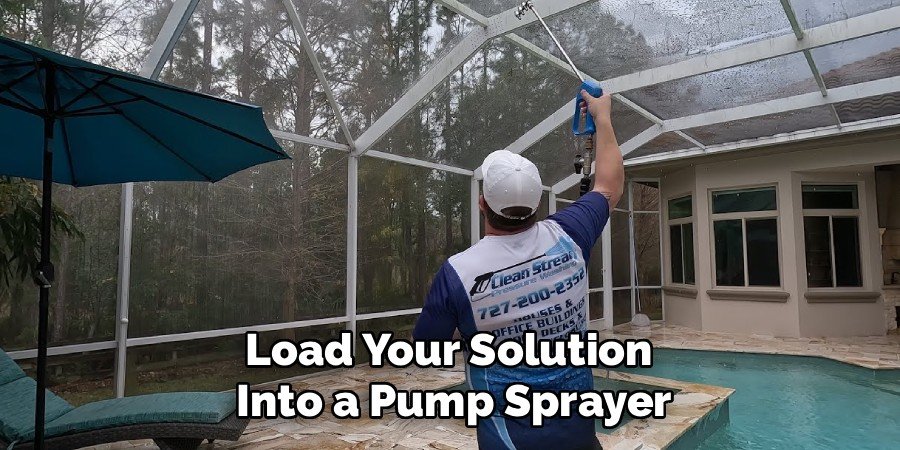
Load your solution into a pump sprayer and coat the mesh in sections, roughly one panel at a time. Let it dwell five to ten minutes so it can actually loosen the buildup.
Here’s a detail people miss: screen mesh holds solution differently depending on the day. On a hot, breezy afternoon the mesh dries out in minutes and your cleaner flashes into a faint chalky film that streaks when you rinse. Clients used to think their solution had gone bad — really they’d just let it bake in the sun. Work in shade or start early in the morning when the air is still cool and damp.
Scrub the Mesh With a Light Hand
Take your soft-bristle brush and work each panel in gentle, straight strokes — up and down, then side to side. Let the bristles and the solution do the lifting. Pushing hard stretches the mesh and can pop it out of the frame spline, so ease off the pressure.
For stubborn mildew spots, dab extra solution on a microfiber cloth and press it against both sides of the mesh, sandwiching the thread between two cloths. Corners and the lower panels near the ground always hold the most grime, so give them a second pass.
Clean the Aluminum Frame and Kick Plates
The frame gets its own quick treatment. Wipe the aluminum rails and any kick plates with your soapy water and a sponge, then hit rust freckles or hard-water spots with a little white vinegar on a cloth. Scrub the corner joints where dirt and spider webs build up thickest.
Don’t skip the door track. A gummed-up track makes the screen door drag and eventually rips the mesh at the handle.
Read More : How to Clean Cupboards After Pest Control
Rinse Clean and Dry
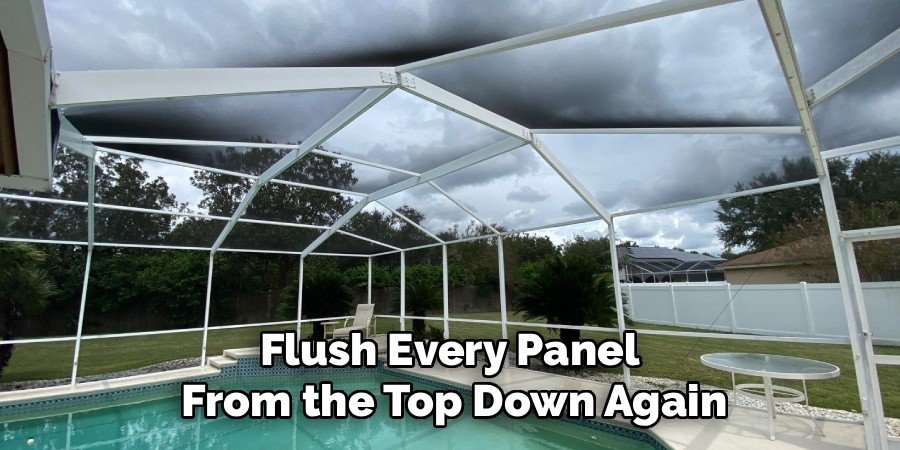
Flush every panel from the top down again with a gentle spray until the water runs clear and you see no soap or haze left behind. Leftover cleaner dries to a dull film, so rinse more than you think you need to.
Let the screen air-dry, then walk the perimeter and look through each panel toward the light. Any missed streaks or shaded patches show up instantly against a bright sky — catch them while everything’s still damp.
Cleaning Methods and Dos and Don’ts
| Do | Don’t |
| Use a soft-bristle brush and light pressure | Scrub hard or use a stiff wire brush |
| Rinse with a wide, gentle spray | Blast with a high-pressure jet up close |
| Choose oxygen bleach for mildew | Pour chlorine bleach over nearby plants |
| Work in shade or early morning | Let solution dry in full sun |
| Clean top to bottom | Start at the bottom and streak upward |
| Spot-treat the frame with vinegar | Ignore the tracks and door channel |
| Support panels while you scrub | Lean your full weight into the mesh |
Match your effort to how thin that mesh really is. Gentle and patient beats fast and forceful every single time.
Common Mistakes to Avoid
- Reaching straight for the pressure washer. A narrow jet held close punches holes and tears mesh off the spline. If you insist on using one, keep it under 1,500 PSI, use a wide 40-degree tip, and stand several feet back.
- Using chlorine bleach near landscaping. The runoff yellows grass and kills flowerbeds. Oxygen bleach clears mildew without the fallout.
- Skipping the dry-clear pass. Wet leaves and pollen smear into a paste that’s harder to remove than the original dirt.
- Scrubbing too hard. Heavy pressure stretches and pops the mesh loose from the frame. Let the cleaner do the work.
- Letting solution dry on the mesh. It flashes into a streaky film in the sun. Work in shade and rinse before it dries.
- Forgetting the frame and tracks. Dirty channels wash grime back onto clean mesh and jam the door.
- Cleaning bottom to top. Runoff streaks down over sections you already finished. Always work downward.
Safety and Warnings
Most of this job is low-risk, but a few things still need care. Wear gloves and goggles whenever you handle oxygen bleach or vinegar — even mild cleaners sting your eyes and dry out your skin over a long afternoon of overhead work.
Never mix cleaning products. Combining bleach with vinegar or ammonia releases a toxic gas. Pick one cleaner, rinse the mesh fully, and only switch products after everything is flushed clean.
Respect the ladder. Upper panels mean overhead reaching, wet aluminum, and slick footing. Wear closed-toe shoes with grip, keep the ladder on level ground, and don’t overreach — move it instead. Falling off a step stool causes more pool-enclosure injuries than any cleaner ever will.
Protect your landscaping. Even plant-friendly oxygen bleach is best kept off delicate flowerbeds in heavy concentration. Lay drop cloths along the base and rinse plants with plain water afterward if any solution reaches them.
How to Clean a Pool Screen Longer
- Rinse the panels every few weeks. A quick top-to-bottom hose-down knocks off pollen and dust before they set into stains.
- Blow off debris after storms. Clear leaves and twigs from the frame and mesh so they don’t rot and stain the threads.
- Trim back overhanging plants. Branches drop leaves and cast shade that feeds mildew. More sun and airflow keep the mesh drier.
- Wipe the door track monthly. A clean track keeps the screen door gliding and stops the mesh from tearing at the handle.
- Tackle mildew the moment you spot it. A small green patch wipes off in seconds; a neglected one turns into a full-enclosure scrub.
- Watch the pollen season. In spring, that yellow dust coats screens fast, so plan a rinse every week or two until it settles down.
- Check the spline yearly. The rubber cord holding the mesh in the frame dries out over time. Re-spline loose sections before they sag or tear.
Frequently Asked Questions
What is the best thing to clean a pool screen with?
For routine dirt, warm water with a squirt of dish soap and a soft-bristle brush does the job. For the mildew and algae that plague most enclosures, oxygen bleach dissolved in warm water lifts stains without harsh fumes or plant damage. Skip anything abrasive — the mesh is far more delicate than it looks.
Can you pressure wash a pool screen?
You can, but it’s the fastest way to ruin one. If you must, keep the pressure under 1,500 PSI, fit a wide 40-degree tip, and stand several feet back while moving in steady passes. A soft brush and a garden hose are far safer and only take a little more time.
How do you get mildew and mold off a pool screen?
Wet the mesh, spray on oxygen bleach mixed with warm water, and let it dwell five to ten minutes without drying out. Scrub gently with a soft-bristle brush, then rinse from the top down. Thick buildup in shaded corners usually needs a second application.
How often should you clean a pool screen enclosure?
Do a full cleaning once or twice a year, and rinse the panels every few weeks in between. During heavy pollen season in spring, bump that rinse up to weekly. Staying ahead of small messes means you rarely need hard scrubbing.
Will vinegar damage screen mesh?
No — diluted white vinegar is safe on both the mesh and the aluminum frame, and it works well on light mildew and hard-water spots. Just don’t mix it with bleach of any kind, and rinse it off when you’re done so it doesn’t leave a film.
Why does my pool screen turn green and black?
Those colors are algae and mildew feeding on organic dust in the shady, humid air around your pool. Poor airflow and overhanging plants make it worse. Regular rinses, more sunlight, and quick spot-treatment with oxygen bleach keep it from taking hold.
Final Word
A clean screen comes down to a light touch, the right cleaner for mildew, and rinsing top to bottom before anything dries. Keep up with a quick hose-down every few weeks, and you’ll trade the yearly deep scrub for an enclosure that stays clear with barely any effort.
