
The biggest mistake I saw on flood jobs wasn’t the water — it was the mop. A homeowner would come home to two inches of water from an overflowed toilet, grab a mop and bucket, and spend an hour pushing dirty water around while it soaked deeper into the baseboards and subfloor. By the time I arrived, the standing water was gone but the real damage had already started under the tile.
Speed and the right order of operations are everything here. Knowing how to clean a flooded bathroom the right way means pulling the water out fast, drying what you can’t see, and sanitizing before mold gets a foothold. Do it in the wrong order and you’ll be dealing with warped floors and a musty smell for months.
What You’ll Need
Get everything staged before you start. Once the water’s moving, you don’t want to stop and search for a bucket.
- Wet/dry shop vacuum (the single most useful tool here)
- Bucket and a squeegee
- Old towels and rags you don’t mind ruining
- A mop for the final pass only
- Rubber gloves and rubber boots
- A face mask (N95 if the water is dirty)
- Disinfectant cleaner or a bleach solution
- Dish soap
- Large fans and a dehumidifier
- Heavy-duty trash bags
- A screwdriver (for removing baseboards or vent covers if needed)
If you don’t own a shop vac, borrow or rent one. A mop and towels alone will not pull water out fast enough on anything more than a small spill.
First, Find and Stop the Water Source
Before you touch the water, figure out where it came from. An overflowing toilet, a burst supply line under the sink, and a backed-up drain all need different first moves. Shut off the water at the fixture valve — the small knob behind the toilet or under the sink — or cut the main supply if you can’t reach it.
This matters for another reason: the source tells you how dirty the water is. Clean supply-line water is a much smaller job than toilet overflow or sewage backup, which brings contamination you’ll need to sanitize aggressively.
Cut the Power Before You Wade In
Water and electricity near your feet is the one part of this job that can genuinely hurt you. If water has reached outlets, the base of a plug-in heater, or any wiring, shut off the electricity to the bathroom at the breaker box before you step in.
Don’t guess. If you’re unsure whether an outlet is live or wet, kill the whole circuit and use a flashlight. I’ve seen people reach for a wet hair dryer to “get it out of the way” — never do that.
Pull Out the Standing Water Fast
This is where the shop vac earns its keep. Set it to wet mode, empty the canister as it fills, and work from the far corner toward the door. On a full flood you’ll empty that canister several times, so keep a drain or outdoor spot nearby.
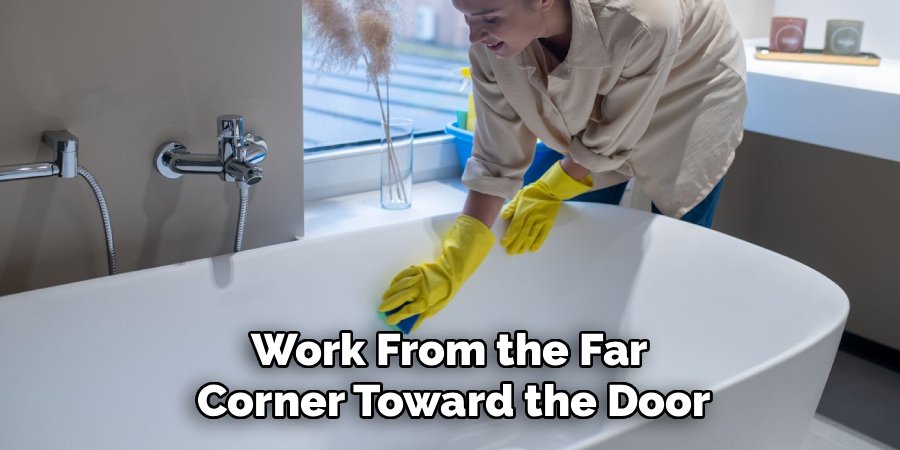
No shop vac? Use a bucket to scoop the bulk, then a squeegee to push the rest toward one low spot where you can vacuum or sponge it up. The goal is to get the visible water gone within the first hour, because every extra minute it sits, more soaks into grout, subfloor, and drywall.
Remove Everything Wet From the Room
Water wicks upward into anything soft, so clear the room out. Pull up bath mats, towels, and the toilet-tank cozy if you have one. Take out any wet cardboard, paper products, and toiletries.
Bag the ruined soft items separately, especially if the water was contaminated. Anything porous that sat in dirty water — a bath mat, a wooden stool — often can’t be salvaged and is safer to toss than to gamble on.
Dry the Hidden Spaces, Not Just the Floor
Here’s the step people skip, and it’s the one that decides whether you get mold. Wipe down every surface with towels, then set up fans blowing across the floor and a dehumidifier running in the doorway. Aim fans at corners, under the vanity, and along the baseboards.
Water hides where you can’t see it. Pull the baseboards off if water got behind them, and lift a vent cover to check the cavity. Running fans and a dehumidifier for 24 to 48 hours straight is normal — don’t shut them off the moment the surface feels dry.
A Field Note on Timing
Mold can start growing in as little as 24 to 48 hours on damp material. On summer jobs, when the air was already humid, I’d tell clients that window shrinks — the muggy air slows evaporation and gives mold a head start. If you flooded in July, treat drying as urgent, not overnight.
Clean and Sanitize Every Surface
Once things are dry to the touch, wash down the floor, lower walls, the base of the toilet, and the vanity with warm water and dish soap to lift grime. Then go over the same surfaces with a disinfectant to kill bacteria — this step is non-negotiable if the water came from a toilet or drain.
For a bleach solution, mix roughly one cup of bleach per gallon of water. Let it sit on the surface for several minutes before wiping, and rinse afterward. Pay extra attention to grout lines, since they trap contamination.
Do the Final Mop and Final Dry
Now the mop finally comes out. Give the whole floor one clean pass with fresh water to remove any cleaner residue, then dry it again with towels and keep the fans running.
Check the room a day later. If you catch any musty smell, that’s trapped moisture talking — get the fans back on that spot before it becomes mold.
Quick Step-by-Step Recap
Follow this order every time and you won’t miss the damage that hides:
- Stop the water at the source or main valve.
- Cut power to the bathroom if water reached outlets or wiring.
- Put on gloves, boots, and a mask.
- Vacuum or scoop out standing water within the first hour.
- Remove and bag all wet items and soft materials.
- Wipe surfaces, then run fans and a dehumidifier.
- Wash with soap, then sanitize with disinfectant.
- Do a final clean-water mop and dry.
- Recheck 24 hours later for hidden moisture or smell.
Dos and Don’ts at a Glance
| Do This | Not That |
| Shut off the water source first | Start mopping before the leak is stopped |
| Cut power if water reached outlets | Touch wet outlets or plug-in devices |
| Use a wet/dry shop vac for bulk water | Rely on a mop alone for a full flood |
| Remove wet baseboards and check cavities | Assume the floor is dry because the top feels dry |
| Sanitize after cleaning with soap | Skip disinfecting after toilet or drain water |
| Run fans and a dehumidifier for 24–48 hours | Shut off drying the moment surfaces feel dry |
| Wear gloves and a mask for dirty water | Handle contaminated water bare-handed |
| Bag and toss porous items soaked in sewage | Try to save a bath mat that sat in dirty water |
Common Mistakes to Avoid
- Mopping instead of vacuuming. A mop spreads dirty water and pushes it deeper. On anything bigger than a small spill, a shop vac pulls water out far faster and cleaner.
- Ignoring hidden moisture. The surface dries first; the subfloor, baseboard cavities, and vanity base stay wet for days. Skipping deep drying is the top cause of after-flood mold.
- Skipping the sanitizing step. If the water came from a toilet or drain, plain soap isn’t enough. You need a disinfectant to kill the bacteria left behind.
- Working with the power on. Water near outlets is a real shock risk. Cut the breaker before you wade in.
- Waiting too long to start. The mold clock starts within 24 to 48 hours. Same-day action makes the difference between a cleanup and a renovation.
- Saving items you shouldn’t. Porous materials soaked in contaminated water rarely come fully clean. Tossing a cheap bath mat beats risking bacteria and smell.
Safety and Warnings
Flood cleanup carries more real hazards than most cleaning jobs, so take these seriously.
- Electricity first. If water reached any outlet, switch, or wired device, shut off power at the breaker before stepping into the room. When in doubt, kill the whole circuit.
- Treat dirty water as contaminated. Toilet overflow and drain backups carry bacteria. Wear rubber gloves, boots, and an N95 mask, and wash your hands and skin thoroughly afterward.
- Never mix cleaning chemicals. Do not combine bleach with ammonia or any acidic cleaner — the reaction releases toxic gas. Use one product at a time and rinse between them.
- Ventilate while sanitizing. Open a window or run an exhaust fan when using bleach or strong disinfectants, since the fumes build up fast in a small bathroom.
- Know your limit. If a flood covers a large area, involves sewage, or has soaked into walls and cabinetry, call a professional water-damage service. Some jobs need commercial drying equipment you can’t rent.
Maintenance and Prevention
Cleaning up once is the hard part. Preventing the next flood is mostly small, cheap habits.
- Check supply lines twice a year. The braided hoses behind the toilet and under the sink are common failure points. Replace any that look corroded or bulging before they burst.
- Know where your shut-off valves are. Find the fixture valves and your main water shut-off now, while it’s calm. In a real flood, seconds matter and you won’t want to be hunting.
- Don’t overload the toilet. Most overflows come from flushing wipes, paper towels, or too much tissue. Keep a plunger within reach and clear slow drains early.
- Keep a floor drain clear. If your bathroom has a floor drain, keep it free of hair and debris so it can actually do its job.
- Store valuables off the floor. Keep towels, spare toilet paper, and anything porous in a cabinet or on a shelf, not sitting on the floor where a small leak ruins them.
- Act on small leaks fast. A slow drip under the vanity becomes a warped cabinet and a mold problem if you ignore it. Fix small leaks the week you notice them.
FAQ
How long does it take for a flooded bathroom to dry out?
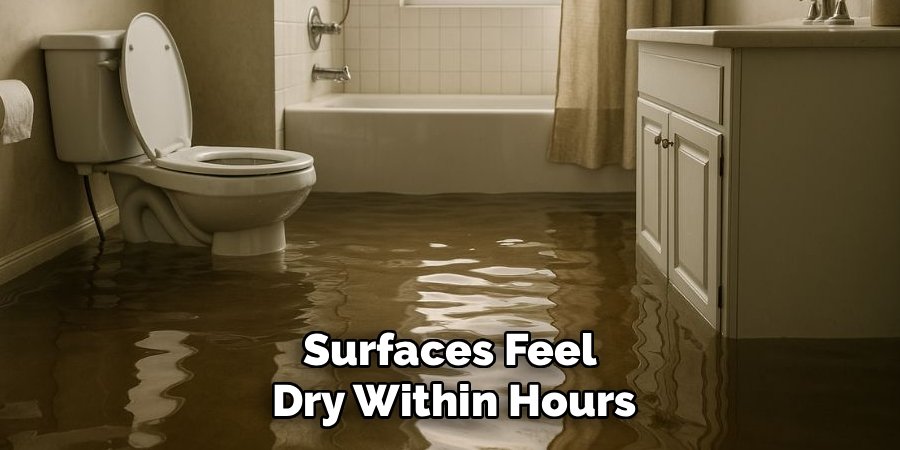
Surfaces feel dry within hours, but the hidden materials — subfloor, baseboards, and the vanity base — take 24 to 72 hours with fans and a dehumidifier running constantly. Humid weather stretches that out. Don’t rush it; shutting off drying too early is how mold gets started.
Can I clean up a flooded bathroom myself or do I need a professional?
Small, clean-water floods you can handle yourself with a shop vac, fans, and disinfectant. Call a professional if the water is from sewage, covers a large area, or has soaked into walls and cabinets, since those need commercial drying gear and often specialized cleanup.
How do I get rid of the musty smell after a bathroom flood?
A musty smell almost always means trapped moisture somewhere you haven’t dried. Get fans and a dehumidifier back on the area, check behind baseboards and under the vanity, and sanitize the surfaces again. The smell fades once the hidden moisture is truly gone — masking it with air freshener won’t fix the source.
Is water from a toilet overflow dangerous to clean up?
Water from the tank side is clean, but water from the bowl side can carry bacteria and should be treated as contaminated. Wear gloves, boots, and a mask, disinfect every surface it touched, and toss porous items that soaked in it. Wash yourself thoroughly when you’re done.
Should I turn off the electricity before cleaning a flooded bathroom?
Yes, if the water reached any outlet, switch, or plugged-in device. Shut off power to the bathroom at the breaker box before you step into standing water. When you can’t tell whether something is live and wet, cut the whole circuit and use a flashlight.
How do I prevent my bathroom from flooding again?
Inspect and replace worn supply-line hoses, learn where your shut-off valves are, and avoid flushing wipes or paper towels. Keep floor drains clear and fix small leaks the week you spot them. Most floods trace back to a burst hose or a clogged toilet, and both are easy to stay ahead of.
The Takeaway
Move fast, work in order, and dry the parts you can’t see — that’s the whole job. Stop the water, pull it out with a shop vac, sanitize, and keep the fans running longer than feels necessary, and you’ll walk away with a clean bathroom instead of a mold problem.
