
The fastest way to ruin a good stainless sink is to attack a rust spot with steel wool. I watched a client do exactly that — she scrubbed an orange streak near the drain until it vanished, then called me a week later because the “clean” patch had bloomed into a whole cluster of new rust spots. The steel wool had left tiny scratches and shed iron particles into them, and those particles rusted right there in her sink.
Here’s the thing most people miss: stainless steel doesn’t usually rust on its own. Learning how to clean rust stains from stainless steel sink surfaces is really about removing foreign rust and iron deposits without wrecking the protective layer underneath. Do it gently, work with the grain, and the stains lift off far easier than you’d expect.
What You’ll Need
Gather everything first. Once you’ve got a paste working on the metal, you don’t want to leave it sitting too long while you hunt for a cloth.
- Baking soda
- White vinegar
- A lemon (or bottled lemon juice) and table salt
- Cream of tartar (optional, but excellent for stubborn spots)
- A soft microfiber cloth or two
- A soft-bristled brush or an old toothbrush
- A non-scratch nylon sponge (never the green scouring side)
- Dish soap
- A spray bottle
- Rubber gloves
- A commercial stainless steel cleaner or a little mineral/olive oil for finishing
Notice what’s not on this list: steel wool, wire brushes, and abrasive powder cleansers. Those cause the exact problem you’re trying to fix.
Figure Out Which Way the Grain Runs
Before you touch a single stain, look closely at the surface. Stainless steel has a “grain” — fine directional lines running one way across the metal, like the grain in wood. You’ll usually see it running lengthwise along the bottom and up the walls.
Everything you do from here works with that grain, never across it or in circles. Scrubbing against the grain is what leaves visible scratches, and once you know to look for the lines, you’ll never scrub blindly again.
Start With the Gentlest Fix: Baking Soda Paste
Most light rust stains come off with baking soda alone, so start here before reaching for anything stronger. Mix baking soda with a few drops of water until you get a spreadable paste — think toothpaste consistency, not runny.
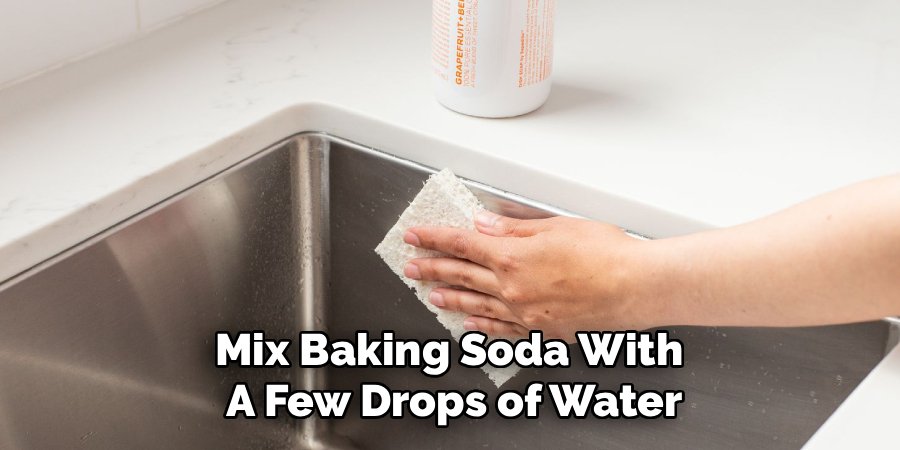
Spread it over the rust stain and let it sit for 5 to 10 minutes. Then take your soft cloth or nylon sponge, and rub gently along the grain. The mild abrasiveness of baking soda lifts surface rust without scratching. Rinse with warm water and dry with a clean cloth to check your progress.
Move Up to Lemon and Salt for Stubborn Spots
If a stain resists the baking soda, the acid-and-salt combination usually finishes the job. Sprinkle a layer of table salt directly over the rust stain, then squeeze fresh lemon juice over the salt until it’s damp.
Let it sit for 5 to 10 minutes — the citric acid breaks down the iron oxide while the salt gives just enough grit to help. Scrub gently with your soft brush along the grain, then rinse thoroughly. This one smells great and works surprisingly well on the orange rings that form under a rusting can or aerosol tin left on the sink.
Why I Keep Cream of Tartar Nearby
For the really dug-in stains, mix cream of tartar with a little lemon juice or hydrogen peroxide into a paste. Cream of tartar is a mild acid that’s gentle on the steel but tough on rust. Apply it, wait ten minutes, rub along the grain, and rinse. In twelve years of jobs, this was my quiet go-to when clients had older sinks with rust that had been building for months.
Tackle Rust Rings From Metal Objects
Rust rings from cans, cast-iron pans, or steel utensils are the most common culprit I saw in kitchens. They’re not the sink rusting — they’re iron transferred onto the sink.
For these, white vinegar works fast. Soak a cloth in vinegar, lay it flat over the ring, and leave it for a few minutes to loosen the deposit. Then sprinkle baking soda over the vinegar-dampened area — it’ll fizz — and rub gently along the grain. Rinse and dry.
Rinse, Dry, and Finish
This last step is the one people skip, and it matters more than the scrubbing. After any treatment, rinse the whole sink well so no acidic or salty residue lingers — leftover salt or vinegar sitting on steel can actually start new corrosion.
Dry the entire surface with a clean microfiber cloth. Then, if you want that showroom shine, put a few drops of mineral oil or a dedicated stainless cleaner on a cloth and buff along the grain. It fills the micro-texture, repels water, and makes the next cleanup easier.
Quick Step-by-Step Recap
Follow this order and you’ll go from gentlest to strongest without over-scrubbing:
- Identify the direction of the grain.
- Apply baking soda paste; wait 5–10 minutes; rub along the grain.
- If the stain remains, use lemon juice and salt; wait; scrub gently.
- For deep stains, switch to a cream of tartar paste.
- For rust rings, use vinegar then baking soda.
- Rinse thoroughly to remove all residue.
- Dry completely with a microfiber cloth.
- Buff with a drop of oil or stainless cleaner to finish.
Dos and Don’ts at a Glance
| Do This | Not That |
| Scrub along the grain | Scrub in circles or across the grain |
| Use baking soda, lemon, or cream of tartar | Use steel wool or wire brushes |
| Use a non-scratch nylon sponge | Use the green scouring pad |
| Start with the gentlest method first | Jump straight to harsh chemicals |
| Rinse off all acid and salt residue | Leave vinegar or salt sitting on the steel |
| Dry the surface completely | Air-dry and let water spots form |
| Remove wet metal cans and pans promptly | Leave rusting objects sitting in the basin |
Common Mistakes to Avoid
- Reaching for steel wool. This is the number one sink-killer. It scratches the finish and leaves iron particles behind that rust in place — exactly what happened to my client. Once the surface is scratched, it holds stains and rust far more easily.
- Scrubbing across the grain. Even a soft sponge leaves faint marks if you go the wrong direction. Always follow the lines in the metal.
- Using bleach on stainless. Chlorine bleach is one of the few things that genuinely damages stainless steel and can cause pitting and rust. Keep it away from the sink, and never leave bleach-soaked items sitting in the basin.
- Letting residue sit. Salt and acid left on the surface can start corrosion of their own. Always rinse fully.
- Leaving rusting objects in the sink. A wet can, a cast-iron skillet, or steel wool left in the basin overnight transfers rust straight onto the steel. Move them out when you’re done.
- Skipping the dry step. Standing water leaves mineral spots and, over time, can contribute to surface staining, especially with hard water.
Safety and Warnings
This is a low-hazard job — you’re mostly working with kitchen-cupboard ingredients — but a few rules protect both you and the sink.
- Test in an inconspicuous spot first. Before applying any paste or acid to a visible area, try it on a hidden corner near the back or under the rim to confirm it doesn’t dull the finish.
- Never mix cleaning chemicals. Do not combine bleach with vinegar, lemon juice, or ammonia — the reaction releases toxic chlorine or chloramine gas. Stick to one method at a time, and if you’ve used any bleach-based product, rinse thoroughly before introducing an acid.
- Skip abrasives entirely. Steel wool, wire brushes, and gritty powder cleansers scratch the protective layer and create new rust points. There’s no situation where they’re worth the risk on stainless.
- Wear gloves. Prolonged contact with acids like vinegar and lemon can irritate skin, especially if you have small cuts.
- Ventilate if using commercial cleaners. If you switch to a store-bought stainless or rust remover, open a window and follow the label exactly — some contain oxalic or phosphoric acid that needs airflow and careful handling.
Maintenance and Prevention
Getting the rust off once is easy. Keeping it away is about a few small habits that take seconds.
- Dry the sink after heavy use. A quick wipe with a cloth stops water spots and mineral buildup before they start. This one habit prevents most staining.
- Don’t let metal sit in the basin. Empty cans, cast-iron pans, steel wool pads, and bobby pins all transfer rust. Move them out as soon as you’re finished.
- Give it a weekly baking soda wipe. A light scrub along the grain once a week keeps the surface clean and stops stains from settling in.
- Buff with oil monthly. A drop of mineral oil buffed along the grain repels water and fingerprints, and it makes rust far less likely to grab hold.
- Watch your hard water. If you’ve got hard water, mineral deposits speed up staining. Wiping dry matters even more, and an occasional vinegar rinse (fully rinsed off after) keeps scale down.
- Rinse away salty and acidic foods. Splashes of tomato sauce, citrus, or salty brine left to dry can etch the surface over time. A quick rinse handles it.
Clients used to swear their sink “came rusty from the factory.” Almost never true — it was nearly always a rusting object left in the basin or hard water doing its slow work. Once they changed those two habits, the rust simply stopped coming back.
FAQ
Why does my stainless steel sink have rust spots if it’s stainless?
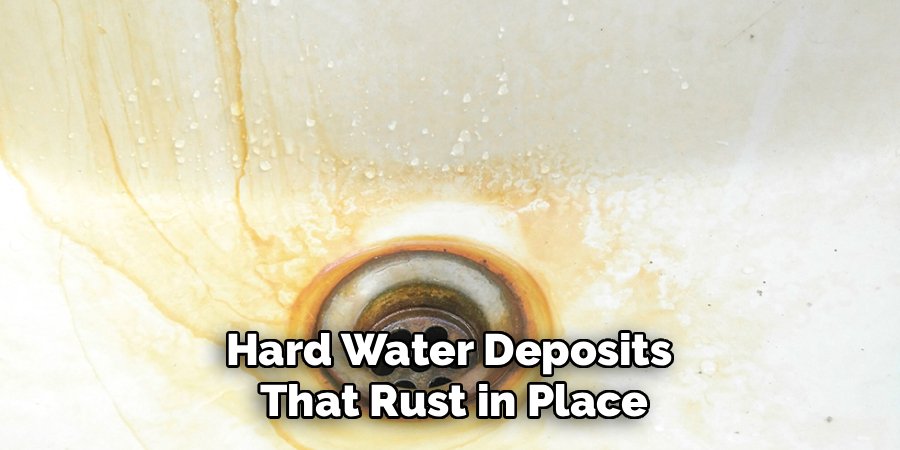
Stainless steel resists rust, but it’s not fully rustproof, and most sink rust isn’t the steel itself. It usually comes from iron particles left behind by cans, cast-iron pans, steel wool, or hard water deposits that rust in place. Scratches and harsh cleaners can also break down the protective layer and let surface rust form.
Does WD-40 remove rust from a stainless steel sink?
WD-40 can loosen light surface rust and is sometimes used as a quick fix, but I’d start with baking soda or lemon and salt first — they’re food-safe and leave no oily residue near where you prep food. If you do use WD-40, wash the area well with dish soap afterward so nothing greasy lingers.
Can I use vinegar to remove rust from my sink?
Yes. White vinegar’s mild acidity breaks down rust and iron deposits, especially the rings left by cans and pans. Soak the spot, scrub gently along the grain, then rinse thoroughly — never leave vinegar sitting on the steel, since acidic residue left too long can cause its own corrosion.
Will Bar Keepers Friend damage a stainless steel sink?
Used correctly, no — it’s a popular choice because its oxalic acid targets rust well. Make it into a paste, rub gently along the grain with a soft cloth, and rinse fully. Don’t scrub hard or use the abrasive powder dry, since aggressive rubbing can dull the finish over time.
How do I get rust rings off a stainless sink?
Rust rings from cans and pans are transferred iron, not the sink rusting. Lay a vinegar-soaked cloth over the ring for a few minutes, sprinkle baking soda over it, then rub gently along the grain and rinse. For stubborn rings, a cream of tartar paste does the trick.
How do I prevent rust stains from coming back?
Dry the sink after heavy use, never leave metal objects sitting wet in the basin, and give it a weekly baking soda wipe. A monthly buff with a drop of mineral oil repels water and helps rust slide off instead of settling in. If you have hard water, drying thoroughly matters even more.
The Takeaway
The rust comes off when you match the method to the stain and always work with the grain — gentle first, stronger only if you need it. Keep metal objects out of the basin and dry the sink after use, and you’ll rarely reach for these tricks again.
