
The furnace short-cycles for two weeks straight, the homeowner swears the filter is “practically new,” and when I pull it out, it’s a gray felt pancake so packed with dust the airflow can’t punch through. The kicker? They’d rinsed it a month earlier, shoved it back in soaking wet, and never noticed the media had gone soft and warped. That one habit ruins more washable filters than dust ever will.
A reusable furnace filter earns its keep only if you clean it right and dry it fully before it goes back in the return. Learning how to clean reusable furnace filter media the correct way takes about ten minutes of hands-on time plus drying, and it saves you from buying a new one every season. Get the routine down and one filter can last five years or more.
What You’ll Need
- A garden hose with a spray nozzle (or a handheld showerhead if you’re working at a utility sink)
- Mild dish soap — the plain, grease-cutting kind, nothing with bleach or citrus additives
- A soft-bristle brush or an old paint brush
- A large basin, laundry sink, or bathtub
- White vinegar (for the soak, optional but worth it)
- Clean microfiber or lint-free rags
- Rubber gloves
- A dust mask (N95 if you have one)
- A drop cloth or old towels for the floor
- A spot to air-dry the filter flat or upright — a drying rack, clothesline, or leaned against a wall outdoors
Skip the pressure washer. I know it’s tempting, but the force blows holes clean through the media on aluminum-mesh and electrostatic filters, and once the weave is torn, the filter stops catching the fine stuff.
Turn Off the Furnace Before You Touch Anything
Kill the power at the thermostat, then flip the furnace’s dedicated switch — usually a standard light switch on or near the unit. You don’t want the blower kicking on with an open filter slot and pulling raw dust straight into the system.
Pull the filter out slowly. Tilt it flat as it comes free so the loose surface dust doesn’t cascade onto the floor or back into the return. Take a second to note the airflow arrow printed on the frame; you’ll want that pointing the right way when it goes back.
Read the Filter Before You Wash It
Hold it up to a light. If you can’t see any glow coming through the media, it’s genuinely clogged and due for a wash. If it’s just lightly coated, a vacuum pass might be all it needs. And here’s the honest check: look at the frame and the mesh itself. A washable filter that’s frayed at the edges, has crushed pleats, or shows torn spots isn’t worth cleaning — it’s bypassing dirty air and needs replacing.
Knock Off the Loose Dust First
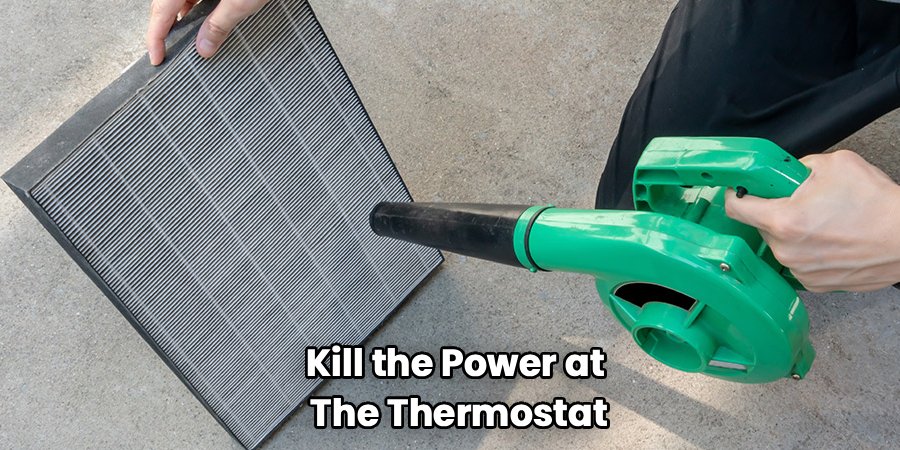
Take the filter outside or over a trash can and tap the frame against a hard edge to shake loose the heavy surface debris. Then run a vacuum with a brush attachment over both sides. Doing this dry step first keeps you from turning a light dusting into a mud paste the second water hits it.
Wear your mask for this part. The fine dust that comes off a season’s worth of filtering is exactly what you don’t want to breathe in a cloud.
Rinse With Low-Pressure Water
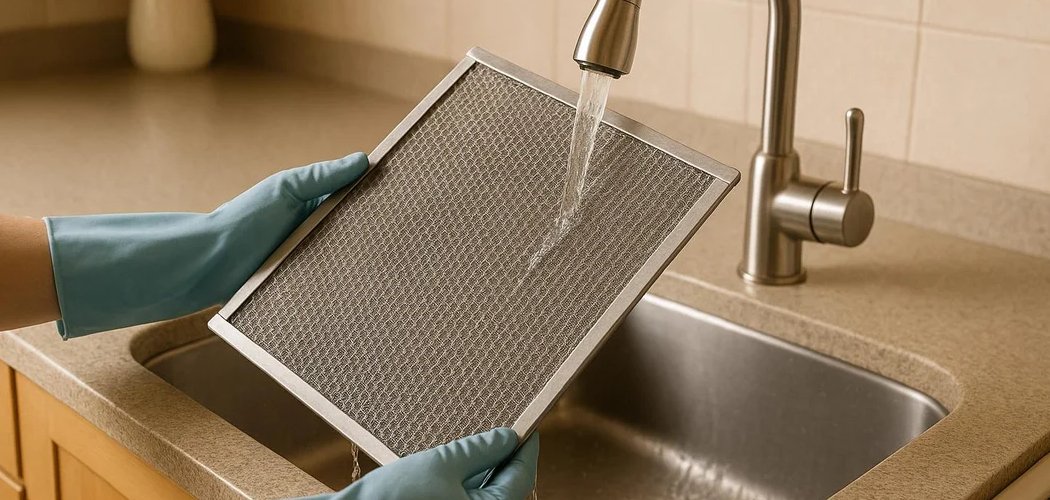
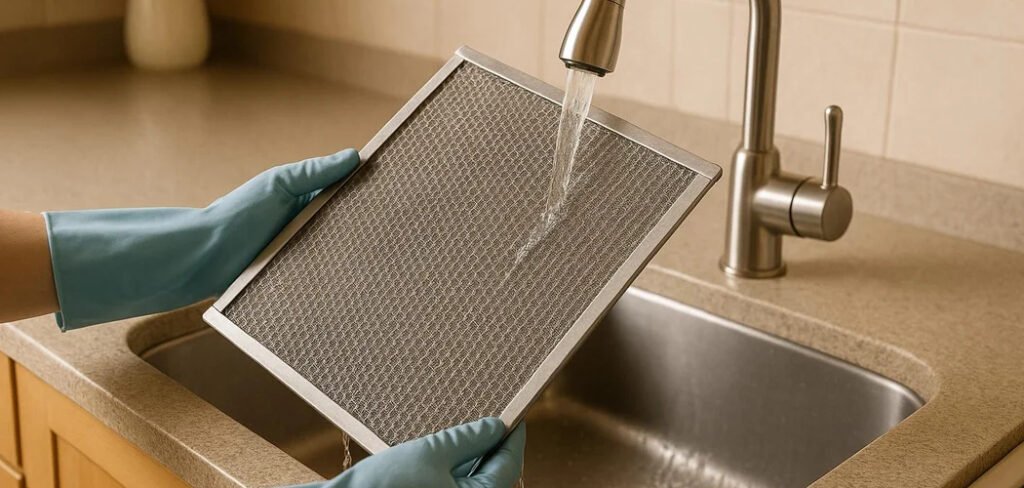
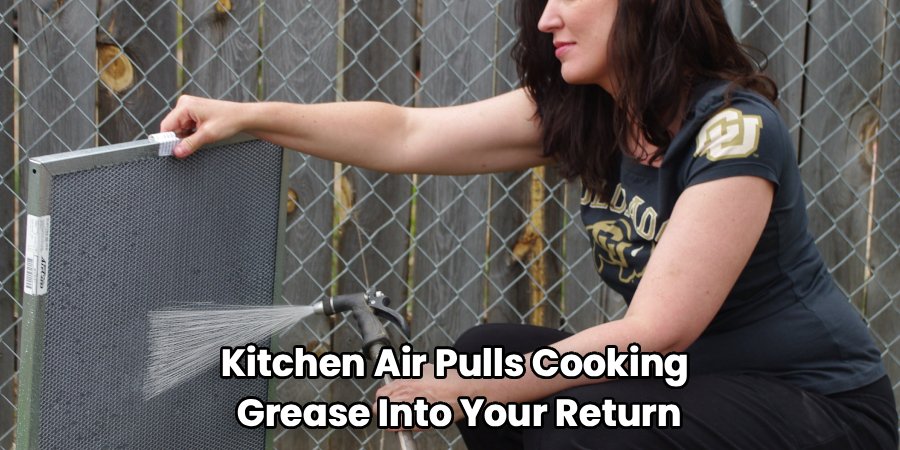
Set the filter in your basin or take it outside and rinse it with your hose on a gentle spray. Run the water opposite the airflow arrow — so you’re pushing the trapped dirt back out the way it came in, not driving it deeper into the media.
Start from the top and work down. Keep the pressure low and steady. You’ll see the runoff go from muddy gray to nearly clear, which is your signal the bulk of the grime is gone.
Wash Away the Greasy Film
Kitchen air pulls cooking grease into your return, and that oily film is what makes dust cling and stink. Plain water won’t cut it. Mix a few drops of mild dish soap into a basin of lukewarm water, or add a cup of white vinegar for a filter that’s picked up a musty smell.
Let the filter soak for 10 to 15 minutes. Then work both surfaces gently with your soft brush, going with the grain of the mesh or pleats. No scrubbing hard — you’re loosening film, not sanding a deck.
Rinse Clean and Shake Out the Water
Rinse the filter thoroughly under low-pressure water again until there’s no soap left. Any leftover residue attracts dust faster once the filter’s back in service, so keep rinsing until the water runs clear and slick-free.
Shake the filter firmly to fling out the standing water, then stand it on a corner to let gravity pull the rest out. Blot the frame edges with a rag.
Dry It Completely — This Is the Step People Skip
Air-dry the filter fully before it goes anywhere near the furnace. Stand it upright or lay it flat on a rack in a spot with good airflow. Depending on humidity, that’s anywhere from a few hours to overnight.
A wet filter is a magnet for two problems: it cakes with dust instantly, and trapped moisture in a dark return duct grows mold. I tell everyone the same thing — if you’re in a rush, keep a second clean filter on hand and rotate them. Never reinstall one that’s even slightly damp.
Dos and Don’ts
| Do This | Don’t Do This | Why It Matters |
| Vacuum loose dust before wetting | Hose down a caked, dry filter first | Dry dust plus water makes mud that clogs deeper |
| Rinse against the airflow arrow | Rinse the same direction air flows | Pushes trapped dirt out instead of driving it in |
| Use mild dish soap or vinegar | Use bleach, degreasers, or harsh chemicals | Strong cleaners break down electrostatic coatings |
| Dry the filter 100% before reinstalling | Slide a damp filter back in | Wet media cakes fast and breeds mold in the duct |
| Use low-pressure water | Blast it with a pressure washer | High pressure tears the mesh and ruins filtration |
| Replace a frayed or crushed filter | Keep washing a damaged one | Torn media lets unfiltered air bypass completely |
Common Mistakes to Avoid
Most washable-filter failures I saw came down to a handful of shortcuts:
- Reinstalling it wet. The big one. It cakes with dust within days and can seed mold in the ductwork.
- Skipping the dry vacuum step. Hitting a dusty filter straight with water turns the debris into paste that’s harder to rinse out.
- Rinsing the wrong direction. Spraying with the airflow drives dirt deeper into the media instead of flushing it free.
- Reaching for strong chemicals. Bleach and heavy degreasers strip the electrostatic charge that helps these filters grab fine particles.
- Ignoring the airflow arrow on reinstall. A filter installed backward doesn’t filter the way it was designed to, and airflow drops.
- Washing a filter that’s actually shot. If the mesh is torn or the frame is warped, no amount of cleaning brings it back.
Safety and Warnings
Nothing here is dangerous the way harsh chemicals are, but a few points protect both you and your equipment.
Cut the power first, every time. Don’t clean or reinstall with the furnace running. An open filter slot with the blower on pulls dust and debris into the system.
Never mix cleaning products. Mild dish soap OR a vinegar soak — not both mixed with anything else, and never bleach. You don’t need strong chemistry here, and harsh cleaners damage the filter’s coating and can leave fumes that circulate through your home once the system runs.
Protect the media from water damage. Reusable filters are built to be washed, but only under low-pressure water. High-pressure spray tears the weave, and once that happens the filter is done. Rinse gently and let gravity do the draining.
Dry it fully — this is a real hazard, not a suggestion. A damp filter in a dark, still return duct is prime mold territory. Mold in your HVAC system circulates spores through every room. If the filter isn’t bone dry, it doesn’t go back in.
Wear a mask and gloves. The dust knocked off a used filter isn’t something to breathe, and gloves keep the grime and soap off your skin during the soak.
How to Keep Your Filter Cleaner Longer
A little routine stretches the time between washes and keeps your airflow strong.
- Check it monthly, clean it every one to three months. Homes with pets, smokers, or heavy cooking need the shorter end; a quiet household can stretch it.
- Clean before peak seasons. Late summer before the furnace runs hard, and early spring before the blower switches to cooling — those two windows keep you ahead of the heaviest use.
- Keep a backup filter on hand. Rotating two lets you install a dry one immediately and dry the other on your own schedule. No temptation to rush.
- Vacuum between full washes. A quick dry vacuum pass mid-cycle knocks down surface dust and delays the next deep clean.
- Keep the surrounding area clean. Dust and vacuum near the return vent so the filter isn’t pulling in extra debris from a dirty floor.
- Change your habits at the stove. Run the range hood while cooking so less grease reaches the return — that oily film is what shortens a filter’s clean life fastest.
Frequently Asked Questions
How often should you clean a reusable furnace filter?
Check it every month and clean it every one to three months. Homes with pets, smokers, or a lot of cooking hit the shorter end of that range. If you hold the filter to a light and can’t see through it, it’s time regardless of the calendar.
Can you wash a furnace filter with water?
Yes — but only the ones labeled reusable or washable. Use low-pressure water and mild dish soap, rinse against the airflow arrow, and dry it completely before reinstalling. Never wash a disposable filter; wet cardboard and paper pleats fall apart and lose all filtering ability.
How long does a reusable furnace filter take to dry?
Anywhere from a few hours to overnight, depending on humidity and airflow. Stand it upright or lay it flat in a well-ventilated spot. Don’t rush it with a hair dryer or heat gun — that can warp the frame. It has to be fully dry before it goes back in.
What happens if you put a wet furnace filter back in?
Two things, both bad. The damp media cakes with dust almost immediately, choking your airflow, and the trapped moisture in the dark return duct can grow mold that circulates through your home. Always dry the filter 100% first.
Do reusable furnace filters actually work as well as disposable ones?
For catching larger dust and debris, yes, and they save money over time. But most washable filters have a lower MICROkit efficiency rating than high-end disposables, so if someone in the home has serious allergies, check the filter’s rating before relying on it.
Why is my furnace filter dirty so quickly?
Usually pets, cooking grease, nearby construction, or a dusty return area. If it clogs within days of cleaning, look at what’s feeding the return — run your range hood, keep the vent area clean, and check whether the filter itself is torn and letting debris pack in.
Final Thoughts
A washable filter is only a bargain if you treat the drying step as seriously as the washing. Vacuum it dry, rinse it gentle and backward, let it dry all the way through, and check the airflow arrow on the way back in. Do that and one filter carries you for years instead of weeks.
