
You spot a smudge near the handle, grab the nearest all-purpose spray, and scrub it with the rough side of a kitchen sponge. Two minutes later there’s a dull, shiny-then-matte patch where the paint sheen used to be even — and now that spot catches the light wrong every time you walk past. That’s the number one way people ruin a perfectly good door, and it happens because they treat paint like tile.
Knowing how to clean painted doors is really about matching your pressure and cleaner to the finish, not the dirt. Get that part right and a fingerprint-covered door goes back to looking freshly painted in about ten minutes. Get it wrong and you’re looking at a repaint.
What You’ll Need
- Two soft microfiber cloths (one for washing, one for drying)
- A soft sponge — the non-abrasive kind only
- Mild dish soap
- Warm water
- A small bucket or bowl
- White vinegar (optional, for grease near the kitchen)
- Baking soda for stubborn marks
- A soft-bristle brush or old toothbrush for panel grooves
- A vacuum with a brush attachment or a dry duster
- Cotton swabs for tight corners and hardware edges
Leave the magic erasers, scouring pads, and bleach sprays in the cupboard. They lift dirt, sure — but they lift your finish right along with it.
Dust the Door Before Anything Gets Wet
Run a dry microfiber cloth or a vacuum brush attachment over the whole door first. Painted doors collect a fine layer of dust, especially along the top edge and in the recessed panels, and if you skip this you’ll turn that dust into gritty mud the second you add water. That grit is abrasive, and dragging it across the paint under a wet cloth is how fine scratches start.
Work top to bottom so anything you loosen falls down onto areas you haven’t cleaned yet. Pay attention to the horizontal ledges on paneled doors — they’re dust magnets people forget exist.
Mix a Gentle Cleaning Solution
Fill your bucket with warm water and add just a few drops of mild dish soap. You want it barely sudsy, not a bubble bath. Too much soap leaves a film that dries streaky and actually attracts more dust.
For doors near the stove that pick up airborne grease, add a splash of white vinegar to cut through it. Skip the vinegar on chalk-painted or specialty matte finishes though — the acid can dull them.
Wash from the Bottom Up
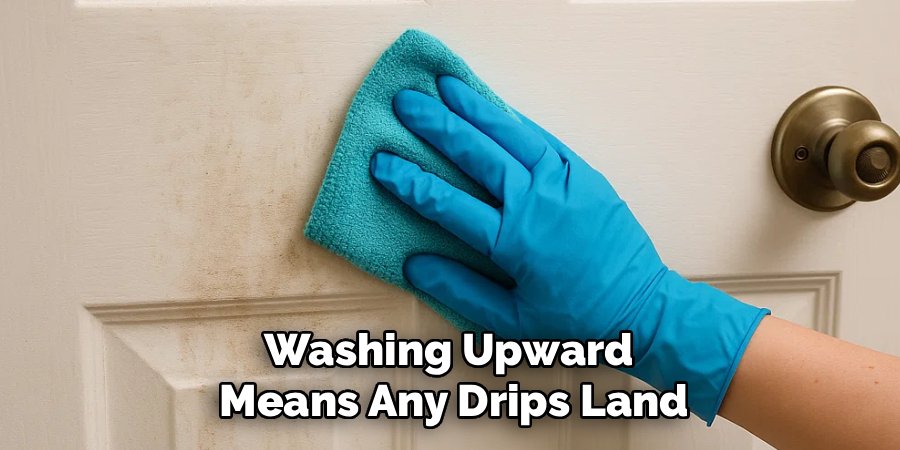
Here’s a trick I leaned on for years: wash starting at the bottom and work upward, then dry from the top down. When you clean top-first, dirty water runs down over the dry lower section and leaves streaks that set into the paint and are a pain to remove. Washing upward means any drips land on an area you’re about to clean anyway.
Wring your sponge or cloth until it’s damp, not dripping. Wipe in the direction of any visible brush strokes or wood grain, using light, even pressure. Let the soap do the work rather than your arm.
Handle Panels, Grooves, and Trim
Raised-panel and shaker doors hide dirt in their grooves and corners. Dip a soft-bristle brush or old toothbrush in your soapy water, then work it gently along the seams. A cotton swab gets into the tight corners where the panel meets the frame.
Don’t jam the brush hard into the corners — those inside edges often have thinner paint coverage and chip more easily than the flat faces.
Tackle Stubborn Marks and Fingerprints
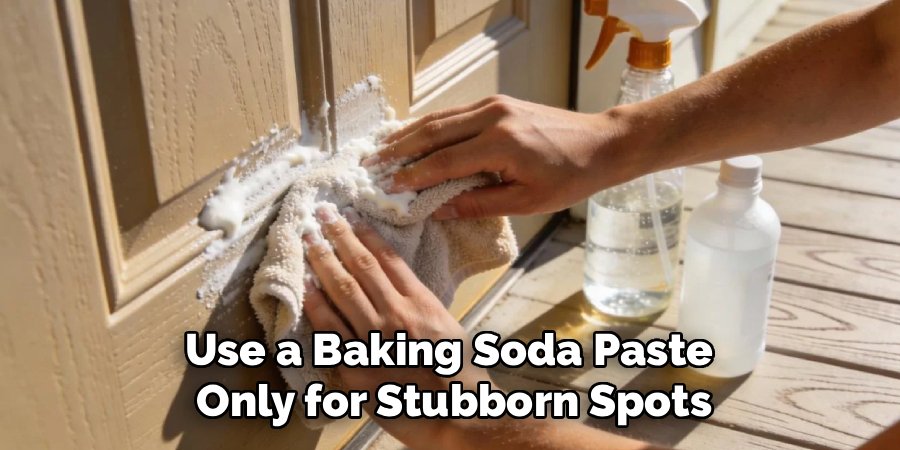
For scuffs, crayon, or sticky spots that don’t budge with soap, make a paste of baking soda and a little water. Dab it on with your finger or a soft cloth and rub in small circles with almost no pressure. Baking soda is a mild abrasive, so keep it gentle and only use it on the mark itself, not the whole door.
Wipe the paste away with a clean damp cloth right after. Left to dry, it leaves a chalky residue that’s more annoying than the original mark.
Rinse and Dry Completely
Go over the whole door with a clean cloth wrung out in plain warm water to lift any soap film. Change the rinse water once it looks cloudy. Then dry immediately with a fresh microfiber cloth, working top to bottom.
Never let a painted door air-dry with water sitting on it. Standing droplets leave mineral spots, and moisture that seeps into an edge or a chip can lift the paint over time.
How Different Finishes React
The paint sheen changes everything about how hard you can scrub. This is the detail most guides skip and it’s the one that actually matters.
Glossy and semi-gloss doors — the common choice for kitchens and bathrooms — are the toughest. They handle regular wiping and a bit of gentle scrubbing without complaint. Satin sits in the middle.
Eggshell and flat or matte finishes are the divas: they mark easily, and scrubbing one spot too hard leaves a burnished shiny patch that stands out worse than the dirt did. On eggshell, I always tell people to blot and lift rather than rub. Test your pressure on a low corner first and you’ll see the difference between finishes right away.
What to Use vs. What to Avoid
| Use This | Avoid This |
| Mild dish soap and warm water | All-purpose degreaser sprays |
| Soft microfiber cloths | Abrasive scouring pads |
| A non-abrasive sponge | Magic eraser–style melamine pads |
| White vinegar (on durable finishes) | Bleach or ammonia cleaners |
| Baking soda paste, spot-only | Full-door abrasive scrubbing |
| Light, even pressure | Hard scrubbing on one spot |
| Drying with a clean cloth | Letting water air-dry on the surface |
| Testing in a hidden corner first | Using a new cleaner on a visible area |
Melamine “eraser” pads deserve a special warning. They feel gentle but they’re essentially ultra-fine sandpaper — they’ll buff the sheen right off matte and satin paint and leave a permanent dull spot.
Common Mistakes to Avoid
- Skipping the dry dust step. Adding water to dusty paint makes grit that scratches the surface. Always dust first.
- Reaching for abrasive pads or erasers. They strip the finish and leave a dull patch that no amount of cleaning fixes.
- Scrubbing one spot too hard. On eggshell and matte paint this burnishes the surface shiny. Blot and lift instead.
- Using too much soap. A sudsy film dries streaky and grabs dust faster. Keep it barely soapy.
- Washing top-down. Dirty water streaks the dry paint below. Wash upward, dry downward.
- Letting the door air-dry. Standing water leaves spots and can lift paint at the edges. Dry it by hand.
- Testing nothing. Trying a new cleaner straight on a visible panel is how you learn — too late — that it dulls the finish.
Safety and Warnings
Painted doors don’t involve harsh fumes if you stick to soap and water, so this is more about protecting the surface than protecting your lungs. Still, a few precautions save you from an expensive mistake.
- Test in a hidden spot first. Try any cleaner — even vinegar or baking soda — on the bottom edge or an inside corner before you touch a visible area. Finishes vary, and some react badly.
- Skip harsh chemicals. Bleach, ammonia, and strong solvents can discolor paint, soften it, or strip the sheen. They’re overkill for door grime.
- Never mix cleaners. Don’t combine bleach with ammonia or vinegar — some mixes release toxic gas. Use one cleaner at a time and rinse between them.
- Go easy on abrasives. Baking soda works, but only in gentle, spot-specific dabs. Too much pressure sands the paint.
- Ventilate if you do use vinegar. It’s mild, but crack a window if the smell bothers you, especially in a small bathroom.
- Keep water off the edges. Water wicking into a chip or an unsealed edge can lift paint from underneath over time.
Maintenance and Prevention Tips
A quick habit here means you rarely need a full wash, and your paint stays looking fresh for years:
- Wipe high-touch zones weekly. The area around the handle and push plate collects the most oil and dirt. A ten-second damp wipe stops buildup before it sets.
- Dust monthly. A dry cloth over the panels and top edge keeps grit from accumulating and scratching later.
- Address marks fast. Fresh fingerprints and scuffs lift with plain water. The same marks left for weeks need baking soda and effort.
- Keep hands and pets in mind. Encourage using handles rather than pushing on the paint, and wipe nose-height smudges where dogs greet the door.
- Watch bathroom humidity. Run the exhaust fan — constant moisture softens paint and encourages mildew along the bottom rail.
- Touch up chips early. A tiny dab of matching paint on a chip stops water getting underneath and spreading the damage.
Clients used to ask me why their front door looked grimier than the rest, faster. Almost always it was sun exposure baking the oils from everyone’s hands into the paint — a south-facing door genuinely needs wiping more often than one that never sees direct light.
Frequently Asked Questions
What is the best thing to clean painted doors with?
Warm water with a few drops of mild dish soap handles nearly every door. It lifts fingerprints, dust, and light grease without touching the finish. Add a splash of white vinegar for kitchen grease, and use a baking soda paste only for stubborn spots — never harsh sprays or abrasive pads.
Can you use vinegar to clean painted doors?
Yes, on durable glossy and semi-gloss finishes, diluted in your soapy water to cut grease. Keep it off chalk paint, matte, and specialty finishes, since the acid can dull them. As always, test it on a hidden corner before wiping a visible area.
How do you clean painted doors without removing the paint?
Dust first, use mild soap and water with a soft cloth, and apply light, even pressure. Skip abrasive pads, magic erasers, and harsh chemicals — those are what strip paint. If a mark resists gentle cleaning, use a baking soda paste only on that spot, then rinse and dry right away.
Why does my painted door look dull after cleaning?
You most likely scrubbed too hard or used an abrasive pad, which burnished or stripped the sheen — especially common on eggshell and matte finishes. Soap film left to dry can also look dull, though that wipes off with a clean damp cloth. The buffed-out sheen, unfortunately, usually needs a fresh coat of paint.
How often should you clean painted doors?
Wipe high-touch areas around the handle weekly and give the whole door a dust monthly. A full wash every few months is plenty for most doors, though kitchen and bathroom doors that collect grease and humidity benefit from more frequent attention.
Can you use a magic eraser on painted doors?
Better not to. Melamine “eraser” pads act like ultra-fine sandpaper and will buff away the sheen, leaving a permanent dull patch on satin and matte paint. Stick to a soft cloth or non-abrasive sponge, and reserve baking soda for the rare stubborn mark.
Match your cleaner and pressure to the finish, dust before you wet anything, and always dry the door by hand. Do that and you’ll keep your doors looking freshly painted without ever risking the finish you paid for.
