
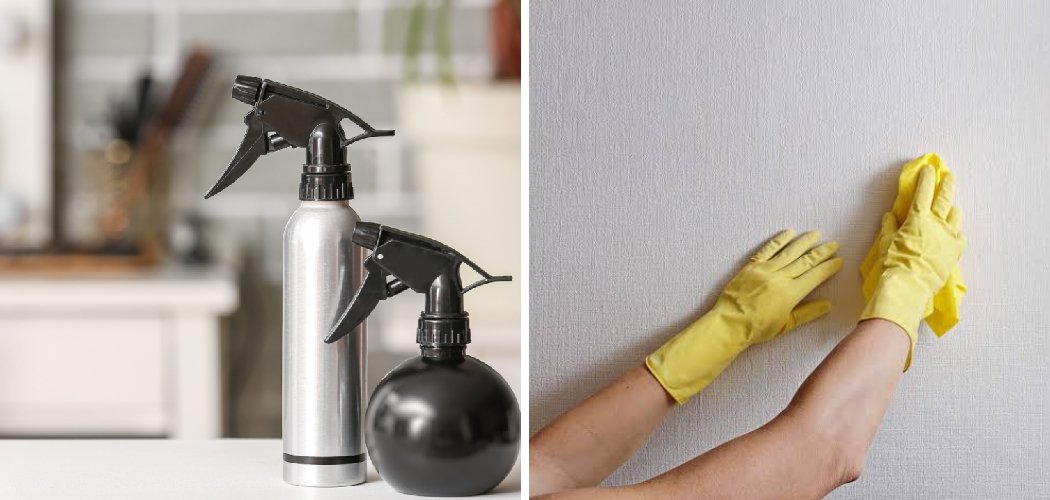
The bathroom wall behind a client’s vanity felt like sandpaper coated in candle wax—years of daily hairspray had built up into a yellow, sticky film nobody noticed until they tried to hang a new mirror. The worst part? They’d already scrubbed it with an abrasive pad and left dull scratch marks in the paint. That single move turned a 20-minute wipe-down into a repaint job.

Learning how to clean hairspray off walls comes down to dissolving the residue, not scraping it. Hairspray is basically a polymer glue that hardens as it dries, so the right approach softens it first. Do that, and it lifts off without harming the paint underneath.
What You’ll Need
- White vinegar
- Warm water
- Liquid dish soap (a grease-cutting one)
- Rubbing alcohol (isopropyl, 70%)
- A spray bottle
- Two or three microfiber cloths
- A soft sponge (non-abrasive side only)
- A small bucket
- Rubber gloves
- Baby wipes (handy for quick touch-ups)
- A dry towel for buffing
- An old toothbrush for corners and trim
Test A Hidden Spot Before You Start
Every wall finish reacts differently. Flat and matte paints scuff and absorb moisture fast, while satin and semi-gloss handle wiping much better.

Dab your chosen cleaner on a low, hidden section—behind a door or below the counter—wait a couple of minutes, then wipe. If the paint color transfers to your cloth or the sheen changes, dilute the solution more or switch to a gentler option.
Warm Water And Dish Soap For Light Buildup
Start with the mildest method. Fresh or thin hairspray film often comes off with nothing more than warm, soapy water.
- Mix a few drops of dish soap into a bucket of warm water.
- Dip your microfiber cloth and wring it out so it’s damp, not dripping.
- Wipe the wall in small circles, working from the top down.
- Rinse the cloth often—the residue reloads onto the wall if your cloth is already loaded with it.
- Go over the area with a second cloth dipped in clean water to remove soap.
- Buff dry with a towel so no watermarks set in.
If the wall still feels tacky after it dries, the buildup is heavier and needs something with more bite.
Vinegar Solution For Sticky Residue
Vinegar is my go-to for the gummy, been-there-for-months layer. The acid breaks down the polymers in the spray without stripping paint.
Mixing The Solution
Combine equal parts white vinegar and warm water in your spray bottle. For thick buildup, you can go slightly heavier on the vinegar, but never use it straight on flat paint—it can pull the finish.
Working It In
Spray a section, let it sit for about a minute so the vinegar softens the film, then wipe with a damp microfiber cloth. You’ll feel the wall go from sticky to smooth as the residue releases. Reapply to stubborn spots rather than scrubbing harder. For textured walls or the ridges around trim, an old toothbrush lifts residue out of the grooves that a flat cloth skips.
One thing I noticed over years of doing this: hairspray builds up worst in humid rooms, and summer makes it far tackier. The moisture keeps the film from fully curing, so it stays gummy and grabs dust. Clients used to ask me why their bathroom walls felt stickier than their bedroom mirrors—that’s the humidity at work.
Rubbing Alcohol For The Toughest Spots
When vinegar can’t cut it, rubbing alcohol dissolves hardened hairspray fast. It’s the strongest option, so save it for spots that won’t budge.

Dampen a cloth with 70% isopropyl alcohol and press it against the residue for a few seconds before wiping. Work in small sections and follow immediately with a water rinse, because alcohol can dull some paint finishes if left sitting. Never soak the wall—a damp cloth is all you need.
Method Comparison: What To Use And What To Avoid
| Situation | Best Method | What To Avoid |
| Light, recent film | Warm water + dish soap | Harsh chemicals you don’t need yet |
| Sticky, months-old buildup | Vinegar and water solution | Straight vinegar on flat paint |
| Hardened, stubborn spots | 70% rubbing alcohol, spot-treated | Soaking the wall or scrubbing hard |
| Textured walls and trim | Toothbrush with vinegar solution | Abrasive pads that scratch |
| Flat/matte paint | Damp cloth, minimal moisture | Excess water that leaves marks |
| Any finish | Test hidden spot first | Skipping the test patch |
Common Mistakes To Avoid
- Scrubbing with abrasive pads. The scratch-mark mistake from the top. Steel wool and scouring pads dull and gouge paint—stick to microfiber and soft sponges.
- Using too much water. Drenched walls streak, especially on flat paint, and moisture can seep behind the finish.
- Skipping the softening step. Wiping dry hairspray just smears it. Let your cleaner sit and dissolve the film first.
- Working bottom to top. Drips run down over the dirty area and leave streaks. Always start high.
- Reusing a saturated cloth. You’ll spread residue instead of removing it. Rinse or swap cloths often.
- Going straight to the strongest cleaner. Start mild and escalate only if needed—your paint will thank you.
Safety And Warnings
A few cautions matter here, mostly around the cleaners. Never mix rubbing alcohol with bleach, and never combine bleach with vinegar or ammonia—these mixes release toxic fumes. Keep your cleaning solutions simple and separate.
Open a window or run a fan while you work, especially with rubbing alcohol, which gives off strong vapors in a closed bathroom. Wear rubber gloves to protect your skin during longer cleaning sessions, since repeated contact with alcohol and vinegar can dry and irritate your hands.
Always test on that inconspicuous spot before treating a visible wall—flat and matte paints are especially prone to color lifting and sheen changes. And keep rubbing alcohol away from any open flame, including candles, because it’s flammable.
How To Keep Hairspray Off Your Walls
Prevention saves you from ever scrubbing again. These habits keep buildup from starting.
- Spray in a contained zone. Hold a hand towel or open a shower curtain behind you to catch overspray before it reaches the wall.
- Aim away from walls. Stand toward the center of the room, not tucked against a corner where mist settles onto the nearest surface.
- Wipe down weekly. A quick pass with a damp microfiber cloth stops film from hardening into that sandpaper texture.
- Improve ventilation. Run the bathroom fan while you style your hair so the mist clears instead of settling.
- Keep baby wipes nearby. A fast wipe right after spraying removes fresh residue before it cures.
- Watch humid months. In summer, buildup gets tackier faster, so bump your wipe-downs to twice a week.
FAQ
Does Vinegar Damage Painted Walls?
Diluted vinegar is safe on most satin and semi-gloss finishes. Flat and matte paints are more delicate, so always test a hidden area first and dilute the vinegar with equal parts water. Wipe with clean water afterward so no acid lingers on the surface.
Will Rubbing Alcohol Remove Paint From The Wall?
Used quickly and wiped off, 70% rubbing alcohol lifts hairspray without stripping properly cured paint. Trouble comes from letting it sit too long or scrubbing hard, which can dull the finish. Spot-treat, wipe, then rinse with water right away.
How Do You Remove Hairspray Buildup Without Streaks?
Work from the top down, use a damp cloth rather than a soaking one, and always finish by buffing the area dry with a clean towel. Rinse away any soap or vinegar with plain water first. Streaks usually come from leftover cleaner or too much moisture drying on the wall.
Why Do My Bathroom Walls Feel Sticky?
That tacky feel is hairspray overspray that settled and hardened over time. Humidity keeps it from fully curing, so it stays gummy and traps dust. A vinegar-and-water wipe-down cuts through it and restores the smooth surface.
Can You Use Magic Erasers On Hairspray?
You can, but carefully. Melamine sponges are mildly abrasive, so they can leave dull spots on flat or glossy paint if you press too hard. Try the vinegar method first, and if you reach for a melamine sponge, use light pressure on a tested area only.
How Often Should You Clean Hairspray Off Walls?
A weekly wipe-down keeps film from hardening in most homes. If you style daily or the room stays humid, do it twice a week. Regular light cleaning beats one heavy scrub that risks damaging the paint.
Match the cleaner to how stubborn the buildup is, and start gentle before reaching for anything stronger. Soften the residue, wipe with the right cloth, and your walls stay smooth without a single scratch.
