

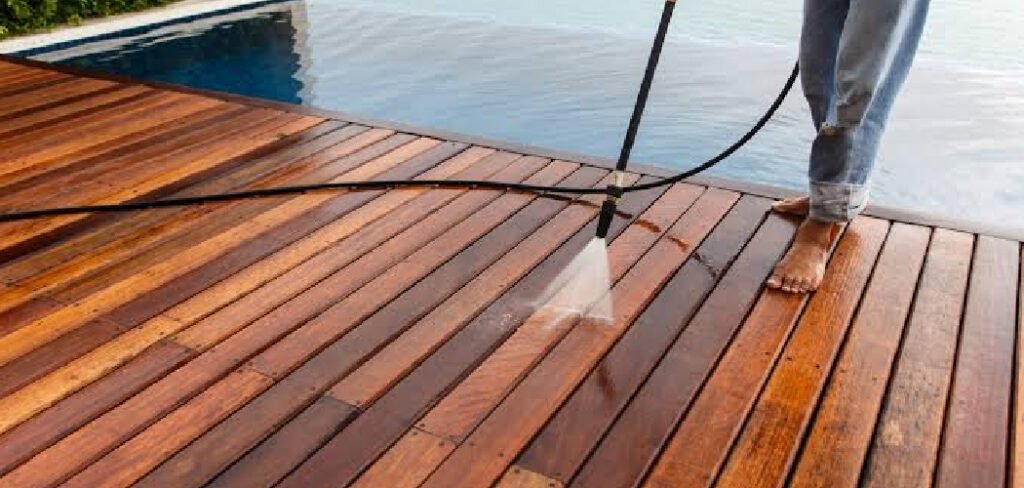
A homeowner once called me in a panic after blasting his brand-new composite deck with a 3,000 PSI washer held six inches from the boards. He’d gouged the surface into a fuzzy, pitted mess and voided his warranty in one afternoon. That fuzzed-up texture then trapped dirt worse than before, and no amount of scrubbing brought back the smooth finish.
Here’s the good news: you don’t need that machine at all. Learning how to clean composite decking without pressure washer damage is simpler, safer, and gentler on the material — and it usually costs less than a tank of gas. All you need is a bucket, the right cleaner, and a bit of elbow grease.
What You’ll Need
- Soft-bristle push broom or deck brush (never a wire brush)
- Two buckets — one for cleaning solution, one for rinse water
- Garden hose with a spray nozzle
- Mild dish soap or a composite-specific deck cleaner
- Warm water
- White vinegar (for mildew spots)
- Baking soda (for grease and oil stains)
- Plastic putty scraper for stuck-on debris
- Rubber gloves and safety glasses
- Old towels or a squeegee for drying
- Painter’s tape and plastic sheeting to protect nearby plants
Sweep and Clear the Boards First
Start dry. Sweep the entire surface with your soft-bristle broom to lift loose leaves, dirt, and grit. Pay attention to the gaps between boards — that’s where debris packs down and holds moisture.
Run the broom or a plastic putty knife along each seam to clear the channels. Trapped organic matter is the main reason composite decks grow mold, so this step matters more than people think. Skip it and you’re just pushing wet dirt around later.
Rinse Down With a Garden Hose
Before any soap touches the deck, wet the whole surface with your hose. A steady spray from a standard nozzle loosens surface grime and pre-soaks the boards so your cleaner spreads evenly.
Work from the house outward toward the steps or yard. Wetting the deck first also stops your cleaning solution from drying in streaks, which is a common headache on hot afternoons.
Scrub With Warm, Soapy Water

Mix a few drops of mild dish soap into a bucket of warm water. Dip your soft-bristle brush and scrub in the direction of the board’s grain — not in circles. Composite has a subtle texture, and following the grain lifts dirt out of the grooves instead of grinding it in.
Work in sections about four feet wide so the soap doesn’t dry before you rinse. Rinse each section thoroughly with the hose before moving on. Leftover soap film attracts dirt and looks cloudy once it dries.
Tackling Mildew and Mold Spots
Composite decks in shaded, damp corners almost always grow mildew — I saw it constantly on north-facing decks under tree cover. Mix one part white vinegar to two parts warm water, apply it directly to the green or black patches, and let it sit for 10 to 15 minutes.
Scrub gently with your brush, then rinse well. For stubborn colonies, a dedicated oxygen-bleach deck cleaner (sodium percarbonate) works without harming the boards. Never reach for chlorine bleach — more on that below.
Lifting Grease and Oil Stains
Grease from a grill or spilled cooking oil needs different handling. Sprinkle baking soda directly onto the fresh stain and let it absorb for 20 minutes. It pulls oil out of the surface texture.
Follow with warm soapy water and a gentle scrub, then rinse. For older, set-in grease, a degreasing dish soap does the heavy lifting. Blot spills fast — the longer oil sits, the deeper it settles into the grain.
Dry and Inspect
Once you’ve rinsed everything, let the deck air-dry or speed it up with a squeegee and towels. Walk the whole surface and check for spots you missed, especially along the edges and in the board gaps.
Standing water isn’t a disaster on composite, but drying faster means less chance of new mildew taking hold in shaded areas.
Safe vs. Harmful Cleaners for Composite Decking
| Cleaner or Method | Safe to Use? | Why |
| Mild dish soap + warm water | ✅ Yes | Lifts everyday grime without harming the cap layer |
| White vinegar solution | ✅ Yes | Kills mildew safely when diluted |
| Baking soda | ✅ Yes | Absorbs grease and oil without abrasion |
| Oxygen bleach (sodium percarbonate) | ✅ Yes | Removes mold and stains, safe for composite |
| Composite-specific deck cleaner | ✅ Yes | Formulated to match the material |
| Chlorine bleach | ❌ No | Can lighten color unevenly and damage some caps |
| Pressure washer | ❌ No | Fuzzes the surface, voids most warranties |
| Wire brush or steel wool | ❌ No | Scratches and permanently roughens the finish |
| Acetone or paint thinner | ❌ No | Eats into the plastic cap layer |
| Abrasive powder cleansers | ❌ No | Leaves fine scratches that trap dirt |
Common Mistakes to Avoid
- Using a wire brush. Metal bristles scratch the cap layer and create rough spots that grab dirt faster than before.
- Scrubbing in circles. Always follow the board grain. Circular scrubbing grinds grime deeper into the texture.
- Letting cleaner dry on the surface. Work in small sections and rinse as you go, or you’ll fight streaks and film.
- Ignoring the board gaps. Trapped leaves and dirt between boards are the number-one cause of mold on composite decks.
- Reaching for chlorine bleach. It can bleach out patches of color unevenly, and the damage doesn’t show until it dries.
- Assuming composite is indestructible. The cap layer is durable but not scratch-proof. Treat it gently and it stays looking new for years.
Safety and Warnings
Composite cleaning is low-risk compared to sealing wood, but a few things still deserve care. Wear rubber gloves and safety glasses whenever you handle vinegar, oxygen bleach, or any commercial cleaner. Even mild solutions sting in the eyes.
Never mix cleaning products. Combining bleach with vinegar or ammonia releases toxic chlorine gas. Since chlorine bleach doesn’t belong on composite anyway, the safest move is to keep it out of your bucket entirely.
If you use a commercial deck cleaner, read the label and work in open air — you’re outside, so ventilation is rarely an issue, but follow the dwell times exactly. Always test any new cleaner on a hidden spot, like a corner under the grill or a step riser, before you commit to the whole deck. Cap layers vary by brand, and a spot test tells you how yours reacts.
Protect surrounding plants and grass by rinsing them before and after, or lay plastic sheeting over beds close to the deck. Oxygen bleach is plant-safe in small amounts, but concentrated runoff can still stress delicate greenery.
How to Keep Composite Decking Clean Longer
The less debris that settles, the less scrubbing you’ll ever face.
- Sweep weekly. A quick pass with a soft broom keeps grit and leaves from packing into the gaps and grooves.
- Clear the gaps every season. Run a putty knife between boards in spring and fall to stop mold before it starts.
- Rinse after pollen season. A simple hose-down in early summer stops yellow film from setting into the texture.
- Wipe spills fast. Grease, wine, and food stains lift easily when fresh but sink into the grain if left overnight.
- Use furniture pads and mats. Felt pads under chairs prevent scratches, and a breathable mat under the grill catches splatter.
- Keep planters raised. Pots sitting flat trap moisture and leave dark rings. Use pot feet to let air circulate underneath.
- Trim overhanging branches. Less canopy means less falling debris and more sunlight to keep shaded corners dry.
One timing tip from experience: give the whole deck a full wash in late spring after the last of the pollen drops, then a lighter cleaning in early fall before leaves pile up. Those two windows handle the bulk of the year’s grime with the least effort.
Frequently Asked Questions
What is the best cleaner for composite decking?
For everyday cleaning, warm water with a few drops of mild dish soap works best. For mildew, use diluted white vinegar or an oxygen-bleach cleaner. Skip chlorine bleach and any abrasive or solvent-based products — they can damage the cap layer.
Can you use vinegar to clean composite decking?
Yes. A solution of one part white vinegar to two parts warm water safely removes mildew and light stains. Apply it, let it sit about 10 to 15 minutes, scrub gently with a soft brush, and rinse thoroughly.
Why should you not pressure wash composite decking?
High pressure fuzzes and pits the surface, permanently roughening the cap layer so it traps dirt worse than before. It also voids most manufacturer warranties. A garden hose and soft brush clean just as well without the risk.
How do you remove mold from composite decking?
Clear debris from the board gaps first, then treat green or black spots with diluted vinegar or an oxygen-bleach cleaner. Let it dwell, scrub with a soft brush along the grain, and rinse well. Keeping shaded areas dry prevents it from coming back.
How often should you clean a composite deck?
A weekly sweep plus two thorough cleanings a year — late spring and early fall — keeps most decks looking good. Add a rinse after heavy pollen or storms if you have a lot of tree cover.
Does bleach damage composite decking?
Chlorine bleach can lighten the color unevenly and harm some cap layers, and the damage often shows only after it dries. Oxygen bleach is the safe alternative for removing stains and mold.
Final Word
Skip the machine — a soft brush, mild soap, and the right stain treatment will keep your composite deck looking new for years. Test any cleaner on a hidden spot first, work with the grain, and stay on top of those board gaps. That’s the whole trick.
