
You reach for the same abrasive cream cleaner you use on the kitchen sink, scrub a scuffed aluminium frame hard, and step back to find dull grey smears where the smooth finish used to be. That haze isn’t dirt anymore — it’s the anodised coating breaking down, and once it’s gone it doesn’t come back. Aluminium looks tough, but the thin protective layer on the surface is surprisingly easy to wreck with the wrong product.
Aluminium frames sit through rain, pollution, and salt air, so grime builds up in the tracks and corners fast how to clean aluminium window frames. The trick to cleaning aluminium window frames well is gentle products, soft tools, and a bit of patience with the fiddly bits. Do it right and the frames stay bright and smooth instead of chalky and pitted.
What You’ll Need
- Two buckets (one soapy, one clean rinse)
- Soft microfiber cloths
- A non-scratch sponge
- A soft-bristle brush and an old toothbrush for tracks and corners
- Mild dish soap or a pH-neutral cleaner
- Warm water (not hot)
- White vinegar (for hard-water spots and light oxidation)
- A vacuum with a crevice tool or a dry paintbrush for loose track debris
- Cotton swabs for tight corners
- A dry lint-free towel
- Non-abrasive metal polish made for aluminium (optional, for oxidation)
- Car wax or a metal protectant (optional, for finishing)
- Silicone spray for tracks and moving parts
- Rubber gloves
Keep scouring powders, steel wool, oven cleaner, and anything strongly alkaline away from aluminium. They strip the finish and leave permanent dull patches.
Clear the Tracks Before Anything Gets Wet
Never run a wet cloth over dry, gritty tracks. That grit turns into a scratchy paste the moment it meets water and drags fine lines across the frame every time the window slides.
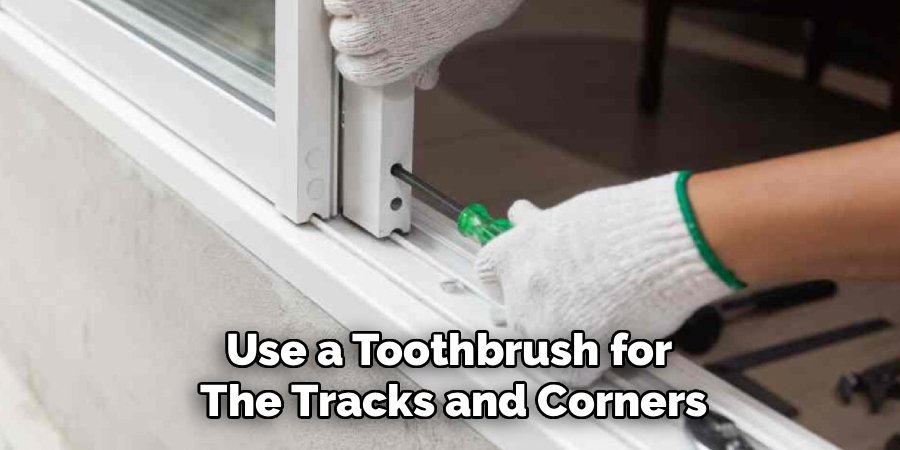
Start dry. Vacuum the tracks with a crevice tool, or loosen packed dirt with a dry paintbrush and sweep it out. Get into the corners with a toothbrush where dead insects, pollen, and greasy city dust collect into a stubborn black gunk. This dry pass takes longer than you’d expect, but it protects the finish for everything that follows.
Wash With Warm Soapy Water, Top to Bottom
Mix a few drops of mild dish soap into a bucket of warm water. You want light suds, not a thick foam.
Dip your non-scratch sponge, wring it until it’s just damp, and wash the frame in sections starting at the top. Working downward stops dirty runoff from streaking the parts you’ve already done. Rinse the sponge often in your clean-water bucket so you’re lifting grime off rather than smearing it around. For the tracks and corners, dip the toothbrush in the soapy water and work it into the detail, then wipe the loosened dirt out with a damp cloth.

Reach the Corners and Weep Holes
The bottom corners and the small drainage slots — the weep holes — clog with debris and hold water against the metal. A cotton swab dipped in soapy water clears the corners without scratching. Poke gently at the weep holes with the toothbrush to clear them, because a blocked weep hole traps water inside the frame and speeds up corrosion.
Tackle Hard-Water Spots and Light Oxidation
If you see cloudy mineral spots from sprinklers or rain, or a faint chalky bloom starting on the surface, mix equal parts white vinegar and water. Dab it on with a cloth, let it sit for a minute, then rub gently and rinse. For heavier oxidation, a non-abrasive aluminium polish worked in with a soft cloth brings back the shine — but test it in a hidden spot first, since finishes vary.
Rinse and Dry to Stop Water Spots
Wipe the whole frame down with clean water and a fresh sponge to clear every trace of soap. Leftover detergent dries into its own dull film.
Dry immediately with a lint-free towel, getting into the tracks and corners so water isn’t sitting in the low spots. I used to tell clients that air-drying is what causes half the “stains” they complain about — those cloudy marks are usually just mineral deposits from water left to evaporate on its own. Two minutes with a towel saves you the spotting.
Safe vs. Unsafe Products for Aluminium Frames
One wrong product can permanently dull the finish. Here’s what belongs near your frames and what doesn’t.
| Safe to Use | Avoid on Aluminium Frames |
| Mild dish soap, well diluted | Abrasive scouring powders |
| pH-neutral cleaner | Steel wool or wire brushes |
| Warm water | Oven cleaner |
| Diluted white vinegar (spot treatment) | Strong alkaline cleaners |
| Non-abrasive aluminium polish | Undiluted acids left to sit |
| Soft-bristle brush and toothbrush | Bleach on bare metal |
| Microfiber and non-scratch sponge | Pressure washer at close range |
| Car wax or metal protectant | Leaving frames wet to air-dry |
A note on vinegar: it works well as a spot treatment for mineral marks and light oxidation, but rinse it off promptly. Left sitting, its mild acid starts etching the finish you’re trying to protect.
Common Mistakes to Avoid
- Using abrasive cleaners or pads. Scouring powders and steel wool strip the protective coating and leave permanent grey patches.
- Washing over dry grit. Always vacuum and dry-brush the tracks first, or you’ll grind dirt across the surface.
- Ignoring the weep holes. Blocked drainage slots trap water inside the frame and invite corrosion.
- Letting frames air-dry. Water left to evaporate leaves cloudy mineral spots that look like stains.
- Leaving vinegar on too long. A quick spot treatment helps; a long soak etches the finish.
- Pressure washing up close. A high-pressure jet forces water past seals and into the frame cavity.
- Skipping the tracks. Clean glass above a filthy track just looks half-finished — and the grit keeps migrating up.
Safety and Warnings
Cleaning aluminium frames is low-risk, but a few points are worth respecting.
- Never mix cleaning products. Don’t combine vinegar with bleach or any ammonia-based cleaner — the fumes are genuinely dangerous. Stick to one mild cleaner and you sidestep the risk entirely.
- Ventilate if you use metal polish. Some polishes give off strong fumes, so open the window and read the label’s guidance.
- Wear gloves. Rubber gloves protect your skin from detergent and from polish, which can irritate over a long session.
- Test any new product in a hidden spot first. Try polish or vinegar on the bottom edge or a corner before the main face. Finishes vary, and a quick hidden test can save the whole frame.
- Mind your footing on upper windows. If you’re leaning out or on a ladder for exterior frames, keep three points of contact and don’t overreach — a clean frame isn’t worth a fall.
- Store products safely. Keep polish and any acidic cleaners sealed and away from kids and pets.
Maintenance and Prevention Tips
A little routine care keeps deep cleans quick and the finish bright:
- Quick wipe every month or two. A fast warm-soapy-water wash and dry stops grime setting into the tracks.
- Vacuum the tracks regularly. Clearing debris before it packs down keeps the window sliding smoothly and the weep holes open.
- Dry after heavy rain if you can. Wiping mineral-heavy water off the frame prevents the cloudy spotting.
- Wax once or twice a year. A thin coat of car wax or metal protectant on the frame adds a water-repellent layer and makes future cleaning easier. Buff it out well.
- Lubricate the tracks every six months. A light silicone spray keeps the window gliding and protects moving parts — never use oily grease, which just traps dirt.
- Catch oxidation early. A faint chalky bloom wipes off easily now; left for a year it dulls and pits.
- Keep sprinklers aimed away. Constant spray on one spot leaves stubborn hard-water buildup.
Frequently Asked Questions
What is the best cleaner for aluminium window frames?
Warm water with a few drops of mild dish soap and a non-scratch sponge handles routine cleaning. Use a toothbrush for the tracks and corners, and diluted white vinegar as a spot treatment for hard-water marks or light oxidation. Skip anything abrasive or strongly alkaline — those are what damage the finish.
How do I clean oxidised or chalky aluminium frames?
For a light chalky bloom, wipe it with a cloth dampened in equal parts vinegar and water, then rinse and dry. Heavier oxidation needs a non-abrasive polish made for aluminium, worked in gently with a soft cloth. Always test in a hidden spot first, and finish with a coat of wax to slow it coming back.
Can I use vinegar on aluminium window frames?
Yes, diluted vinegar works well for mineral spots and light oxidation. Rinse it off promptly and dry the area, because leaving it on lets the mild acid etch the finish. Treat it as a targeted spot cleaner, not an all-over wash.
Why do my aluminium frames look dull or cloudy after cleaning?
Usually it’s one of two things: leftover soap or minerals from water left to air-dry, or a damaged finish from an abrasive product. If a proper rinse and dry doesn’t clear it, you’re likely looking at oxidation or a stripped coating, which needs polish rather than another wash.
How do I clean the window tracks properly?
Start dry — vacuum the loose debris or brush it out, since wet grit scratches. Then scrub with a toothbrush and warm soapy water, clear the corners with a cotton swab, and poke the weep holes open so they drain. Wipe everything dry afterward.
How often should I clean aluminium window frames?
A quick wipe and track vacuum every month or two keeps grime from setting in. Add a proper wash and a wax coat once or twice a year, and lubricate the tracks every six months while you’re there.
Keep your products mild, clear the tracks before you add water, and never let the frames air-dry. Treat oxidation the moment it appears and give the frames a wax coat now and then, and they’ll stay bright and smooth for years.
