
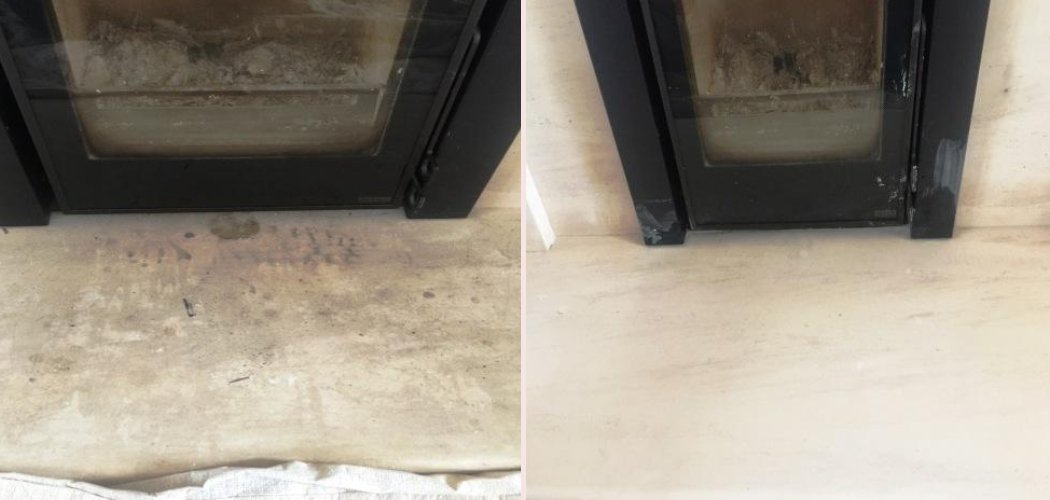
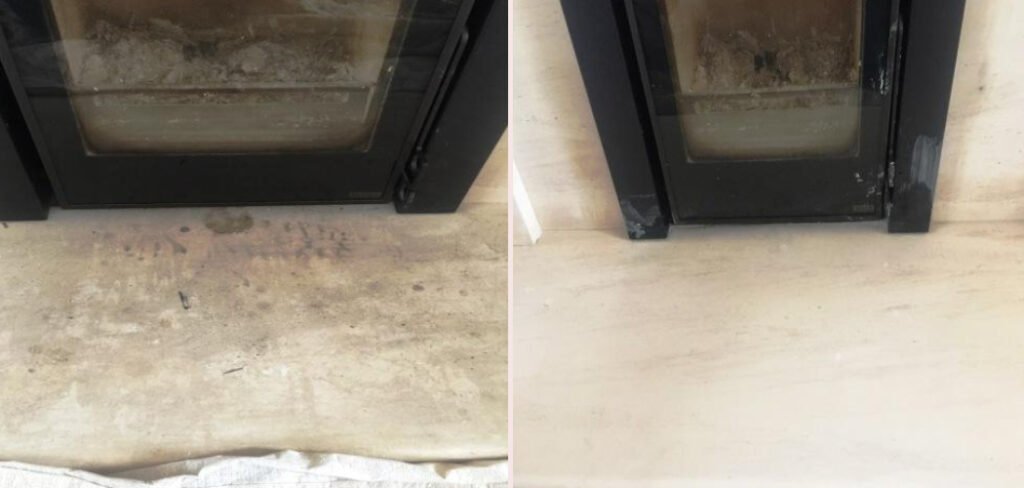
A woman once called me in a panic after she’d scrubbed her sandstone hearth with a bathroom lime-scale spray to shift a stubborn soot mark. The mark went, sure — but so did a dull, bleached patch where the acid had eaten straight into the stone. No amount of cleaning brings that back. She’d swapped a stain that would have lifted with a poultice for permanent etching she had to live with.
That’s the trap most people fall into. Learning how to clean a stone hearth well is less about scrubbing harder and more about knowing what your stone can take. Acids, wire brushes, and impatience do far more damage than the soot ever will.
What You’ll Need
- Soft-bristle brush or dustpan brush
- Vacuum with a brush attachment
- pH-neutral stone cleaner (or a few drops of mild dish soap)
- Two buckets — one for solution, one for clean rinse water
- Soft cloths and a couple of old towels
- Sponge (non-scratch)
- Baking soda or a poultice powder
- Hydrogen peroxide (for organic and soot stains)
- Plastic wrap and painter’s tape
- Rubber gloves
- Drop cloth or old sheet to protect the floor
- Small detail brush for grout and crevices
Keep vinegar, lemon, and any acidic descaler well away from the hearth. They etch soft and calcium-based stone on contact.
Know Your Stone Before You Start
Not all hearth stone behaves the same, and this decides everything you do next. Limestone, marble, travertine, and sandstone are soft and acid-sensitive — they scratch and etch easily. Granite and slate are much harder and more forgiving. Bluestone and flagstone sit somewhere in the middle.
Here’s a quick test I always ran on a first visit: drip a little water on a hidden corner. If it soaks in fast and darkens the stone, you’ve got a porous, softer type that needs gentle products and quick clean-ups. If it beads on top, the stone is denser and better sealed. When you’re not sure, treat it as the softest option — you can always do more, but you can’t un-etch stone.
Clear the Ash and Loose Debris First
Never bring water anywhere near a hearth until it’s bone dry and cold. If you’ve had a fire, give it a full 24 hours before you touch it. Wet ash turns into a grey cement-like paste that smears deep into the pores and stains far worse than dry soot.

Scoop out any leftover ash with a dustpan, then run the vacuum with a brush attachment over the whole surface, working into the joints and corners. Get every speck of loose grit off first. Skip this and you’ll drag that grit around under your sponge, scratching the stone as you go.
Wash With a Gentle Neutral Solution
Mix a pH-neutral stone cleaner or a few drops of mild dish soap into a bucket of warm water. Wring your sponge or cloth out so it’s damp, not dripping — flooding porous stone pushes dirty water deep into the pores where it dries into a shadow.
Wipe the surface in sections, rinsing your sponge often in the clean water bucket so you’re lifting dirt away rather than moving it around. For textured stone like slate or flagstone, use the soft brush to work the solution into the natural grooves. Then wipe the whole hearth down with a cloth wrung out in plain water, and dry it straight away with a towel. Letting it air-dry leaves water spots on darker stone.
Lift Soot and Smoke Stains
Soot is the complaint I heard most, especially on the front lip of the hearth where heat and smoke roll out. Don’t reach for anything acidic. Start by mixing baking soda with a little water into a spreadable paste. Cover the stain, leave it 10 to 15 minutes, then gently work it with the soft brush and rinse.
For darker, greasy soot that won’t shift, hydrogen peroxide does the heavy lifting. Dampen a cloth with 3% peroxide, lay it over the mark, and give it time to break down the carbon. On pale stone this often clears marks that look permanent. Always rinse well afterward and dry the area.
Draw Out Deep and Oily Stains With a Poultice
For old grease, wax drips, or stains that have soaked right in, a poultice is your best friend. Mix baking soda or poultice powder with water — or with hydrogen peroxide for organic stains — into a thick, peanut-butter consistency. Spread a quarter-inch layer over the stain, cover it with plastic wrap, and tape the edges down.
Leave it 24 to 48 hours. As the paste dries, it pulls the stain up out of the stone. Scrape it off gently with a plastic scraper, rinse, and dry. Stubborn stains often need a second round — that’s normal, not a failure.
Safe vs. Damaging Methods
| Safe on a Stone Hearth | Will Damage the Stone |
| pH-neutral cleaner or mild dish soap | Vinegar, lemon, or acidic descalers |
| Baking soda paste for soot | Bathroom or lime-scale sprays |
| Hydrogen peroxide on stains | Bleach on colored or sealed stone |
| Soft-bristle and non-scratch sponges | Wire brushes or steel wool |
| Damp cloth, wrung out | Soaking or flooding the surface |
| Vacuuming grit off first | Scrubbing over loose grit |
| Drying immediately with a towel | Letting it air-dry into water spots |
| Testing in a hidden corner | Guessing what the stone can take |
The pattern’s the same throughout: gentle and patient beats harsh and fast every single time.
Common Mistakes to Avoid
- Using acidic cleaners. Vinegar, lemon, and descalers etch limestone, marble, and travertine on contact. That dull patch never buffs out.
- Cleaning wet ash. Water plus fresh ash makes a staining paste. Let everything go cold and dry, then vacuum before any liquid touches the stone.
- Flooding porous stone. Too much water sinks into the pores and dries as a dark shadow. Keep your cloth damp, not soaked.
- Skipping the grit vacuum. Loose ash and grit act like sandpaper under your sponge. Always dry-clean first.
- Scrubbing with anything metal. Wire brushes and steel wool leave permanent scratches and can bed rust into the stone.
- Letting it air-dry. Water spots and mineral rings show up fast, especially on dark slate. Towel it dry.
- Giving up on a poultice too soon. Deep stains often need two or three applications. Patience wins here.
Safety and Warnings
Hearth cleaning is low-risk compared with heavy chemical jobs, but a few things still matter.
- Test any cleaner in a hidden spot first. Try a back corner before you commit to the whole surface. Stone varies piece to piece, even within one hearth.
- Wait for a cold, dead fire. Never clean around embers or warm stone. Give it a full 24 hours after your last fire.
- Wear gloves. Hydrogen peroxide and repeated water exposure dry and irritate skin.
- Never mix cleaning products. In particular, never combine bleach with anything acidic or with ammonia — the reaction gives off toxic gas. Stick to one product at a time and rinse between them.
- Ventilate the room if you use peroxide or any commercial stone cleaner, and keep the flue open to help airflow.
- Check for a sealer. If your hearth was sealed, harsh cleaners can strip it unevenly and leave patchy spots. Neutral products protect the seal.
Keep Your Stone Hearth Clean for Longer
A little routine care means you rarely face a big scrubbing session. The less soot and grime sit on the stone, the easier every clean becomes.
- Wipe it down weekly. A quick pass with a damp cloth during the burning season stops soot from building into a baked-on layer.
- Vacuum the ash regularly. Don’t let it pile up. Loose ash gets walked around and ground into the surface.
- Seal porous stone. A quality penetrating stone sealer makes soft stone far more stain-resistant. Reseal limestone and sandstone every one to two years — check by dripping water and seeing if it still beads.
- Use a hearth rug or guard. A protective mat in front of the firebox catches sparks, embers, and dropped logs before they mark the stone.
- Deal with spills fast. Blot wine, grease, or drink spills immediately rather than wiping — wiping spreads them into the pores.
- Burn dry, seasoned wood. Green or damp wood throws far more soot and creosote, which means a dirtier hearth and more frequent cleaning.
Frequently Asked Questions
What is the best cleaner for a stone hearth?
A pH-neutral stone cleaner or a few drops of mild dish soap in warm water is the safest all-round choice for any stone type. For soot, use a baking soda paste, and for tougher stains reach for hydrogen peroxide. Skip anything acidic — vinegar, lemon, and lime-scale sprays etch soft stone permanently.
How do you remove soot and black marks from a stone fireplace?
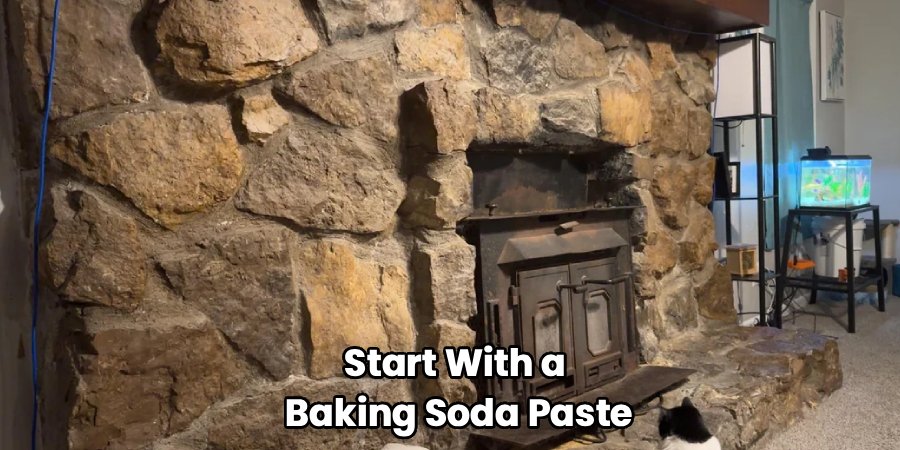
Start with a baking soda paste: spread it over the mark, leave it 10 to 15 minutes, then brush gently and rinse. For greasy or stubborn soot, lay a cloth dampened with 3% hydrogen peroxide over the stain and give it time to break down the carbon. Rinse well and dry the area afterward.
Can you use vinegar to clean a stone hearth?
No — keep vinegar away from stone hearths. It’s acidic and etches limestone, marble, travertine, and sandstone on contact, leaving dull, permanent marks that won’t buff out. Even on harder stone it can strip sealer unevenly. A neutral cleaner is always the smarter option.
How do you get stains out of natural stone?
For deep or oily stains, use a poultice. Mix baking soda or poultice powder with water (or hydrogen peroxide for organic stains) into a thick paste, spread a quarter-inch layer over the stain, cover with plastic wrap, and leave it 24 to 48 hours. As it dries, it draws the stain out of the pores. Repeat if the mark is still visible.
How often should you clean a stone hearth?
During the burning season, a quick damp wipe once a week keeps soot from baking on. Give it a deeper clean at the start and end of the season, and vacuum ash whenever it builds up. Outside of winter, an occasional dusting is usually all it needs.
Should you seal a stone hearth?
Yes, if it’s porous stone like limestone or sandstone. A penetrating sealer makes the surface far more resistant to soot and stains and buys you time to wipe up spills before they soak in. Test whether the seal is still working by dripping water on the stone — if it stops beading, it’s time to reseal.
Final Word
Match your method to your stone, clear the grit before any water touches it, and give stains time to lift instead of forcing them. Treated gently and wiped down through the season, your hearth stays warm and handsome for decades — force and acid only ever cost you more.
