

The quickest way to kill a good RC car is to walk it over to the garden hose and blast it like a dirty bike. I’ve seen a guy do exactly that after a muddy trail run, and by the next morning his electronic speed control was corroded green and the servo was dead. Water and electronics don’t negotiate.
Knowing how to clean a RC car properly means keeping water and harsh solvents away from the parts that hate them, while still getting the grit out of the places that grind your bearings to dust. It takes about twenty minutes and mostly stuff you already own. Do it right and your car runs quieter, lasts longer, and won’t cost you a new receiver.
What You’ll Need
- Soft-bristle brushes (an old toothbrush and a paintbrush work great)
- Compressed air, either a can or an electric blower
- Microfiber cloths and a few paper towels
- Isopropyl alcohol (90% or higher)
- Electronics-safe contact cleaner or a dedicated motor spray
- A small screwdriver set for removing the body and wheels
- Cotton swabs for tight corners
- Light machine oil or bearing oil
- A small parts tray or a magnetic dish for screws
- Nitrile gloves
Skip the WD-40 as a cleaner. It leaves a film that grabs dust, and it can swell certain rubber and plastic parts over time.
Power Down and Strip the Body First
Before anything touches your car, disconnect the battery and pull it out completely. Cleaning around a live battery is how you short a connection or trigger the motor by accident.
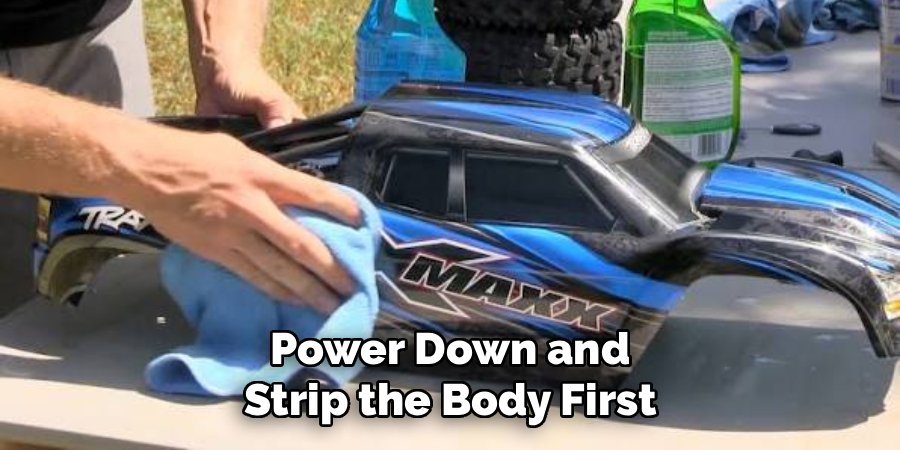
Unclip the body shell and set it aside — you’ll clean that separately since it’s just painted polycarbonate and can take water. With the chassis exposed, you can actually see where the dirt lives: the drivetrain, the shock towers, and the underside.
Knock Off the Loose Debris
Take your car outside or over a trash can and use compressed air to blow out the big stuff first. Hit the chassis, the suspension arms, and around the motor. Grass, sand, and dried mud fling off fast this way, and it saves you from grinding that grit deeper when you start brushing.
Work top to bottom so debris falls away from the parts you’ve already done. For caked-on mud, let it dry fully, then flake it off with a dry brush. Wet mud smears; dry mud crumbles.
Brush and Wipe the Chassis
Now go in with your dry brushes. Work the toothbrush into the drivetrain, the gear covers, and the suspension pivots where dust packs in tight. A paintbrush handles the flatter surfaces of the chassis plate.
Dampen a microfiber cloth with a little isopropyl alcohol and wipe down the chassis, shock bodies, and plastic parts. Alcohol lifts grease and dried grime, then flashes off in seconds without soaking anything. Use cotton swabs dipped in alcohol for the corners around the servo and steering linkage.
Keep the alcohol away from tires — it dries out the rubber compound and can make them hard and slick.
Clean the Wheels and Tires
Pop the wheels off if they’re badly clogged. Mud loves to pack between the tire and the rim, and it throws off your balance if you leave it.
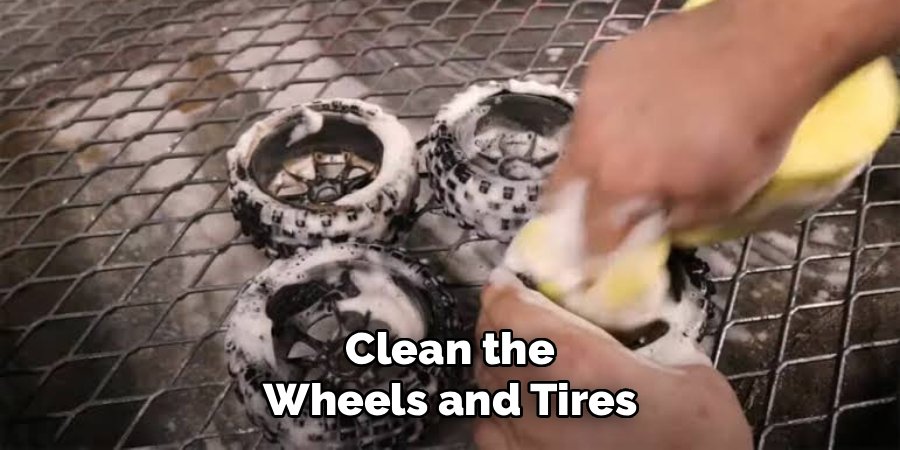
Rinse the tires alone under water if you want — they’re just rubber and foam-backed plastic, so they can handle it. Let them dry completely before reinstalling.
Handle the Electronics With Care
This is where people wreck their cars, so slow down. Never spray water or alcohol directly at the ESC, receiver, or servo. Instead, blow them out with compressed air to clear dust from the vents and heat sinks.
If a connector looks corroded or gritty, use electronics-safe contact cleaner on a cotton swab, not a spray flood. Dab, don’t drench. For the motor, a short burst of motor spray or contact cleaner through the vents clears carbon dust from brushed motors — but let it dry fully before you reconnect power.
One thing clients used to ask me all the time: “Can I just wipe the receiver with a damp cloth?” No. Even a little moisture wicks under the case and sits on the board. Dry air only for anything with a circuit in it.
Clean and Re-Oil the Bearings
Grit in your bearings is what turns a smooth, fast car into a sluggish, whiny one. If your wheels don’t spin freely, pull the bearings.
Wipe each bearing with alcohol on a swab to clear old grease and dirt, then spin it dry. Add a single drop of bearing oil to each one and spin it to work the oil in. Don’t overdo it — too much oil just attracts fresh dust. Reinstall and check that everything spins clean and quiet.
Wash the Body Shell
The body is the easy part. Rinse the polycarbonate shell under lukewarm water with a drop of mild dish soap, then wipe gently with a soft cloth. Skip abrasive sponges, which scratch the clear coat and dull the paint.
Dry it inside and out before clipping it back on, so you’re not trapping moisture over your freshly cleaned electronics.
What To Use vs. What To Avoid
| Component | Use This | Avoid This |
| ESC, receiver, servo | Compressed air, contact cleaner (dabbed) | Water, direct alcohol spray, WD-40 |
| Motor | Motor spray or contact cleaner through vents | Soaking, oil near brushes |
| Chassis and plastics | Isopropyl alcohol on microfiber | Bleach, acetone, harsh degreasers |
| Bearings | Alcohol to clean, bearing oil to lubricate | Water rinse, thick grease, over-oiling |
| Tires | Water and a brush | Alcohol, oil-based cleaners |
| Body shell | Mild dish soap and water | Abrasive sponges, glass cleaner |
Common Mistakes to Avoid
- Hosing down the whole car. Water in the electronics is the number one killer. Even “waterproof” ESCs aren’t meant for a pressure blast.
- Using WD-40 as a cleaner. It leaves a sticky film that traps dust and can swell rubber parts. Use it only where a proper penetrating oil belongs, if at all.
- Cleaning with the battery still in. You risk shorts and accidental motor spin. Always disconnect first.
- Over-oiling bearings. More oil means more dust sticks. One drop per bearing is plenty.
- Alcohol on the tires. It hardens the rubber and kills your grip.
- Reassembling while damp. Trapped moisture corrodes contacts slowly, and you won’t notice until something stops working.
Safety and Damage Warnings
Isopropyl alcohol and contact cleaners are flammable and give off fumes, so work in a ventilated space and keep them away from any spark or flame. Wear nitrile gloves — repeated alcohol contact dries and cracks your skin fast.
Never mix cleaning products. There’s no reason to combine solvents, and some blends give off harmful vapors. Stick to one product at a time.
Test any cleaner on a hidden spot first, especially on painted or clear-coated body shells. Acetone and strong degreasers will craze or dissolve polycarbonate and some plastics — once that happens, there’s no fixing it. And keep water and sprays well clear of the ESC, receiver, and servo unless a part is specifically rated as waterproof, and even then, dry it thoroughly.
Keep Your RC Car Cleaner, Longer
The deep clean matters less than what you do after each run.
- Blow out the chassis with compressed air after every session. Two minutes now saves you a teardown later.
- Wipe the shell down before dust dries onto it. Fresh dirt comes off easy; baked-on dirt fights back.
- Check bearings monthly if you run often. A quick spin test tells you when they need re-oiling.
- Run a chassis skid plate or dust cover if your car takes one. It keeps grit out of the drivetrain entirely.
- Store the car indoors, out of temperature swings. Heat and humidity corrode contacts and warp plastics over time.
- Avoid running in fine sand and standing water when you can. Sand is the worst — it works into everything and grinds gears down.
Stick to this and you’ll do a full teardown clean maybe a few times a season instead of every weekend.
Frequently Asked Questions
Can you wash an RC car with water?
Only the parts that can handle it — the tires and the polycarbonate body shell. Keep water away from the ESC, receiver, servo, and motor. For the chassis and electronics, use compressed air and isopropyl alcohol on a cloth instead of a rinse.
What is the best thing to clean an RC car with?
Compressed air for loose debris, isopropyl alcohol for grease and grime on plastics, and electronics-safe contact cleaner for connectors and motors. A soft brush and microfiber cloths handle the rest. Avoid WD-40 and harsh degreasers.
How do you clean the electronics on an RC car?
Blow them out with compressed air first to clear dust. For corroded connectors, dab contact cleaner on a cotton swab rather than spraying. Never use water or flood alcohol directly onto a circuit board, and let everything dry fully before reconnecting the battery.
How often should you clean an RC car?
Do a quick air blow-out after every run, and a full clean whenever the car gets muddy, sandy, or wet. If you run on clean pavement, a deeper clean every several sessions is fine. Sandy or off-road use calls for more frequent attention.
Why is my RC car slow after getting dirty?
Grit packed into the bearings and drivetrain creates drag and eats your speed. Clean and re-oil the bearings, clear debris from the gears, and the car should spin freely again. Dirty bearings also make that telltale whining sound.
Can I use rubbing alcohol on an RC car?
Yes, 90% or higher isopropyl alcohol works well on the chassis, plastics, and connectors because it evaporates fast without soaking in. Keep it off the tires, since it hardens rubber, and don’t spray it directly at the electronics.
Final Word
An RC car rewards a quick air blow-out after every run far more than an occasional deep scrub, so build that habit first. Keep water off the electronics, go easy on the oil, and store it somewhere dry — that’s how you get seasons of clean, fast runs instead of a fried receiver.
