

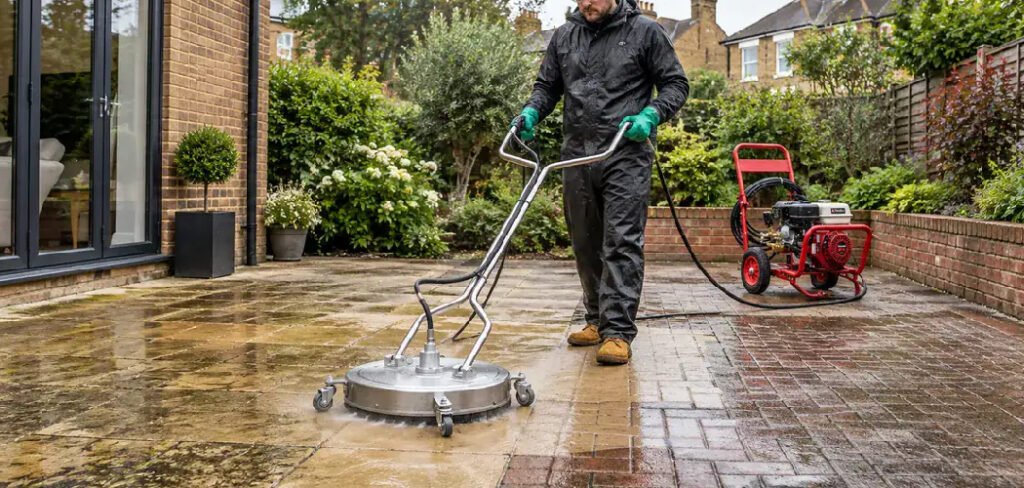
You point the pressure washer at a stubborn stain, hold it a few inches from the surface, and drag it back and forth like you’re sanding wood. A week later you notice pale streaks etched into the concrete that won’t go away no matter what you do. That’s zebra striping, and it’s permanent surface damage from a nozzle held too close and moved too fast. I saw this on more front walks than I can count, usually from folks who rented a machine for the weekend and went at it with enthusiasm.
Concrete looks tough, but the top layer is more delicate than people expect. Knowing how to clean a concrete sidewalk properly means matching the method to the mess, keeping your technique even, and protecting that surface skin so the walk still looks good years down the line.
What You’ll Need
- Stiff-bristle push broom (not metal — nylon or poly bristles)
- Garden hose with a spray nozzle, or a pressure washer with a 25° tip
- Bucket
- Liquid dish soap or a dedicated concrete cleaner
- Oxygen bleach (sodium percarbonate) for organic stains
- Baking soda and cornstarch or clay cat litter (for oil)
- Rubber gloves and safety glasses
- Long-handled scrub brush
- Plastic sheeting to protect nearby plants
- A leaf blower or broom for the final clear-off
Set everything out before you wet the surface. Once concrete is soaked, dirt turns to a paste that’s far harder to lift, so you want to move without stopping to hunt for supplies.
Sweep and Clear the Surface First
Grab your push broom and sweep the whole walk end to end. Get the leaves, grit, and loose debris off before a single drop of water touches the concrete. Wet leaves left sitting will leave tannin stains, and grit turns into gritty mud that clogs everything.
Pull any weeds poking through the cracks now too. Trying to clean around them just splashes dirt right back onto the sections you already cleared.
Pre-Treat Stains Based on What Made Them
Not every stain comes off the same way, so match your treatment to the source.
Oil and Grease Spots
Cover fresh oil with baking soda, cornstarch, or plain clay cat litter and let it pull the oil up for a few hours, or overnight for a deep stain. Sweep the powder away, then scrub the spot with dish soap and hot water. Old, set-in oil may need two or three rounds.
Moss, Algae, and Mildew
These green and black patches thrive on the shady, damp side of a walk. Mix oxygen bleach with warm water per the package directions, pour it over the growth, and let it dwell 15 minutes before scrubbing. Here’s a timing detail worth knowing: I always steered clients toward a dry, overcast day in early fall for moss removal, because the growth is still soft and hasn’t hardened into the surface the way it does after a cold snap.
Rust and Fertilizer Stains
Rust needs an oxalic acid cleaner, not chlorine bleach — bleach can actually set a rust stain and turn it darker. Apply the acid cleaner to the spot, give it the dwell time on the label, then rinse thoroughly.
Apply Your Cleaning Solution

For general grime across the whole walk, mix a squirt of dish soap into a bucket of warm water, or use a concrete cleaner diluted as directed. Pour or spread it across the surface in sections so it doesn’t dry before you scrub.
Work while the concrete is still wet with solution. Let it sit two or three minutes to loosen the dirt, but don’t let it dry back onto the surface, especially in direct sun.
Scrub With the Grain of the Finish
Take your stiff-bristle brush and scrub in the direction of the broom finish — those fine lines you see running across the concrete. Working with them lifts dirt out of the grooves instead of grinding it deeper. Put your back into the stained areas and give the whole walk an even once-over so you don’t end up with clean patches next to dingy ones.
Rinse Thoroughly From High to Low
Rinse with your hose or pressure washer, always pushing the water toward the lowest point or the street. Start at the high end and work downhill so you’re never chasing dirty water back across a clean section.
If you’re using a pressure washer, keep the tip 12 to 18 inches off the surface, use a 25° nozzle, and sweep in smooth, overlapping passes at a steady pace. Even, consistent distance is what keeps you from etching those stripes into the surface.
Dos and Don’ts at a Glance
| Do This | Avoid This |
| Sweep debris off completely before wetting | Hosing down a walk full of leaves and grit |
| Use oxygen bleach for moss and mildew | Chlorine bleach on rust (sets the stain darker) |
| Keep the pressure tip 12–18 in. from the surface | Holding the nozzle inches away to “blast” spots |
| Move the washer in steady, overlapping passes | Lingering in one spot or dragging it fast |
| Scrub with the direction of the broom finish | Scrubbing in circles or against the grain |
| Rinse downhill toward the street | Pushing dirty water back over clean concrete |
| Cover plants and grass near the edges | Letting cleaner runoff soak your flower beds |
| Reseal the concrete every 2–3 years | Assuming bare concrete never needs protection |
Common Mistakes to Avoid
Holding the pressure washer too close. This is the big one. That zebra striping I mentioned is irreversible, and I’ve seen brand-new walks ruined in an afternoon. Distance and steady movement matter more than power.
Reaching for chlorine bleach on everything. It works on some organic stains but sets rust and can bleach the surrounding concrete unevenly. Match the cleaner to the stain.
Skipping the sweep. Wetting a dirty walk just makes mud. Every minute you spend sweeping first saves you double the scrubbing later.
Letting cleaner dry on the surface. Solution that dries before you rinse leaves a hazy film and can discolor the concrete. Work in shaded sections or on a cool morning.
Ignoring the runoff. Cleaner and dislodged oil run straight into your lawn, garden, and storm drain. Redirect it and protect what’s downhill.
Safety and Warnings
Concrete cleaning brings a few real hazards, so don’t skip these.
- Never mix cleaning products. Chlorine bleach and any acid cleaner (including many rust and mildew removers) release toxic chlorine gas when combined. Rinse one product away completely before using another.
- Handle oxalic acid rust removers with care. Wear rubber gloves and safety glasses, and keep it off your skin. Rinse any splashes right away.
- Wear eye protection with a pressure washer. The spray kicks debris back at your face, and the stream itself can cut skin at close range. Never point it at anyone, including your own feet.
- Protect your landscaping. Lay plastic sheeting over nearby plants and pre-wet the soil so cleaner runoff dilutes instead of soaking straight in.
- Watch your footing. Wet concrete plus soap is slick. Move deliberately and keep hoses out of your walking path.
- Read the label dwell times. Leaving a cleaner on longer than directed can etch or discolor the surface rather than clean it better.
How To Keep Your Sidewalk Clean Longer
A little prevention stretches the time between deep cleans and keeps the concrete looking fresh.
- Sweep weekly. Regular sweeping stops leaves and organic debris from breaking down and staining. It’s the single easiest habit that pays off.
- Rinse spills fast. Oil, fertilizer, and food spills set the longer they sit. A quick hose-down the same day usually prevents a stain entirely.
- Reseal every two to three years. A quality concrete sealer fills the pores so dirt, oil, and moisture can’t sink in. Sealed concrete rinses clean with a fraction of the effort.
- Fix drainage issues. Standing water feeds moss and algae. If one section stays damp and green, look at where the water pools and redirect it.
- Trim back shady plants. Moss and mildew love shade. Opening up a little sunlight on that damp stretch slows the regrowth considerably.
- Pull weeds early. Catch them small before the roots widen the cracks. It’s a two-minute job now versus a real repair later.
Frequently Asked Questions
What is the best thing to clean a concrete sidewalk with?
For everyday dirt, warm water with dish soap and a stiff brush handles most of it. Step up to a dedicated concrete cleaner or oxygen bleach for moss and mildew, and use an oxalic acid product for rust. Match the cleaner to the stain rather than reaching for one all-purpose fix.
Can you clean a concrete sidewalk without a pressure washer?
Absolutely. A garden hose, a stiff push broom, and some elbow grease clean concrete just fine. Pre-treat the stains, scrub with your cleaning solution, and rinse thoroughly. It takes more effort than a pressure washer but there’s zero risk of etching the surface.
Does bleach damage concrete?
Diluted chlorine bleach won’t damage the concrete itself, but it can lighten or discolor the surface unevenly and it kills nearby grass and plants. It also sets rust stains darker. Oxygen bleach is the safer pick for organic growth like moss and mildew.
How do you get black stains off a concrete sidewalk?
Black stains are usually mildew, algae, or mold. Apply oxygen bleach mixed with warm water, let it dwell about 15 minutes, then scrub with a stiff brush and rinse. Deep-set growth may need a second pass. Improving drainage and sunlight keeps it from coming back.
How often should you clean a concrete sidewalk?
Sweep weekly and give it a full wash once or twice a year, usually spring and fall. Walks in shady, damp spots or under heavy tree cover may need the moss treatment more often. Rinsing spills as they happen cuts down on how often you need a deep clean.
Will a pressure washer damage concrete?
It can, if you use it wrong. Holding the tip too close, using too narrow a nozzle, or lingering in one spot etches permanent stripes into the surface. Keep the tip 12 to 18 inches away, use a 25° nozzle, and move in steady, overlapping passes.
Final Word
Match the treatment to the stain, keep your technique even, and the walk comes clean without a scratch. Seal it afterward and the next cleaning will take half the time.
