
I got a call one summer from a couple who’d blasted their pool deck with a pressure washer on full power, tip held about two inches from the surface. They stripped the mildew, sure — along with the top layer of concrete, leaving ugly wand tracks etched into the deck for good. Concrete looks tough, but the surface is softer than people think, and the fastest way to ruin it is treating it like a driveway.
The good news is that you don’t need to gouge your deck to get it clean. Learning how to clean concrete pool deck surfaces the right way comes down to the correct pressure, the right cleaner for the stain, and a little patience. Do it well and your deck comes back bright without a single wand mark.
What You’ll Need
- Push broom with stiff bristles
- Garden hose with a spray nozzle
- Pressure washer (electric or gas, 3,000 PSI max) with a 25- or 40-degree tip
- Stiff-bristle deck brush on a pole
- Large bucket
- Concrete-safe degreaser
- Oxygen bleach (sodium percarbonate) for organic stains
- Muriatic acid or a concrete-specific acid cleaner (for heavy stains only)
- Dish soap
- Nitrile or rubber gloves
- Safety goggles
- Closed-toe rubber shoes or boots
- Plastic sheeting or tarps to protect nearby plants
- A pool cover or plastic to keep runoff out of the water
Sweep and Clear the Deck First
Start dry. Sweep off leaves, dirt, twigs, and any loose debris with your push broom before a drop of water touches the surface. Wet leaves smear into stains, and grit left behind turns into a gritty paste that scratches when you scrub.
Move your furniture, planters, and pool toys off the deck entirely. You want a clear, open surface so you can work in even passes without dodging obstacles or missing shaded patches where mildew loves to hide.
Rinse Down the Whole Surface
Give the deck a good rinse with your hose to knock loose the fine dust and lift surface dirt. A pre-rinse also stops your cleaner from soaking straight into dry, thirsty concrete, which wastes product and leaves streaks.
Wet the concrete evenly. Damp concrete holds cleaning solution on the surface where it can actually work, instead of drinking it down in the first thirty seconds.
Mix and Apply Your Cleaning Solution
For everyday grime, a bucket of warm water with a good squirt of dish soap and a scoop of oxygen bleach handles most of it. Oxygen bleach is my go-to for the green and gray organic stuff — it’s gentler than chlorine bleach and won’t kill the flowerbeds bordering the deck.
Pour or brush the solution across a section at a time, roughly a ten-foot square. Let it dwell for five to ten minutes so it can break down the buildup, but don’t let it dry out. On a hot afternoon that solution can flash-dry in minutes, so work in shade or start early. Clients used to ask me why their cleaner left chalky streaks — nearly always because they let it bake in full sun before scrubbing.
Scrub the Stubborn Spots by Hand
Before you reach for the pressure washer, hit the problem areas with your stiff deck brush. Scrub in overlapping circles, putting your weight into the mildew lines, the shaded edges, and any spot near the waterline that stays damp.
For grease from sunscreen, food, or a nearby grill, work a concrete-safe degreaser straight onto the spot and let it sit before scrubbing. Hand-scrubbing first means the pressure washer does less work, which means less chance of etching the surface.
Pressure Wash With the Right Technique
Here’s where most people go wrong. Use a 25- or 40-degree tip — never the zero-degree red one, which cuts concrete like a knife. Keep the wand 8 to 12 inches off the surface and hold it at a slight angle, not straight down.
Work in smooth, overlapping passes, moving with the tip the whole time. Never park the spray in one spot; that’s how you get the leopard-spot marks that never fully blend out. Sweep steadily, section by section, and keep your pressure at 3,000 PSI or below for standard broom-finish concrete.
Rinse, Dry, and Inspect
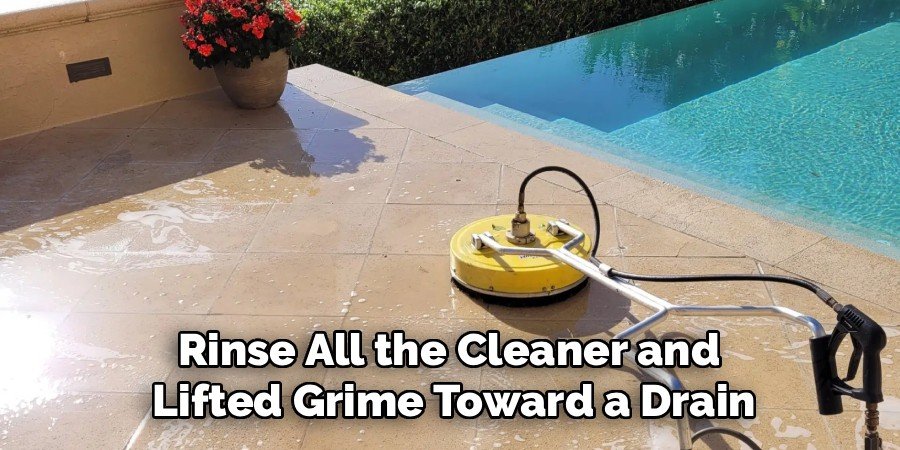
Once a section is clean, rinse all the cleaner and lifted grime toward a drain or off the edge away from the pool. Leftover cleaner dries to a dull film, so flush it thoroughly.
Let the deck dry fully, then walk it and look for spots you missed. Shaded corners and the rough textured edges usually need a second pass. Better to catch them now than after your furniture’s back in place.
Cleaning Methods Compared
| Method | Best For | Effort | Risk to Concrete | Notes |
| Soap + water + brush | Light dirt, routine cleaning | Medium | Very low | Safe weekly go-to |
| Oxygen bleach | Mildew, algae, organic stains | Medium | Low | Plant-friendly, no fumes |
| Pressure washing | Ground-in grime, large areas | Low-Medium | Medium if misused | Use wide tip, keep distance |
| Concrete degreaser | Oil, sunscreen, grease spots | Medium | Low | Spot-treat, don’t soak whole deck |
| Muriatic acid | Severe rust, mineral, heavy stains | High | High | Last resort, full PPE, dilute |
Match the method to the mess. Most decks never need anything past soap, oxygen bleach, and a careful pressure wash.
Common Mistakes to Avoid
- Using a zero-degree pressure washer tip. That narrow jet carves lines into concrete instantly. Stick to 25 or 40 degrees.
- Holding the wand too close. Even the right tip etches if you crowd the surface. Keep 8 to 12 inches of distance.
- Letting cleaner dry on the deck. Dried solution leaves chalky streaks. Work in shade and rinse before it flashes off.
- Reaching for chlorine bleach near landscaping. Runoff scorches grass and plants. Oxygen bleach does the job without the collateral damage.
- Skipping the dry sweep. Wet debris smears into stains and grit scratches. Always clear the deck dry first.
- Ignoring pool water. Cleaner and acid runoff throw off your water chemistry. Cover the pool or direct runoff away.
- Pressure washing a freshly sealed deck. You’ll strip the sealer. Wait, and clean sealed surfaces gently.
Safety and Warnings
Most of this job is low-risk, but a few steps demand real caution. Wear goggles and gloves any time you handle oxygen bleach, degreaser, or acid — even mild cleaners irritate skin and eyes over a full afternoon of scrubbing.
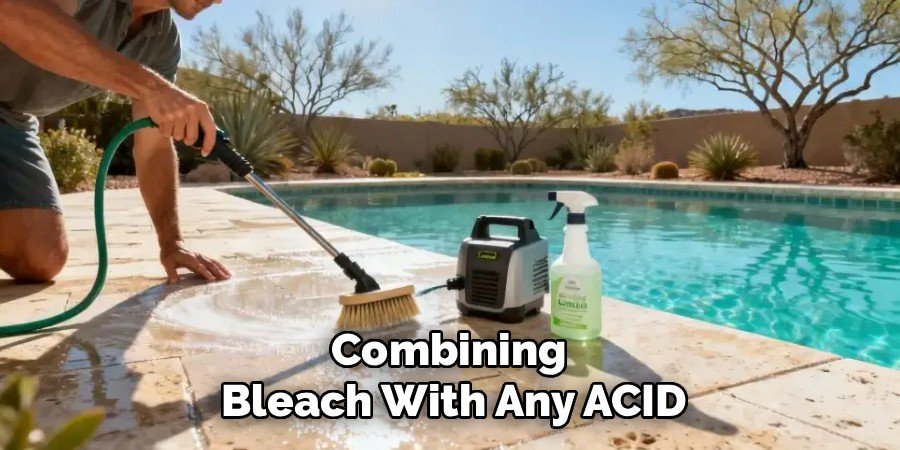
Never mix cleaning products. Combining bleach with any acid or ammonia-based cleaner releases toxic gas. Pick one cleaner, rinse thoroughly, and only then move to another if you must.
If a stain forces you to use muriatic acid, treat it seriously. Always add acid to water, never water to acid, and dilute it well. Work upwind in open air, wear acid-resistant gloves and splash goggles, and keep baking soda nearby to neutralize spills. Acid etches concrete fast, so test a hidden corner first and never let it sit longer than needed.
Watch your footing. Wet concrete plus soap gets slick, so wear closed-toe rubber shoes with grip. And keep the pressure washer wand pointed away from people, pets, and windows — that spray can break skin and glass at close range.
How to Clean Concrete Pool Deck Longer
- Sweep weekly. A two-minute pass with the push broom keeps leaves and dirt from breaking down into stains you’ll have to scrub out later.
- Rinse after heavy use. A quick hose-down after a pool party clears sunscreen, spilled drinks, and food before they set.
- Treat mildew early. The moment you spot a green or gray patch, hit it with oxygen bleach. Small spots wipe out fast; large ones take a full cleaning.
- Seal the concrete every few years. A quality concrete sealer resists stains, blocks moisture, and makes routine cleaning far easier. Reseal when water stops beading on the surface.
- Trim back overhanging plants. Shade and dropping leaves feed mildew and algae. More sun and airflow keep the deck drier and cleaner.
- Fix standing water. Puddles that linger breed algae and leave mineral rings. Redirect drainage or squeegee low spots after rain.
- Do one deep clean a season. A thorough spring cleaning before swim season and a fall pass after the leaves drop keeps buildup from ever getting ahead of you.
Frequently Asked Questions
What is the best cleaner for a concrete pool deck?
For routine cleaning, a mix of warm water, dish soap, and oxygen bleach handles dirt, mildew, and algae without harming nearby plants. Save chlorine bleach and muriatic acid for severe stains only, and always match the strength of the cleaner to the mess in front of you.
Can you pressure wash a concrete pool deck?
Yes, and it’s one of the fastest ways to clean a large deck. Use a 25- or 40-degree tip, keep the wand 8 to 12 inches off the surface, and move in steady overlapping passes. Skip the zero-degree tip entirely — it etches concrete and leaves permanent wand tracks.
How do you remove mildew and algae from a pool deck?
Wet the area, apply oxygen bleach dissolved in warm water, and let it dwell for five to ten minutes without drying out. Then scrub with a stiff deck brush and rinse clean. For thick buildup in shaded corners, a second application does the trick.
Will bleach damage my concrete pool deck?
Chlorine bleach won’t destroy concrete, but the runoff scorches grass and plants around the deck and can lighten colored or stamped concrete. Oxygen bleach is the safer choice for regular cleaning. If you do use chlorine bleach, dilute it and protect your landscaping with plastic sheeting.
How often should you clean a concrete pool deck?
Sweep weekly and rinse after heavy use, then do a deep clean at the start and end of swim season. Staying on top of small messes means you rarely need aggressive cleaners or hard scrubbing to keep the deck looking sharp.
Should you seal a concrete pool deck after cleaning?
Sealing after a thorough cleaning and full dry is smart. A concrete sealer blocks stains, repels moisture, and makes future cleanups quicker. Reseal every few years, or whenever water stops beading on the surface.
Final Word
A clean pool deck comes down to the right cleaner, the right pressure, and a little restraint with that wand. Work in sections, treat stains for what they are, and keep up with weekly sweeps so you never face a summer’s worth of buildup at once.
