
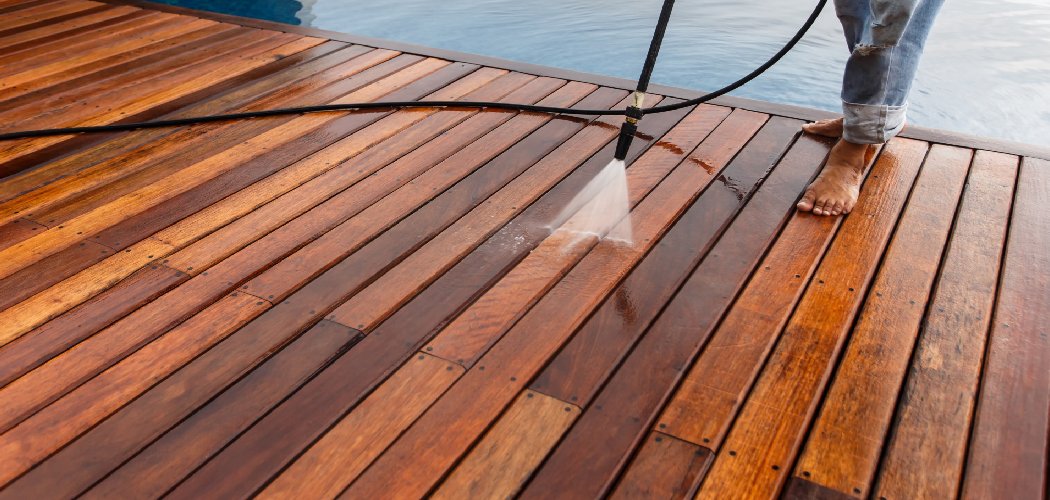
Every summer I’d get the same panicked call: “My deck turned black overnight and now it’s slick as ice.” Nine times out of ten, the homeowner had power-washed the surface a month earlier, blasted off the sealer, and left the concrete wide open for algae to move in. Pool decks live in a rough spot — constant splash, sunscreen, chlorine, and organic gunk from nearby plants — so the wrong approach shows up fast.

Learning how to clean pool deck surfaces properly means matching your method to the material and being gentle with the finish. Whether you’ve got stamped concrete, pavers, natural stone, or plain broom-finish concrete, the goal is the same: lift the grime and kill the slippery growth without stripping what protects the surface.
What You’ll Need
- Stiff-bristle push broom or deck brush (nylon, not wire)
- Garden hose with an adjustable nozzle
- Pressure washer with a wide fan tip (optional, low setting only)
- Two buckets — one for cleaning solution, one for rinse water
- Mild dish soap or a pH-neutral deck cleaner
- Oxygen bleach (sodium percarbonate) for algae and mildew
- Baking soda or a poultice for grease and sunscreen stains
- White vinegar for mineral deposits and light stains
- Commercial concrete or stone cleaner (surface-specific)
- Rubber gloves and safety glasses
- Old towels or rags
- Plastic sheeting to protect nearby plants
Clear the Deck and Sweep It Down
Move everything off the deck first — furniture, planters, toys, the floating flamingo. Then sweep the entire surface to pull off leaves, dirt, and loose debris.
Skip this and you’ll grind grit into the surface the second you start scrubbing, which dulls the finish and scratches softer stone. A quick dry sweep also keeps organic debris from turning into a muddy paste once the water hits it.
Rinse Before You Scrub
Hose down the whole deck with a wide, even spray to flush surface dust and pre-wet the material. Damp surfaces let your cleaner spread evenly instead of soaking straight into dry, thirsty concrete.

Work from the high side toward the pool’s drainage or the yard, never toward the water itself. You don’t want cleaning runoff dumping into the pool and throwing off your chemistry.
Wash Away Everyday Grime
For the general film of dust, sunscreen, and foot traffic, mix a squirt of mild dish soap or a pH-neutral deck cleaner into a bucket of warm water. Pour it over a section and work it in with your stiff broom.
Scrub in overlapping strokes, tackling patches about six feet square so the solution never dries before you rinse. Pool decks bake in full sun, and on a hot afternoon your soapy water evaporates faster than you’d think — that’s exactly why you work in small sections.
Kill Algae, Mildew, and That Slippery Green Film
The black or green slime that makes a deck dangerous is organic growth thriving on constant moisture. Mix oxygen bleach with warm water per the label and brush it across the affected areas.
Let it dwell 10 to 15 minutes, scrub hard, then rinse thoroughly. Oxygen bleach kills the growth without the harsh fumes of chlorine, and it won’t scorch the grass or shrubs bordering your deck.
For Stubborn Patches
If a shaded corner keeps coming back, treat it twice and let the second application sit longer. Deep-set algae hides in the pores of the concrete, so one pass often just clears the surface layer while the roots survive underneath.
Lift Grease, Oil, and Sunscreen Stains
Sunscreen and body oils leave dark, greasy blotches right where people lounge. Sprinkle baking soda over the spot, add a little water to make a paste, and let it draw the oil out for 15 to 20 minutes before scrubbing.
For older, set-in stains, use a poultice or a degreaser rated for your surface. Let it dwell the full label time — grease needs a few minutes to break down before you scrub, or you’ll just smear it around.
Tackle Rust and Mineral Deposits
Metal furniture legs and hard water leave rust rings and white chalky spots. White vinegar cuts light mineral buildup — apply it, wait a few minutes, then scrub and rinse.

For rust that won’t budge, reach for a commercial rust remover made for your specific surface. Skip acid-based rust removers on natural stone like limestone or travertine — they etch and permanently dull the finish.
Rinse From the High Side Down
Rinse each section before the cleaner dries, moving from the highest point toward your yard drainage. This carries dirty runoff away from clean surface instead of dragging it back across.
Keep rinsing until the water runs clear. Leftover cleaner residue dries into a dull, sticky film that actually grabs new dirt faster than clean concrete.
What to Use vs. What to Avoid by Surface
| Surface or Stain | Use This | Avoid This |
| Stamped/sealed concrete | pH-neutral cleaner, oxygen bleach | High-pressure washing, acids |
| Natural stone (travertine, limestone) | Mild stone cleaner, water | Vinegar, acid, harsh brushes |
| Pavers | Oxygen bleach, mild soap | Full-power pressure washing (blows out joint sand) |
| Algae/mildew | Oxygen bleach | Chlorine bleach near plants |
| Sunscreen/oil stains | Baking soda paste, poultice | Wire brush, gasoline |
| Rust/minerals | Vinegar (sealed concrete), rust remover | Acid on natural stone |
| Scrubbing | Stiff nylon brush | Wire brush |
Common Mistakes to Avoid
- Blasting everything with max pressure. High-pressure washing strips sealer from stamped concrete and blows the joint sand right out of pavers. Keep the pressure low, use a wide fan tip, and hold the wand well back.
- Reaching for chlorine bleach. It fades colored concrete, harms your landscaping, and does less for algae than oxygen bleach does. Save the chlorine for the pool water.
- Using acid on natural stone. Vinegar and acidic cleaners etch travertine, limestone, and marble permanently. Match your cleaner to the material every time.
- Scrubbing before the cleaner dwells. Grease and algae need time to break down. Scrub too early and you smear the mess around instead of lifting it.
- Cleaning in the blazing midday sun. Hot surfaces flash-dry your solution into a streaky haze and rob you of the dwell time you need.
- Letting runoff drain into the pool. Cleaning chemicals throw off your water balance. Always steer runoff toward the yard.
Safety and Warnings
Pool deck cleaning is fairly low-risk, but the products still deserve respect. Wear rubber gloves and safety glasses whenever you handle oxygen bleach, degreasers, or rust removers — all of them irritate skin and eyes quickly.
Never mix cleaning products. Combining chlorine bleach with any ammonia-based cleaner or acid releases toxic gas. You don’t need to blend anything here anyway — oxygen bleach handles algae, baking soda handles grease, and mild soap handles everyday dirt. Pick the right one for the job and use it on its own.
Always spot-test a new cleaner in a hidden corner before treating the whole deck, since concrete, stone, and paver finishes all react differently. Cover nearby plants with plastic sheeting and rinse any overspray off leaves right away. Work on a cool, overcast day or in early morning so cleaners don’t flash-dry, and be mindful that wet decks are slick — clean in sections so you always have dry footing.
How to Keep Your Pool Deck Clean Longer
- Reseal every two to three years. A fresh sealer on concrete resists stains, blocks algae, and makes every future cleanup easier. This is the single biggest thing you can do.
- Sweep two or three times a week. Clearing leaves and debris stops organic matter from breaking down and feeding algae.
- Rinse after heavy pool days. A quick hose-down flushes away sunscreen, body oil, and splashed chemicals before they set.
- Fix standing water fast. Puddles are algae factories. Redirect drainage and clear low spots that hold moisture.
- Move metal furniture around. Shifting chairs and tables keeps rust rings from forming in the same spots.
- Trim back overhanging plants. More sun and airflow means less shade for mildew and algae to thrive.
- Spot-treat stains immediately. A fresh sunscreen blotch wipes up in seconds; the same stain baked in for a month becomes a scrubbing project.
One timing note from years on the job: I always scheduled deep deck cleanings for late spring, right before pool season kicked off, or early fall as things wound down. Concrete and stone hold heat brutally in midsummer, and scrubbing a scorching deck means your cleaner dries before it works — plus nobody enjoys kneeling on a surface hot enough to fry an egg. Cool, overcast conditions give you dwell time and comfort both.
FAQ
What is the best way to clean a pool deck?
Start by sweeping off debris, then rinse and wash with a pH-neutral cleaner or mild dish soap using a stiff nylon brush. Treat algae with oxygen bleach and grease with a baking soda paste. Match your cleaner to your surface — concrete, pavers, and natural stone each need different products — and rinse thoroughly from the high side down.
Can you pressure wash a pool deck?
You can, but carefully. Use a wide fan tip on a low setting and keep the wand well back from the surface. Too much pressure strips sealer off stamped concrete and blows the joint sand out of pavers, which leads to shifting and weeds. On natural stone especially, a stiff brush and cleaner is safer than high pressure.
How do you get algae off a pool deck?
Mix oxygen bleach with warm water, brush it over the green or black areas, and let it dwell 10 to 15 minutes before scrubbing and rinsing. Deep-set algae in shaded corners often needs a second, longer treatment since it hides in the pores of the concrete. Skip chlorine bleach — it harms plants and fades colored surfaces.
Will bleach damage a pool deck?
Chlorine bleach can fade colored or stamped concrete, damage nearby landscaping, and it’s less effective on algae than oxygen bleach. For cleaning your deck, oxygen bleach is the safer, more effective choice. Save the chlorine for balancing your pool water, not scrubbing the surface around it.
How do you remove sunscreen and oil stains from concrete?
Sprinkle baking soda over the stain, add a little water to form a paste, and let it draw the oil out for 15 to 20 minutes before scrubbing. For older stains, use a poultice or a surface-safe degreaser and give it the full dwell time on the label. Never use gasoline or paint thinner — they cause more damage than the stain.
How often should you clean a pool deck?
Sweep a few times a week and rinse after heavy pool days, then do a deeper wash once or twice a season. Shaded, damp decks that grow algae may need more frequent attention. Staying ahead of stains and growth is far easier than reviving a neglected, slippery surface.
Final Word
Match your cleaner to your surface, give it time to work, and keep the pressure gentle — a pool deck rewards a light touch far more than brute force. Rinse away spills fast, reseal every few years, and you’ll spend more summers enjoying the deck than scrubbing it.
