
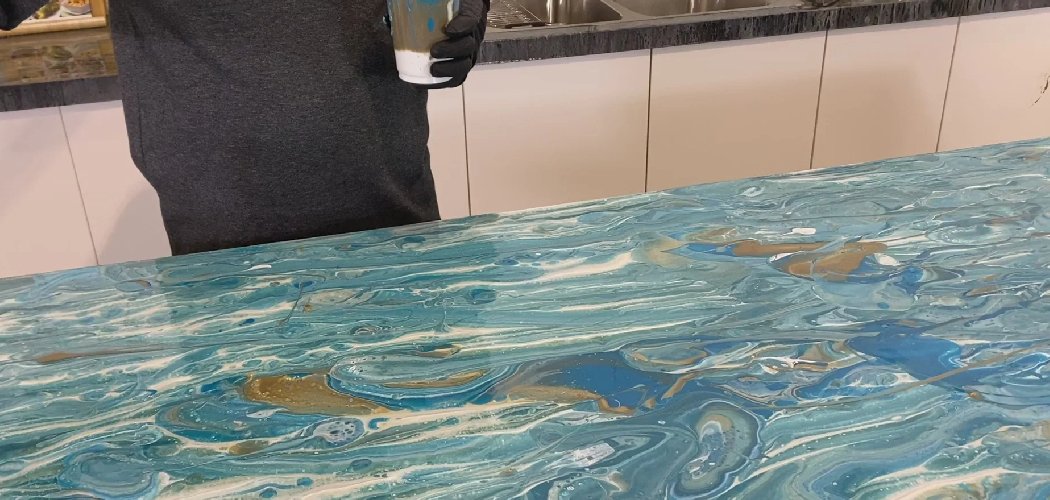
A guy I worked for had a stunning river table — walnut slab with a deep blue resin channel running down the middle. He kept a citrus spray cleaner on the shelf next to it and gave the top a quick wipe every morning. Six months later that glossy blue channel had gone cloudy and streaked, and he couldn’t figure out why. The cleaner was the culprit: acidic, day after day, slowly fogging the resin.
Epoxy is a hard plastic resin, so it behaves nothing like wood or stone underneath. Learning how to clean epoxy table top surfaces comes down to being gentle and skipping the harsh stuff most people reach for. Get the routine right and that mirror finish holds up for years.
What You’ll Need
You already own most of this. The trick is keeping the acidic and abrasive products away from the resin.
- Two or three soft microfiber cloths
- A non-abrasive sponge (soft side only)
- Warm water
- A few drops of mild dish soap
- A spray bottle for your soap solution
- 70% isopropyl alcohol for stubborn spots
- A soft, dry towel for buffing
- A plastic scraper or an old credit card
- Food-safe mineral oil or furniture wax (for upkeep later)
Leave the glass cleaner, the bleach, the vinegar, and anything labeled “citrus” or “scrubbing power” in the cupboard. Those are the products that dull the shine over time.
Wipe It Down Daily with Soap and Warm Water
Your everyday clean should feel almost too simple. Add a few drops of dish soap to a spray bottle of warm water — you want it barely soapy, not foamy. Mist the top lightly, then wipe with a damp microfiber cloth.
Work toward the light coming through a nearby window so you can catch streaks as they form. Finish by buffing with a dry microfiber cloth, because water left to air-dry on glossy resin can leave faint spots, especially if your tap water runs hard.
Lift Sticky Spills Without Scratching the Resin
Dried candle wax, spilled soda, and stuck-on food are where people grab a scouring pad and do real harm. Don’t reach for it. Soften the spot first by laying a warm, damp cloth over it for a couple of minutes.
Once it loosens, slide a plastic scraper or the edge of an old credit card underneath at a low angle. Plastic lifts the gunk without gouging the finish the way a metal knife or blade will. Wipe the area with your soap solution afterward to clear any residue.
Tackle Stubborn Marks with Isopropyl Alcohol
For ink, coffee rings, or a greasy film that soap won’t budge, 70% isopropyl alcohol does the job without the acidity that eats at resin.
- Dab a small amount onto a clean microfiber cloth — never pour it straight onto the table.
- Rub the spot gently in small circles.
- Wipe the area with a plain damp cloth to remove any alcohol residue.
- Buff dry with a soft towel.
- If the mark hangs on, repeat the process instead of pressing harder — patience beats pressure on resin every time.
Clients used to ask me why their “safe” disinfectant wipes left a hazy film on the tabletop. Most of those wipes are mildly acidic or loaded with surfactants that build up on a sealed surface. Alcohol and water rinse away clean; the wipes leave a layer behind.
Bring Back the Shine After Cleaning
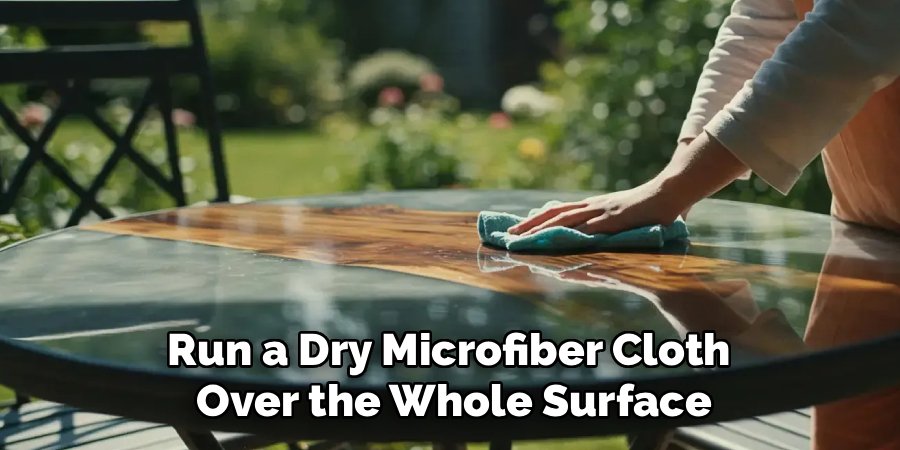
Epoxy looks its best when it’s spotless and bone-dry. After a deeper clean, run a dry microfiber cloth over the whole surface in long, overlapping strokes. This buffs out water marks and restores that wet-look gloss.
If the shine still looks flat in patches, that usually means the finish needs conditioning, not more cleaning. I’ll cover that in the maintenance section below.
What to Use vs. What to Avoid
| Use This | Avoid This |
| Mild dish soap and warm water | Bleach or ammonia-based cleaners |
| 70% isopropyl alcohol for spots | Vinegar, lemon, or acidic cleaners |
| Soft microfiber cloths | Abrasive scrub pads or steel wool |
| Non-abrasive sponge (soft side) | Scouring powders like Comet |
| Plastic scraper for stuck-on messes | Metal knives or blades on the surface |
| Coasters and placemats | Setting hot mugs or dishes directly down |
| Food-safe mineral oil for shine | “Citrus power” degreasers |
| Buffing dry after every clean | Letting water air-dry on the surface |
The vinegar row surprises people. It gets pushed everywhere as the natural do-it-all cleaner, but its acidity slowly dulls and etches resin. Natural doesn’t mean safe for a plastic-based coating.
Common Mistakes to Avoid
Setting hot mugs and dishes straight down. Epoxy softens under heat and can hold a permanent dull ring. A fresh cup of coffee or a hot plate from the microwave is enough to leave a mark. Use a coaster or trivet.
Scrubbing with abrasives. Steel wool, green scour pads, and powdered cleansers scratch the gloss into a cloudy patch. Those micro-scratches don’t buff out.
Using acidic cleaners. Vinegar, lemon, and citrus sprays eat at the finish over months. The dulling creeps up so slowly you don’t notice until the shine is gone.
Letting spills sit. Wine, coffee, and turmeric can stain resin if they linger for hours. Wipe them while they’re fresh.
Leaning on disinfectant wipes. The residue builds into a haze over time. Fine in a pinch, but not as your everyday clean.
Dragging objects across the top. Sliding a laptop, a ceramic bowl, or keys can leave fine scratches. Lift and place instead of dragging.
Safety and Warnings
Cleaning an epoxy tabletop is low-risk, but a few habits protect both you and the finish.
- Never mix cleaning products. You won’t need bleach or ammonia on epoxy at all, but if either sits nearby, keep them apart — combined, they release toxic gas.
- Ventilate when using alcohol. Isopropyl fumes are strong in a closed room. Crack a window or run a fan while you work.
- Keep alcohol away from flame. It’s flammable, so don’t use it near a lit candle or gas burner.
- Test any new product in a hidden spot first. Dab it on an out-of-the-way corner or the underside edge, let it dry, and check that it didn’t dull or discolor the resin before using it on the whole top.
- Mind food-contact use. If you eat directly off the surface, rinse away any alcohol or soap residue with plain water afterward and dry it.
- Wipe drips off the floor. Soapy water and alcohol running down table legs can leave a slick spot underfoot.
Maintenance and Prevention Tips
The tables that still looked showroom-fresh years later belonged to people who protected the surface, not the ones who scrubbed it hardest.
- Use coasters and placemats. Heat and moisture rings are the most common damage I saw. A coaster under every mug prevents both.
- Keep it out of direct sun. Long hours of UV exposure can yellow and cloud epoxy over time, especially lighter or clear resin. Angle the table away from a sunny window or draw a shade during peak afternoon light.
- Wipe spills right away. Especially wine, coffee, and turmeric — the pigments that stain if they sit.
- Condition it a few times a year. A thin coat of food-safe mineral oil, rubbed in with a soft cloth and buffed off, revives the depth and gloss. Furniture wax does the same with a longer-lasting layer.
- Lift, don’t drag. Protecting against scratches keeps the finish clearer than any polish can restore it.
- Buff dry after every wet clean. Two minutes of buffing stops water spots from building into a permanent haze.
FAQ
What is the best cleaner for an epoxy table top?
Mild dish soap in warm water handles nearly everything day to day. For stubborn marks like ink, coffee rings, or grease, use 70% isopropyl alcohol on a soft cloth. Steer clear of anything acidic, abrasive, or bleach-based.
Can you use vinegar on an epoxy table top?
No. Vinegar is acidic, and repeated use slowly dulls and etches the resin. It gets recommended everywhere as a natural cleaner, but “natural” doesn’t make it safe for a plastic-based coating. Stick with soap and water or alcohol.
How do you get scratches out of an epoxy table top?
Light surface scratches can sometimes be reduced by conditioning with food-safe mineral oil or a fine automotive polish rubbed in gently, which fills and masks the marks. Deeper gouges usually need light wet-sanding and a fresh coat of resin, which is a job better left to a refinisher. Prevention — coasters and lifting objects instead of dragging — beats any repair.

Why does my epoxy table top look cloudy or foggy?
Usually it’s residue buildup from disinfectant wipes or acidic cleaners, or micro-scratches from abrasive pads. Clean with alcohol and water to strip the film, then condition with a little mineral oil to bring the shine back. If UV exposure or scratches caused it, refinishing is the only full fix.
Can you put hot things on an epoxy table top?
You shouldn’t. Epoxy softens under heat and can leave a permanent dull ring — even a hot coffee mug or a plate from the microwave can mark it. Always use a coaster or trivet.
How often should you clean an epoxy table top?
Wipe it down with soap and water whenever it’s used, and do a fuller clean weekly. Buff it dry each time to prevent water spots, and condition it two or three times a year to keep the gloss deep.
Keep a coaster under every mug, wipe spills before they set, and buff the top dry after each wet clean — that trio prevents most of the damage I ever saw. A little conditioning a couple times a year keeps the finish glassy instead of fading to a tired matte.
