

You finally nail the socarrat — that crispy, caramelized crust of rice stuck to the bottom that Spanish cooks brag about — and then you kill your pan by dumping it in the sink with dish soap and a green scouring pad. Ten minutes of scrubbing later, the thin layer of seasoning you built up over months is gone, and by morning there’s a bloom of orange rust across the metal. That single move, aggressive soap-and-scour on bare carbon steel, ruins more paella pans than actual cooking ever will.
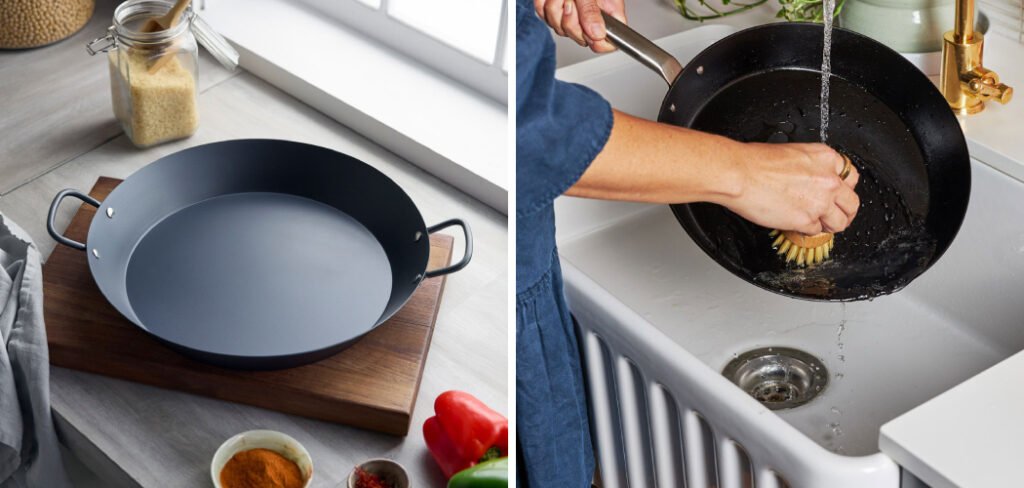
Learning how to clean a paella pan the right way depends entirely on what it’s made of, because carbon steel, enameled steel, and stainless all want different treatment. Get the material right, and cleanup takes five minutes and actually improves the pan over time.
What You’ll Need
- Hot water (straight from the tap is fine)
- A soft sponge or non-abrasive scrubber
- A wooden or plastic spatula for lifting stuck-on rice
- Coarse salt (for stubborn carbon steel jobs)
- A small amount of mild dish soap (for enameled or stainless only)
- A clean, dry dish towel
- Neutral cooking oil — grapeseed, canola, or flaxseed
- Paper towels
- A stovetop burner for drying and re-oiling carbon steel
Skip the steel wool, the dishwasher, and anything with harsh degreasers if your pan is bare carbon steel. Those are the fast track to a stripped, rusty pan.
Know Your Pan Before You Touch It
Most paella pans (or paelleras) fall into three camps, and mixing up the cleaning method is where people go wrong.
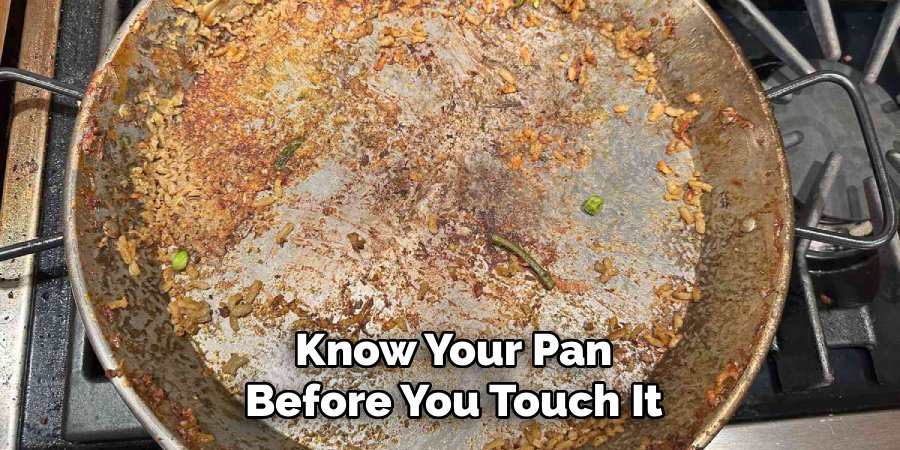
- Carbon steel (pulido/polished): The traditional choice. It’s reactive, rusts easily, and relies on a seasoned oil layer. Treat it like a cast iron skillet.
- Enameled steel: Usually dark with white speckles. The enamel coating resists rust, so it tolerates soap and a gentle scrub.
- Stainless steel: Modern, non-reactive, and the most forgiving. Soap and water won’t hurt it.
If you’re not sure which you have, assume carbon steel and clean gently. You can always do more later — you can’t un-strip seasoning.
Clean Carbon Steel While It’s Still Warm
Carbon steel is the one that scares people, but it’s genuinely easy once you stop treating it like a dinner plate. The trick is to clean it while it’s still warm from cooking, before the rice cements itself on.
- Let the pan cool just enough to handle safely — warm, not scorching.
- Scrape leftover rice and bits into the trash with a wooden spatula.
- Rinse under hot running water, using the soft side of a sponge.
- For stuck-on socarrat, sprinkle a spoonful of coarse salt and scrub with a damp cloth — the salt acts as a gentle abrasive that won’t strip seasoning.
- Rinse again and check that no grit or rice remains.
- Dry immediately and completely with a towel.
Here’s the part that saves your pan: after towel-drying, set the pan on a burner over low heat for a minute or two until every trace of moisture evaporates. Then wipe a few drops of neutral oil across the surface with a paper towel, buff off the excess, and store. That thin oil film is what keeps rust away between uses.
Back when I cleaned for a family that hosted big Sunday paellas, they’d always ask why their pan went rusty and mine never did — it came down entirely to that 90-second dry-on-the-burner step. Air-drying isn’t enough. Water hides in the cooking surface and starts corroding within hours, especially in a humid kitchen.
Wash Enameled Steel Like Normal Cookware
Enameled pans are the low-stress option because the coating shrugs off rust. You get to use soap here without guilt.
- Let the pan cool to lukewarm — never plunge a hot enameled pan into cold water, or the enamel can crack from thermal shock.
- Scrape out food debris with a plastic or wooden tool.
- Wash with warm water, mild dish soap, and a soft sponge.
- For baked-on spots, soak in warm soapy water for 15–20 minutes, then wipe away.
- Rinse thoroughly and dry with a towel.
You don’t need to oil an enameled pan, but drying it well still prevents water spots and protects any exposed rim edges where the enamel is thinnest.
Handle Stainless Steel Without the Rainbow Stains
Stainless is the most forgiving, though it loves to show heat discoloration and stubborn stuck rice.
- Soak the pan in hot water for 10 minutes to loosen the socarrat.
- Wash with soap and a non-abrasive sponge.
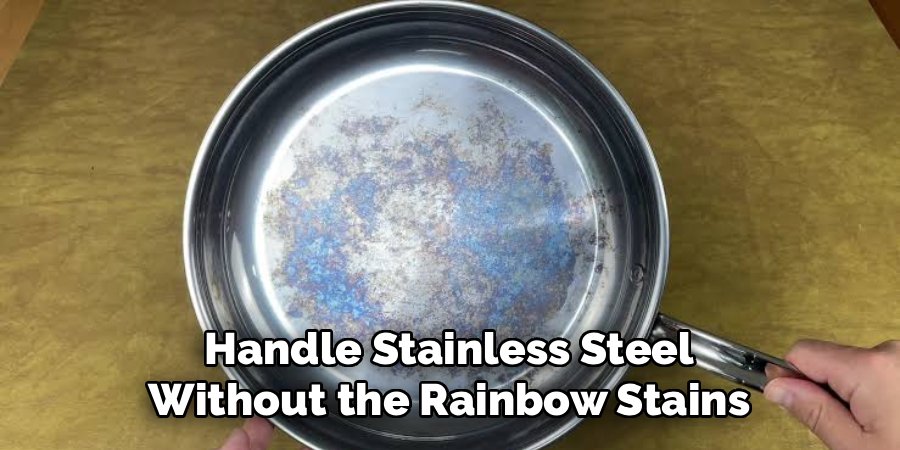
- For rainbow-colored heat tint, wipe with a cloth dipped in a little white vinegar, then rinse.
- Tackle burnt patches by simmering water with a spoonful of baking soda for a few minutes, then scrubbing gently.
- Rinse and dry to avoid mineral spots.
Carbon Steel vs Enameled vs Stainless: Cleaning at a Glance
| Task | Carbon Steel | Enameled Steel | Stainless Steel |
| Dish soap | Avoid — strips seasoning | Fine | Fine |
| Scouring pad | Never — use salt instead | Soft scrub only | Non-abrasive only |
| Dishwasher | Never | Not recommended | Usually OK, but hand-wash is kinder |
| Drying | Towel + burner, immediately | Towel dry | Towel dry |
| Oil after washing | Always | Not needed | Not needed |
| Rust risk | High | Low | Very low |
| Soaking | Keep short, dry fast | Fine | Fine |
Common Mistakes to Avoid
- Putting carbon steel in the dishwasher. The detergent and long water exposure strip the seasoning and rust the pan in a single cycle. Hand-wash every time.
- Scrubbing off the seasoning with soap and steel wool. That dark patina isn’t dirt — it’s the non-stick layer you want. Use hot water and salt instead.
- Letting the pan air-dry. Water sitting on bare steel means rust. Dry it fully, and heat carbon steel on the burner to finish.
- Shocking a hot pan with cold water. This warps thin steel and can crack enamel. Let the pan cool a bit first.
- Soaking carbon steel overnight. A long soak undoes all your seasoning work and invites corrosion. Clean it promptly instead.
- Forgetting to re-oil. Skipping the oil film on carbon steel is the most common reason a well-cleaned pan still rusts.
Safety and Warnings
Cleaning a paella pan is low-risk, but a few things protect both you and the pan.
- Don’t shock hot metal with cold water. Thermal shock can warp a thin carbon steel paellera and crack enamel. Let the pan drop to warm before rinsing.
- Skip harsh degreasers and oven cleaners on carbon steel and enamel. Strong caustic chemicals eat through seasoning and can damage enamel coatings. Mild dish soap is the strongest thing these surfaces need — and only on enamel or stainless.
- Never mix cleaning products. You won’t need bleach or ammonia for cookware, so there’s no reason to combine anything. As a blanket rule, never mix bleach and ammonia — the fumes are toxic.
- Watch for sharp rust flakes. If a neglected carbon steel pan has heavy rust, wear gloves while scrubbing so you don’t cut or splinter your hands on flaking metal.
- Keep handles cool. Many paella pans have metal handles that stay hot long after the pan looks safe. Use a towel or mitt when moving the pan to dry it.
Maintenance and Prevention
A little routine care means you’ll almost never face a deep-cleaning battle.
- Re-oil carbon steel after every wash. A wiped-on layer of neutral oil is your rust barrier. Buff off the excess so it doesn’t turn sticky.
- Store carbon steel dry and covered. A paper towel laid inside the pan absorbs stray moisture, and a spot away from the steamy dishwasher or sink keeps humidity off it.
- Build seasoning by cooking. Every paella you make with a little oil deepens the patina. The pan gets more non-stick the more you use it, so cook often.
- Wipe enameled rims dry. The enamel is thinnest at the edges, so those spots can rust if left wet. Dry them well.
- Re-season if food starts sticking. When carbon steel loses its slick surface, heat a thin coat of oil in the pan until it smokes lightly, let it cool, and wipe. That rebuilds the layer.
- Keep salt handy. Coarse salt is your go-to for stuck-on rice — cheaper and gentler than any scrub pad, and it won’t touch your seasoning.
FAQ
Can you use soap on a paella pan?
It depends on the material. Enameled and stainless steel pans handle mild dish soap fine, but bare carbon steel should be washed with just hot water and salt, because soap strips the seasoned oil layer that keeps it non-stick and rust-free. If you slip up and use soap on carbon steel, re-oil the pan right away to protect it.
How do you get rust off a carbon steel paella pan?
Scrub the rusty areas with coarse salt or a fine steel wool pad and a little oil until the rust lifts off and you see bare metal. Rinse, dry the pan completely, then re-season it by heating a thin coat of neutral oil until it smokes and wiping off the excess. This restores the protective layer so rust doesn’t return.
Why does my paella pan keep rusting?
Almost always because it’s being air-dried or stored damp. Carbon steel rusts within hours of contact with lingering moisture, so towel-dry it, heat it on the burner to drive off every trace of water, and wipe on a thin oil film before storing. Humid kitchens make this step even more important.
Can a paella pan go in the dishwasher?
Stainless steel pans usually survive the dishwasher, though hand-washing is gentler. Carbon steel and enameled pans should never go in — the detergent strips carbon steel seasoning and rusts it, and prolonged water exposure can harm enamel over time. Hand-washing takes only a few minutes and protects your investment.
Should you scrub off the crust at the bottom of a paella pan?
Scrape out loose leftover rice, but don’t attack the darkened, seasoned surface underneath — that patina is what makes the pan work. Use a wooden spatula for debris and coarse salt for anything stubborn, saving your seasoning while still getting the pan clean.
How do you season a new paella pan?
Wash off the factory coating with warm soapy water, dry the pan fully, then heat a thin layer of neutral oil across the entire surface until it smokes lightly. Let it cool, wipe away the excess, and repeat a couple of times. Each round builds the non-stick, rust-resistant layer you’ll maintain from then on.
Match your cleaning method to your pan’s material, dry carbon steel like your dinner depends on it, and never let that dark seasoning scare you into scrubbing it away. Do that, and your paellera will turn out better rice every single time you cook.
