


A homeowner once showed me a beautiful limestone-look cast stone surround with a rust-colored stain bleeding down one side. She’d hung a metal stocking holder off the mantel over the holidays, it got damp, and the iron leached straight into the porous stone. Then she made it worse by scrubbing with an acidic bathroom cleaner, which ate a dull, chalky patch into the finish.
That combination — a porous surface plus the wrong cleaner — is behind most of the damage I’ve seen. Learning how to clean a cast stone fireplace really comes down to two habits: choosing pH-neutral products and never letting anything acidic or abrasive touch the surface. Once you understand that, the actual cleaning is gentle, slow work that anyone can manage.
What You’ll Need
Set everything out before you start so you’re not hunting for a cloth with a wet, dripping surface in front of you:
- Two soft microfiber cloths
- A soft-bristled brush (a clean, dry paintbrush or a soft nylon detailing brush)
- A vacuum with a soft brush attachment
- pH-neutral stone cleaner (or a few drops of mild dish soap in warm water)
- Distilled water for rinsing
- A spray bottle
- White cotton towels for drying
- Painter’s tape and plastic sheeting to protect the hearth and floor
- A poultice paste for deep stains (baking soda and water, or a store-bought stone poultice)
- Nitrile gloves
Skip anything labeled acidic, abrasive, or “heavy-duty.” Vinegar, lemon, bleach, and scouring powders all belong far away from this project.
Dry-Dust the Surround Before Anything Gets Wet
Start completely dry. Cast stone traps a surprising amount of soot, dust, and fine ash in its textured surface, and if you go straight in with water, you’ll just smear that grime into a muddy film that’s much harder to lift.
Run the vacuum’s soft brush attachment across the whole surround, working top to bottom so falling dust lands on areas you haven’t cleaned yet. Then take your dry soft-bristled brush and work it into the carved details, corners, and any decorative molding where the vacuum can’t reach. Get every loose particle off before you introduce a single drop of moisture.
Mix a Gentle pH-Neutral Cleaning Solution
Fill your spray bottle with warm water and either a squirt of pH-neutral stone cleaner or a few drops of mild dish soap. You want it barely soapy — think of the faint slip of a rinsed glass, not a sink full of suds.

Here’s the detail most people miss: cast stone is essentially a fine concrete, and it’s alkaline by nature. Acids react with it and etch the surface, leaving that chalky, lighter patch my client ended up with. A neutral cleaner won’t fight the stone chemically, so it lifts grime without eating the finish.
Wipe Down in Sections, Not All at Once
Dampen — don’t soak — one microfiber cloth in your solution and wring it out well. The cloth should feel damp, not dripping.
Work one small section at a time, roughly two feet square, wiping in gentle circles to loosen soot and handprints. Follow immediately behind with your second cloth dampened in plain distilled water to lift the soap away. Leaving soap residue on the surface attracts dust and can dull the finish over time, so that rinse step matters more than the wash itself.
Handle Carved Details and Textured Areas
For carved corbels, fluting, or any deep texture, switch to the soft brush dipped lightly in your solution. Use short, gentle strokes to work grime out of the recesses, then blot with a damp cloth. Don’t flood these areas — water pools in the low spots and takes forever to dry, which invites the very staining you’re trying to prevent.
Tackle Stubborn Stains With a Poultice
For a set-in stain — soot, oil, rust, or a drink ring — a poultice does the slow, patient work that scrubbing can’t. A poultice is a paste that sits on the stain and draws it up out of the stone as it dries.
Follow this order:
- Mix baking soda with a little distilled water until you have a thick, spreadable paste (about peanut-butter consistency).
- Spread it over the stain about a quarter-inch thick, extending slightly past the edges.
- Cover it with plastic wrap and tape down the sides.
- Leave it 24 to 48 hours to dry fully — this is where the drawing action happens.
- Peel or gently scrape off the dried paste with a plastic scraper.
- Rinse the spot with distilled water and blot dry.
- Repeat if the stain has faded but not vanished; deep stains often need two or three rounds.
Rust and oil stains are the stubborn ones. Rust rarely comes out completely with a home poultice, so set your expectations — you’re aiming to lighten it, and a specialty rust remover made for stone may be needed for the rest.
Dry the Surface Completely
Once you’ve cleaned and rinsed, go over the whole surround with dry cotton towels. Don’t let it air-dry on its own, especially in the textured areas.
Standing moisture is what carries minerals to the surface and leaves faint white streaks or spots as it evaporates. A thorough hand-dry stops that before it starts.
Dos and Don’ts at a Glance
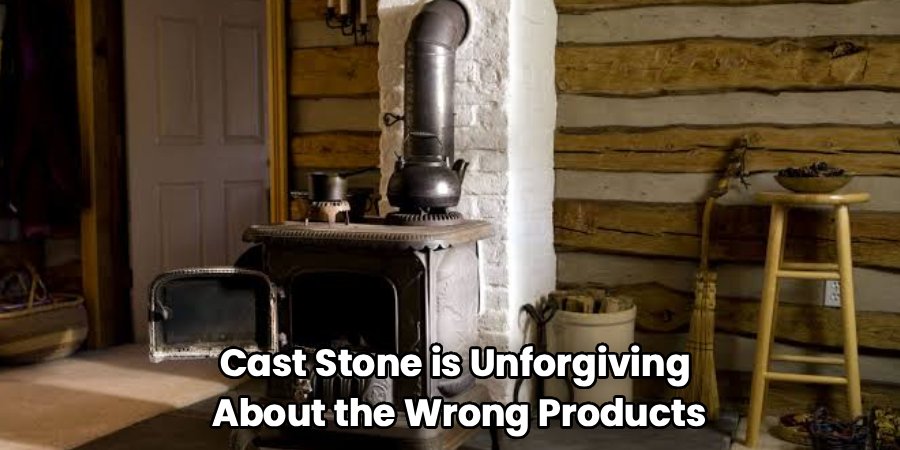
Cast stone is unforgiving about the wrong products, so keep this handy before you reach under the sink:
| Do This | Avoid This | Why It Matters |
| Use pH-neutral cleaner or mild dish soap | Vinegar, lemon, or any acid | Acids etch the alkaline stone and leave chalky patches |
| Dust dry before wetting | Wiping wet over dusty stone | Water turns loose soot into a hard-to-remove film |
| Rinse with distilled water | Leaving soap residue | Residue dulls the finish and attracts new dust |
| Blot spills right away | Letting liquids sit | Porous stone absorbs stains fast, especially oil |
| Use a soft brush on texture | Scouring pads or wire brushes | Abrasives scratch and wear down the surface |
| Hand-dry with cotton towels | Letting it air-dry | Standing water leaves mineral streaks |
| Test any new product in a hidden spot | Assuming a cleaner is safe | Reactions show up fast and can be permanent |
Common Mistakes to Avoid
These are the repeat offenders I ran into again and again on service calls, and each one either damages the stone or makes the job harder:
- Reaching for vinegar. It’s the go-to “natural” cleaner for everything, but on cast stone it etches a permanent dull spot.
- Scrubbing with abrasive pads. Steel wool and scouring sponges leave scratches that hold dirt worse than before.
- Soaking the stone. More water doesn’t mean cleaner — it means longer drying and higher staining risk.
- Skipping the rinse. Soap film left behind grabs dust within days and clouds the finish.
- Ignoring spills. A dropped glass of red wine or a splash of cooking oil soaks in within minutes if you walk away.
- Using colored cloths on light stone. Dye from a dark rag can transfer onto damp pale stone. Stick with white or undyed cotton and microfiber.
- Sealing over dirt. If you apply sealer without cleaning first, you lock the grime in permanently.
Safety and Warnings
Cleaning cast stone is low-hazard compared to a working firebox, but there are still a few real risks worth respecting.
Test every product in a hidden spot first. The inside edge of the surround or a low back corner works well. Wait and check for any dulling or color change before you use it on visible areas. Damage to stone finishes is often permanent.
Never mix cleaning products. You genuinely don’t need much here — neutral soap and water do the job. Skip bleach entirely, and never combine bleach with ammonia or any acidic cleaner, since those fumes are dangerous in an enclosed room.
Ventilate if you use a commercial stone product. Crack a window and read the label. Some rust removers and sealers give off strong fumes and call for gloves and airflow.
Make sure the firebox is cold. If your surround wraps a working fireplace, confirm it’s fully out and cool before you lean in with wet cloths. Ceramic and metal parts hold heat long after the flames die down.
Wear gloves for poultices and rust removers. Even a baking soda paste is drying on the skin over a long contact, and specialty stone chemicals can irritate.
Maintenance and Prevention Tips
A little routine care keeps each deep clean quick and stops stains from ever setting in:
- Dust weekly with a dry microfiber cloth. Regular light dusting stops soot from building into a stubborn film.
- Blot spills the second they happen. Keep a cloth nearby during gatherings — this one habit prevents most permanent stains.
- Reseal every one to two years. A breathable stone sealer gives the porous surface a fighting chance against soot and spills. I always told clients to reseal in late summer, before the fireplace season starts, so the surround goes into winter fully protected.
- Keep metal objects off the mantel in damp conditions. Candle holders, décor, and stocking hangers can leave rust rings if moisture gets trapped underneath.
- Use coasters and trivets on the hearth. Treat the stone like you’d treat an unsealed wood table — anything wet or oily needs a barrier.
- Check for hairline cracks each season. Catching a small crack early means dirt and moisture won’t work their way in and widen it.
Frequently Asked Questions
What is the best cleaner for a cast stone fireplace?
A pH-neutral stone cleaner or a few drops of mild dish soap in warm water. Both lift soot and grime without reacting with the alkaline stone. Avoid anything acidic, abrasive, or bleach-based, since those either etch or scratch the finish.
Can you use vinegar to clean cast stone?
No. Vinegar is acidic, and cast stone is alkaline, so the two react and leave a dull, chalky etched spot. It’s one of the most common ways people accidentally damage their surround. Stick with a neutral cleaner instead.
How do you remove soot from a cast stone fireplace?
Dry-dust and vacuum first to lift loose soot, then wipe in small sections with a barely damp cloth and neutral soap. For soot that’s soaked in, a baking soda poultice left on for 24 to 48 hours draws it out. Always rinse and hand-dry afterward.
How do you get stains out of cast stone?
Use a poultice — a thick paste of baking soda and distilled water spread over the stain, covered with plastic, and left to dry for a day or two. As it dries, it pulls the stain up out of the stone. Deep oil and rust stains often need two or three rounds.
Should you seal a cast stone fireplace?
Yes, sealing helps a lot. Cast stone is porous, so a breathable stone sealer applied every one to two years makes soot and spills far easier to wipe away. Just be sure the surface is clean and fully dry before you seal, or you’ll trap dirt underneath.
Why does my cast stone fireplace have white streaks?
Those are usually mineral deposits left behind when water evaporates on the surface, often from air-drying or using hard tap water. Rinse with distilled water and hand-dry with cotton towels to prevent them. Persistent white haze can also be efflorescence, which is minerals migrating out of the stone itself.
The Bottom Line
Treat cast stone as the porous, acid-sensitive material it is, and the whole job gets simple: dust dry, wash gentle, rinse with distilled water, and dry by hand. Keep acids and abrasives away, blot spills fast, and reseal before each fireplace season. Do that, and your surround will keep its clean, even finish for years.
