
The fastest way to ruin a beautiful acacia dining table is to wipe it down with an all-purpose spray and walk away. I watched a client do exactly that for two years, and by the time she called me, the finish had gone cloudy and the grain looked thirsty and gray. Acacia is tough, but it hates two things: standing water and harsh chemicals.
Learning how to clean acacia wood the right way takes about five minutes and a few things you already own. Get the routine down, and this hardwood will stay rich and warm for decades. Skip it, and you’ll be sanding and re-oiling far sooner than you should.
What You’ll Need
- Two soft microfiber cloths (one for washing, one for drying)
- A small bowl of warm water
- A few drops of mild dish soap or pH-neutral wood cleaner
- White vinegar (for occasional deeper cleaning)
- Food-grade mineral oil or a wood-specific conditioner
- A soft-bristle brush or old toothbrush (for grain and grooves)
- Coasters and felt pads (for after you’re done)
That’s genuinely it. You don’t need specialty sprays or anything with a warning label the size of a paragraph.
Step-by-Step: Cleaning Acacia Wood the Right Way
Dry-Dust Before You Add Any Moisture
Always start dry. Wipe the surface with a clean microfiber cloth to lift dust, crumbs, and grit. This matters more than people think, because dragging a wet cloth over dry grit creates tiny scratches that dull the finish over time. Go with the grain, not across it.
Mix a Gentle Cleaning Solution
Add two or three drops of mild dish soap to a bowl of warm water. You want it barely sudsy, not a foamy sink of dishwater. For sealed acacia, this solution handles almost everything from coffee rings to greasy fingerprints.
Wipe With a Damp — Not Wet — Cloth
Here’s the part most people get wrong. Dip your cloth, then wring it out until it’s just damp. Acacia has an open, porous grain, and it drinks up water faster than denser hardwoods like oak. If your cloth leaves a wet trail behind it, it’s too wet. Wipe in the direction of the grain, working in small sections.
Tackle Grooves and Textured Areas
Acacia often has gorgeous natural variation and, on furniture, carved edges or slatted sections. A soft brush or old toothbrush gets into those grooves where grime hides. Barely dampen the bristles and work gently.
Dry Immediately and Completely
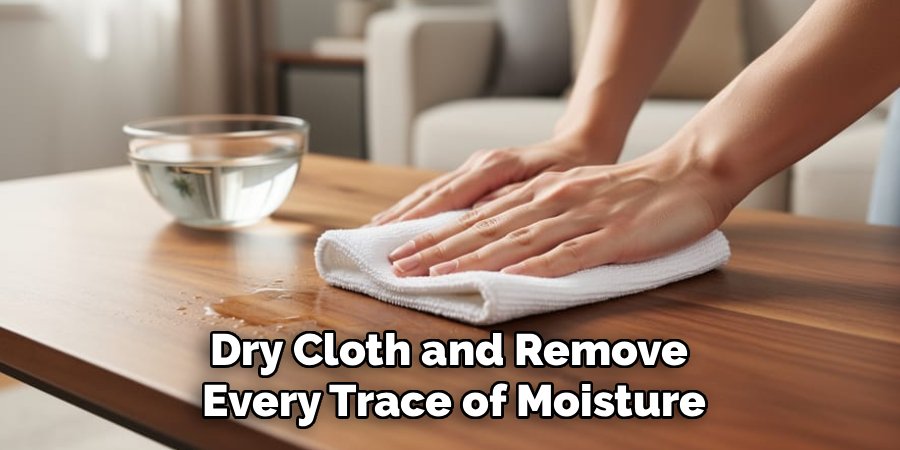
Take your second, dry cloth and remove every trace of moisture right away. Don’t let acacia air-dry. Trapped moisture is the number one cause of the gray, blotchy patches I used to get called out to fix. One quick pass with a dry cloth prevents all of it.
Handle Stubborn Stains
For dried-on food, sticky residue, or water marks, dampen a cloth with a 50/50 mix of white vinegar and water. Wipe the spot, then immediately go over it with plain water, then dry. Vinegar cuts through buildup without stripping the finish, but don’t leave it sitting — its acidity can dull the sheen if you let it linger.
Safe vs. Unsafe: What to Use on Acacia Wood
| Do This | Avoid This |
| Mild dish soap and warm water | Bleach or ammonia-based cleaners |
| Damp, wrung-out microfiber cloth | Soaking wet rags or standing water |
| Diluted white vinegar for buildup | Undiluted vinegar left to sit |
| Wiping with the grain | Abrasive scrubbers or steel wool |
| Food-grade mineral oil to condition | Furniture polish with silicone or wax buildup |
| Drying immediately by hand | Leaving the surface to air-dry |
| Coasters and trivets under items | Placing hot pans directly on the surface |
Common Mistakes to Avoid
Over-wetting the wood. I’ll say it again because it’s the big one. Acacia’s porous grain soaks up water, swells slightly, and dries unevenly. That’s what causes cloudiness and gray patches.
Using all-purpose or glass cleaners. Most contain ammonia or strong solvents that break down the protective finish. Once that’s gone, the wood is exposed and stains set fast.
Reaching for furniture polish sprays. They promise shine but leave a silicone film that attracts dust and builds up into a hazy layer you eventually have to strip off.
Scrubbing across the grain. This grinds dirt into the pores and leaves faint scratches you’ll notice under sunlight.
Forgetting to condition. Acacia is naturally oily, but exposed pieces lose that richness over time. Skip conditioning entirely and the surface goes dry and pale.
Safety and Warnings
Acacia cleaning is low-risk, but a few cautions save you from damage and headaches:
- Never mix bleach and ammonia, or any cleaner containing them. Combined, they release toxic chloramine gas. There’s no reason to use either on acacia anyway.
- Test any new cleaner or oil in an inconspicuous spot first — the underside of a table or a back corner. Finishes vary between manufacturers, and what’s fine on one piece may react on another.
- Ventilate the room when applying mineral oil or conditioner. The fumes are mild, but a cross-breeze speeds drying and keeps the air clear.
- Watch heat and moisture on outdoor acacia. Direct summer sun and rain will weather it fast if it’s not sealed. Bring cushions and covers in during wet spells.
No respirators or gloves needed for routine cleaning — just mild soap, a damp cloth, and a little care.
Maintenance and Prevention: Keeping Acacia Clean Longer
The real secret isn’t how you clean acacia — it’s how you protect it between cleanings. A few habits stretch the time between deep cleans and keep the finish looking new.
Wipe spills the moment they happen. Acacia’s open grain means liquids seep in quickly. A five-second wipe now prevents a stain later.
Use coasters, trivets, and placemats. Heat rings and water marks are almost always avoidable. This is boring advice, and it’s also the single most effective thing you can do.
Condition two to four times a year. Apply a thin coat of food-grade mineral oil with a clean cloth, let it soak in for 15 minutes, then buff off the excess. I always told clients to do this at the change of seasons — spring and fall — because the shift from dry indoor heating to humid summer air is exactly when the wood needs a little extra moisture to stop it cracking. It’s an easy calendar cue that actually lines up with what the wood needs.
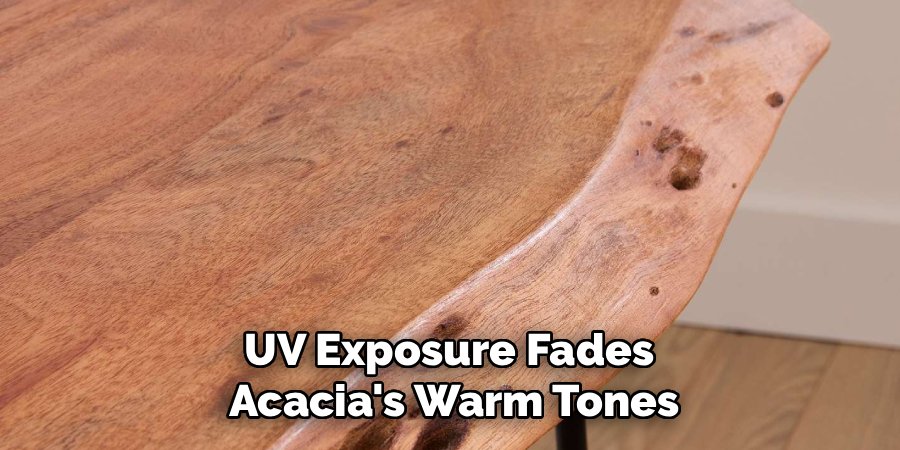
Keep it out of direct, constant sunlight. UV exposure fades acacia’s warm tones over months. Rotate outdoor pieces or use a light cover.
Buff, don’t soak, for everyday touch-ups. A quick dry-cloth buff most days means you rarely need a full wet clean.
FAQ
Can you use vinegar to clean acacia wood?
Yes, but dilute it. A 50/50 mix of white vinegar and water works well for stubborn buildup and water marks. Wipe it on, follow with plain water, and dry immediately. Never use undiluted vinegar or let it sit — the acidity can dull the finish over time.
How do you get water stains out of acacia wood?
For fresh, cloudy white marks, try a light rub with diluted vinegar or a paste of mineral oil and a pinch of fine salt, wiping with the grain. Dry thoroughly, then condition. Deeper, dark stains that have penetrated the wood may need light sanding and re-oiling to fully lift.
Is acacia wood waterproof?
No. Acacia is water-resistant thanks to its natural oils, but it’s not waterproof. Standing water and constant moisture will still cause swelling, staining, and gray patches, which is why drying it promptly matters so much.
How often should you oil acacia wood?
Two to four times a year for most indoor pieces. Outdoor acacia and heavily used surfaces may need it more often — if the wood looks dry, pale, or dull, it’s asking to be conditioned. A quick check is to drop a little water on the surface; if it soaks in fast instead of beading, it’s time to oil.
Can you use olive oil or cooking oil on acacia wood?
Skip it. Kitchen oils like olive or vegetable oil go rancid inside the grain and can turn sticky or smell over time. Use food-grade mineral oil or a wood-specific conditioner instead — they’re stable and won’t spoil.
What should you never use to clean acacia wood?
Avoid bleach, ammonia, all-purpose sprays, abrasive scrubbers, and silicone-based furniture polish. These either strip the protective finish, scratch the surface, or leave a haze that builds up over time.
Final Word
Treat acacia gently — damp cloth, quick drying, and a seasonal coat of oil — and it’ll reward you with years of warm, rich grain. The moment you catch yourself reaching for a spray bottle of all-purpose cleaner, put it back and grab a soft cloth instead.
