
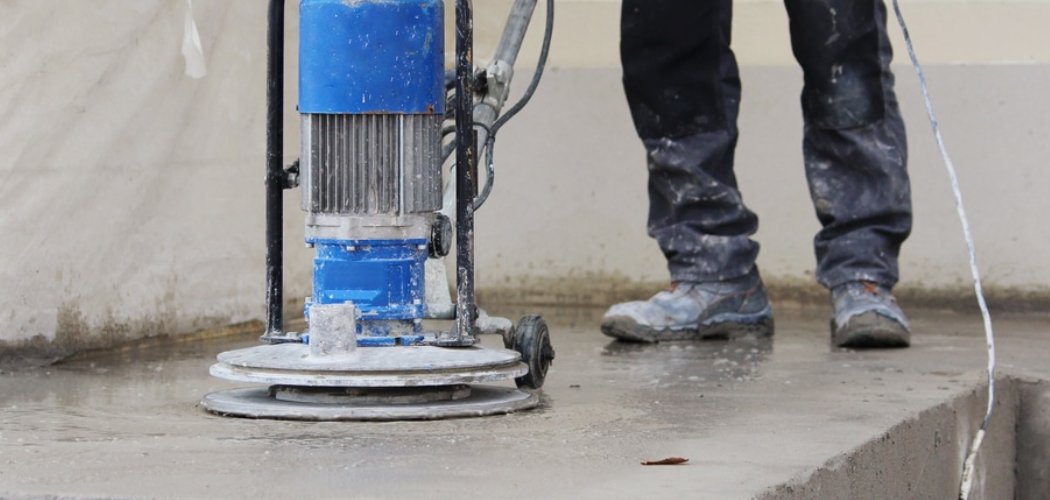
The first time I tried to sweep up concrete dust after a garage grinding job, I made it worse. I grabbed a broom, sent a gray cloud into the air, and spent the next three days finding a fine film on every shelf, tool, and window ledge in the room. That dust doesn’t just fall — it floats, drifts, and settles everywhere you’re not looking.
Learning how to clean concrete dust properly means fighting your instinct to sweep. The right approach traps the particles instead of launching them, and it protects your lungs while you work.
What You’ll Need
Set yourself up before you touch a single surface. Half the mess I cleaned up over the years came from people starting without the right gear.
- N95 or P100 respirator (a dust mask won’t cut it for silica)
- Safety goggles that seal around your eyes
- Rubber or nitrile gloves
- HEPA-filter vacuum (a standard shop vac will just blow fine dust back out)
- Microfiber cloths and mop
- Two buckets — one for cleaning solution, one for rinse water
- pH-neutral floor cleaner or a few drops of mild dish soap
- Garden sprayer or spray bottle for misting
- Squeegee (for larger floor areas)
- Trash bags for disposal
Notice the vacuum is HEPA-rated. This is the detail people skip, and it matters more than anything else on the list.
The Step-by-Step Cleaning Process
Concrete dust is fine enough to pass straight through a regular vacuum filter. Your whole strategy should be about capturing it, not stirring it up.
Seal Off and Ventilate the Space
Before you clean, close interior doors and cover vents or air returns with plastic and tape. You don’t want the dust migrating into the rest of your home through the HVAC system. Then open windows to the outside and set up a fan pointing out a window to pull airborne particles away from you.
Let the Dust Settle First
If you’ve just finished grinding, cutting, or drilling, walk away for 20 to 30 minutes. Airborne concrete dust needs time to fall before you start collecting it. Wading in immediately just keeps it suspended and coats everything again the moment it drops.
Mist Surfaces to Weigh the Dust Down
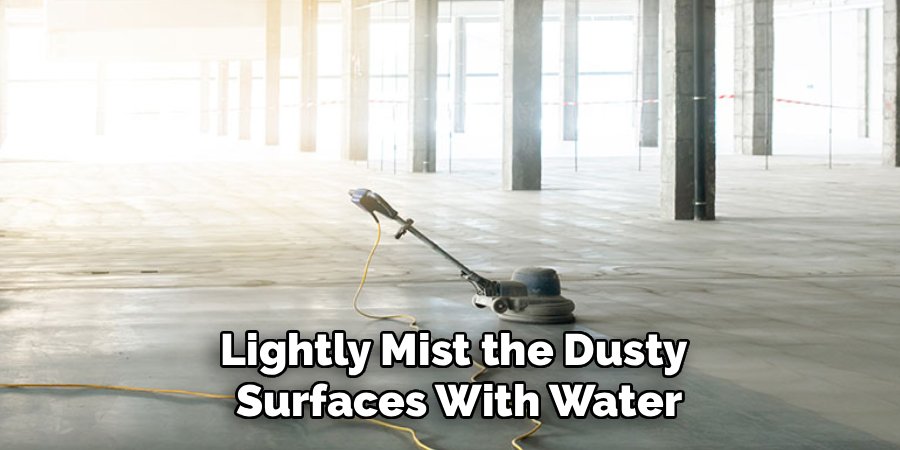
Here’s the trick that separates a clean job from a disaster. Lightly mist the dusty surfaces with water from a spray bottle or garden sprayer before you touch anything. Damp dust clumps together and stays put instead of billowing into the air. Don’t soak it — you want a fine mist, not puddles that turn dust into a cement-like paste.
Vacuum With a HEPA Filter
Run your HEPA vacuum slowly across every misted surface. Work top to bottom: shelves, ledges, and window sills first, then walls, then the floor last. Concrete dust settles high and low, so don’t forget door frames and the tops of baseboards. Moving slowly lets the vacuum actually pull the particles in rather than skimming over them.
Wipe Down Hard Surfaces With Microfiber
Once the loose dust is vacuumed, wet a microfiber cloth and wipe every hard surface. Microfiber grabs and holds fine particles instead of pushing them around like a dry rag. Rinse the cloth often in your rinse bucket, and change the water the second it turns cloudy gray.
Mop the Floor in Sections
Fill one bucket with warm water and a pH-neutral cleaner. Mop in small sections, wringing the mop well between passes, and rinse with clean water afterward. On a big garage or basement slab, follow with a squeegee to pull the gray water toward a drain. You’ll likely need two or three passes — concrete dust is stubborn and loves to leave a haze behind.
Dispose of Waste Safely
Don’t dump dusty rinse water down an indoor drain where it can clog and re-deposit residue. Let heavy sediment settle in the bucket, pour off the water outdoors away from storm drains, and bag the solids. Wipe down your vacuum’s exterior and empty the canister outside while still wearing your respirator.
Dry Sweeping vs. Wet Methods
| Dry Sweeping / Dry Vacuuming | Wet Suppression Method |
| Sends fine dust airborne | Keeps particles weighed down |
| Spreads silica through the room | Traps silica at the source |
| Standard vacuum blows dust back out | HEPA vacuum captures it fully |
| Coats nearby surfaces again | Contains the mess to one area |
| High inhalation risk | Far lower inhalation risk |
| Fast but ineffective | Slower but actually works |
If you take one thing from this table: misting and HEPA vacuuming beats sweeping every single time. Dry methods just relocate the problem.
Common Mistakes to Avoid
Grabbing a broom. Dry sweeping is the number one mistake. It launches the finest, most dangerous particles right into the air you’re breathing.
Using a regular shop vac. Without a HEPA filter, the vacuum captures the big stuff and blasts the fine dust straight through the exhaust. You end up with an even cloud instead of a pile.
Soaking the surface. Too much water turns concrete dust into a gritty slurry that dries back into a stubborn crust. A light mist is all you need.
Skipping the respirator. A cloth mask or bandana does nothing against silica. You need an N95 at minimum, and P100 for heavy jobs.
Cleaning too soon. Diving in before the dust settles means you’re just chasing a cloud around the room.
Forgetting the HVAC. Leave your vents uncovered and the dust hitches a ride through the ductwork into every room in the house.
Safety and Warnings
This is the section you cannot skip. Concrete dust contains crystalline silica, and breathing it in over time causes silicosis — a serious, irreversible lung disease. Treat every dusty concrete job as a respiratory hazard.
- Wear an N95 respirator at minimum, P100 for heavy dust. Dust masks, surgical masks, and bandanas do not filter silica. Make sure the respirator seals against your face.
- Protect your eyes and skin. Fine dust irritates eyes and dries out skin. Sealed goggles and gloves are not optional on a big cleanup.
- Use wet suppression whenever possible. Misting the dust before cleaning is the single most effective way to keep silica out of the air. Contractors are legally required to control silica dust for a reason.
- Ventilate, but don’t blow dust indoors. Point fans out of windows so you’re pulling contaminated air outside, not circulating it.
- Never dry-sweep silica dust. It’s the fastest way to fill a room with airborne particles.
- Keep others out. Close off the area so family, kids, and pets aren’t breathing the dust while you work. Keep it sealed until everything is wiped down and dry.
- Wash up thoroughly. Change out of dusty clothes before walking through the house, and wash them separately so you’re not spreading residue into the laundry.
If you’re dealing with a large-scale job — a full slab grind or demolition — consider whether it’s a job for a professional with proper containment and extraction equipment.
Maintenance and Prevention Tips
The best way to clean concrete dust is to make less of it in the first place. This is the part most guides ignore, and it saves you hours of cleanup.
- Use dust-collecting tools. Grinders, saws, and drills with built-in dust extraction or shrouds capture particles at the source before they ever hit the air.
- Wet-cut when you can. Running water over a saw blade or cutting surface knocks down most of the dust as it’s created.
- Seal your concrete. A sealed slab sheds far less dust than a raw, unsealed one. Bare concrete slowly powders on its own, which is why old garage floors always feel chalky. Clients used to ask me why their car mats were always gray underneath — it was the unsealed floor shedding fine dust with every tire turn.
- Set up plastic containment. For any planned indoor work, tape off the area with plastic sheeting so dust stays in one zone.
- Vacuum, don’t sweep, for routine cleanup. Keep a HEPA vacuum handy and use it for regular passes instead of a broom.
- Add a walk-off mat. A heavy mat at the door catches concrete grit before it tracks through the house and grinds into your floors.
Frequently Asked Questions
Is concrete dust dangerous to breathe?
Yes. Concrete dust contains crystalline silica, and long-term exposure can cause silicosis, a permanent lung disease. Even short exposures irritate your airways. Always wear an N95 or P100 respirator when cleaning it up, and use wet methods to keep it out of the air.
Can I just sweep up concrete dust?
No — sweeping is the worst thing you can do. A broom sends the finest, most harmful particles airborne, where they hang for hours and settle across the whole room. Mist the dust first, then use a HEPA vacuum to capture it safely.
What’s the best way to remove concrete dust from a garage floor?
Mist the floor lightly, vacuum with a HEPA vacuum, then mop with a pH-neutral cleaner in small sections. Follow with a squeegee toward a drain for large areas, and expect to do two or three passes to clear the haze.
Will concrete dust ruin my regular vacuum?
It can. Fine dust clogs standard filters and slips through them into the motor, and a non-HEPA vacuum will blow the finest particles right back into the room. Use a HEPA-rated vacuum designed for fine dust to protect both your machine and your lungs.
How do I get rid of the gray haze left after cleaning?
That haze is a thin layer of residual dust. Wipe hard surfaces with a damp microfiber cloth, rinsing often, and mop the floor with clean water until the haze lifts. It usually takes a couple of passes, so change your water the moment it turns cloudy.
Does sealed concrete produce less dust?
Yes. Raw concrete slowly sheds fine powder on its own, while a sealed surface locks those particles in. Sealing a garage or basement floor dramatically cuts down on the everyday dust you have to clean.
Concrete dust rewards patience and punishes shortcuts. Mist it, trap it with a HEPA vacuum, and keep that respirator on — do those three things and you’ll clear the mess without breathing it in for days afterward.
