
A homeowner once called me in a panic, sure that mold was creeping across his new brick retaining wall. He’d already scrubbed it twice with bleach, which did nothing, and he was ready to tear the whole thing out. It wasn’t mold at all — it was efflorescence, that powdery white salt bloom brick pushes to the surface, and bleach is exactly the wrong thing to throw at it.
Knowing how to clean efflorescence from brick starts with understanding that you’re not fighting dirt sitting on top — you’re dealing with salt that migrated out from inside the brick and mortar. Get that idea straight and the whole job gets simpler. Tackle it wrong and you’ll either waste your afternoon or drive the salt right back in.
What You’ll Need
- Stiff, dry scrub brush (natural or synthetic bristles)
- Garden hose with a spray nozzle
- Two buckets — one for cleaner, one for clean rinse water
- White vinegar or a purpose-made masonry efflorescence remover
- Muriatic acid (only for severe, stubborn cases — see the warnings)
- Plastic sheeting or drop cloths to protect plants and metal below
- Shop vacuum (a wet/dry model helps on large areas)
- Rubber gloves, safety goggles, and a respirator or mask
- Long sleeves and old clothes you don’t mind ruining
- Clean rags and a spray bottle
- Breathable masonry sealer (for the prevention step)
You’ll notice I list the dry brush first and the acid last. That order matters — most efflorescence comes off with almost nothing, and reaching for acid first is how people burn their brick.
Brush It Off Dry First
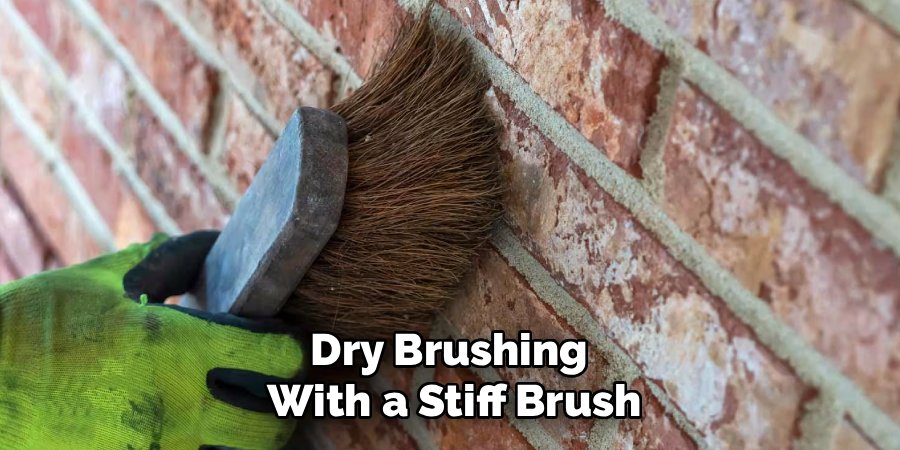
Before you wet anything, attack the white bloom with a stiff, dry brush. Efflorescence is loose salt crystal, and a surprising amount of it flakes away with plain elbow grease and no chemicals at all.
Work in small circles, then in straight passes, and knock the powder off the surface as you go. Wetting the brick first is the classic beginner mistake — water dissolves the salt and pulls it back into the pores, so you lose your chance to simply sweep it away. Vacuum or brush the loose powder well clear of the wall so it doesn’t just wash back later.
Rinse With Plain Water for Light Cases
If the dry brushing leaves a faint haze but no heavy crust, try plain water next. Wet the brick with your hose, scrub with the brush, then rinse thoroughly and let it dry completely.
Give it a full day or two to dry out before you judge the result. Brick that looks clean while wet can bloom white again as it dries, because you dissolved salt without fully flushing it away. If a thin film returns, move up to a mild acidic cleaner.
Treat Stubborn Bloom With Diluted Vinegar
For film that keeps coming back, white vinegar is your gentlest acid option. Mix it roughly half-and-half with water in a bucket, or use it straight on tough patches.
Wet the Brick Before You Apply
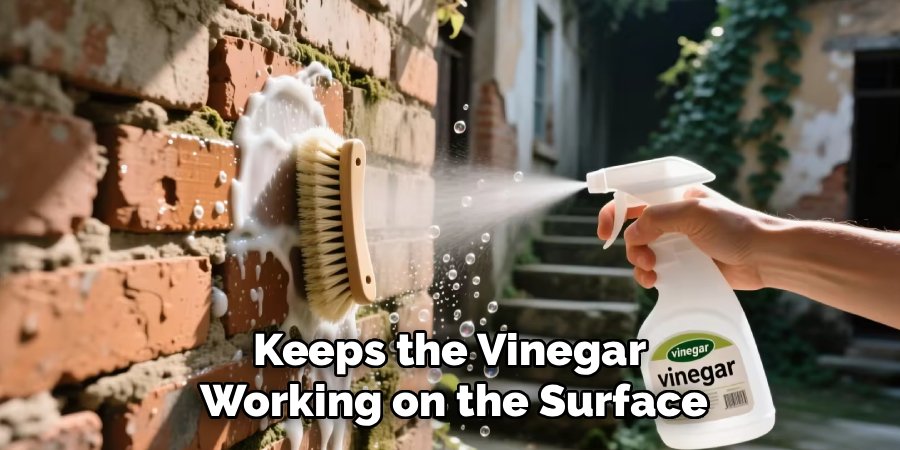
Dampen the brick with clean water first. Dry, thirsty brick drinks acid straight into its pores, which can etch the surface and leave you with a new blotchy problem. A pre-wetted wall keeps the vinegar working on the surface where the salt sits.
Apply, Dwell, and Scrub
Brush or spray the vinegar solution onto the affected area and let it fizz and dwell for a few minutes. Then scrub with your stiff brush, working the bristles over every joint and face. The mild acid dissolves the salt crystals so they release from the brick.
Rinse Thoroughly and Repeat if Needed
Rinse hard with clean water until every trace of vinegar is gone. Leftover acid keeps eating at the mortar, so don’t cut this short. Bad cases may need two or three rounds — that’s normal, and it beats jumping straight to something harsher.
Bring Out Muriatic Acid Only for Severe Crust
When you’ve got a thick, hardened crust that vinegar won’t budge, diluted muriatic acid is the last resort. This is strong stuff, so read the safety section before you even open the jug.
Dilute it heavily — usually one part acid to at least ten parts water, and always pour acid into water, never the reverse. Pre-wet the brick, apply the solution to a small section, let it work briefly, scrub, then flush with huge amounts of clean water right away. Neutralize afterward with a baking soda and water rinse so no acid lingers in the mortar.
Clients used to ask me why the new brick on their homes bloomed worst in the first year. That’s normal — fresh masonry carries the most soluble salt, and it works its way out over those first several months, especially through wet winters and humid springs. If your brick is new, don’t panic and don’t reach for acid; a lot of that early bloom clears on its own with dry brushing as the wall cures.
Method Comparison: What to Use for Each Level
| Severity | Best Method | What to Avoid | Notes |
| Light dusty film | Dry brushing | Wetting first | Fastest, no chemicals |
| Faint returning haze | Plain water + scrub | Bleach | Dry fully before judging |
| Moderate bloom | Diluted vinegar | Muriatic acid | Rinse completely |
| Heavy hardened crust | Diluted muriatic acid | Skipping neutralize step | PPE required, last resort |
| Suspected mold, not salt | Identify first | Any acid | Salt tastes/feels gritty; mold smells |
Common Mistakes to Avoid
- Wetting the brick before dry brushing. Water turns loose salt into a paste and drives it back into the pores.
- Reaching for bleach. Efflorescence is salt, not organic growth, so bleach does nothing but waste your time and fumes.
- Starting with muriatic acid. It’s overkill for most cases and burns brick, mortar, and skin when misused.
- Applying acid to dry brick. Thirsty brick soaks it in and etches, leaving permanent blotches.
- Skimping on the rinse. Leftover acid keeps degrading mortar long after you’ve packed up.
- Sealing over the problem. Trapping salt and moisture under sealer causes bigger blooms and peeling later.
- Cleaning in freezing or blazing weather. Cold slows drying and traps moisture; hot sun dries cleaner before it works.
Safety and Warnings
You’re working with acids here, so treat this job with real respect.
- Never mix cleaners. Don’t combine acid with bleach, ammonia, or any other product — the fumes can be toxic. Pick one approach and rinse fully before switching.
- Always add acid to water, never water to acid. Doing it backward can cause a violent, splashing reaction.
- Wear full PPE with muriatic acid. Rubber gloves, sealed goggles, a respirator, and long sleeves are non-negotiable. It burns skin, eyes, and lungs fast.
- Ventilate the area. Even with outdoor brick, position yourself upwind and avoid enclosed spaces like tight basement stairwells.
- Test in a hidden spot first. Try any acidic cleaner on a low or out-of-sight brick before doing the whole wall, so you catch a bad reaction early.
- Protect what’s below. Cover plants, grass, and metal fixtures — acid runoff kills greenery and corrodes metal.
- Neutralize and flush. After acid, rinse heavily and follow with a baking soda solution so nothing keeps eating at the mortar.
Keep Efflorescence From Coming Back
Cleaning is only half the battle — efflorescence returns whenever water keeps moving salt to the surface. Cut off the moisture and you cut off the bloom.
- Find and fix the water source. Look for leaky gutters, poor drainage, sprinklers hitting the wall, or ground that slopes toward the brick. Salt can’t travel without moisture.
- Improve drainage at the base. Redirect downspouts and grade soil to slope away from the wall so water doesn’t pool against it.
- Let new brick cure before sealing. Wait several months to a year on fresh masonry so the early salts can escape first.
- Apply a breathable masonry sealer. Once the brick is clean and fully dry, a vapor-permeable sealer repels water while still letting the wall breathe. Skip film-forming sealers that trap moisture.
- Reseal every few years. Water testing tells you when: if water stops beading and soaks in, it’s time for a fresh coat.
- Keep vegetation and mulch off the brick. Both hold moisture against the wall and feed the cycle.
- Do a quick dry brush each season. Catching light bloom early with a brush keeps it from ever hardening into crust.
Frequently Asked Questions
What is the best way to remove efflorescence from brick?
Start with the gentlest method: dry brushing with a stiff brush, since much of the salt lifts off with no chemicals at all. If a haze remains, move to plain water, then diluted white vinegar for stubborn bloom. Save muriatic acid for severe, hardened crust only, and always rinse thoroughly afterward.
Will vinegar remove efflorescence from brick?
Yes, diluted white vinegar works well on moderate efflorescence because its mild acidity dissolves the salt crystals. Wet the brick first, apply a half-and-half vinegar-and-water mix, let it dwell a few minutes, scrub, then rinse completely. Tougher cases may need two or three rounds, which is normal.
Why does efflorescence keep coming back on my brick?
It returns because moisture keeps carrying salt from inside the brick and mortar to the surface. Until you fix the water source — leaky gutters, poor drainage, or sprinklers hitting the wall — the bloom will reappear no matter how often you clean. New brick also blooms heavily in its first year as built-in salts work their way out.
Can I use bleach to clean efflorescence?
No. Bleach targets organic growth like mold and algae, but efflorescence is mineral salt, so bleach does nothing except waste your time and create fumes. Use a mild acid like vinegar instead, and if you’re unsure whether you’re looking at salt or mold, identify it before choosing any cleaner.
Is efflorescence harmful to brick?
The white bloom itself is mostly cosmetic and won’t destroy your wall overnight. But it signals that water is moving through the masonry, and long-term moisture is what actually damages brick and mortar. Treat the bloom as a warning sign and track down the moisture behind it.
Should I seal brick after removing efflorescence?
Sealing helps, but only after the brick is completely clean and fully dry, and only with a breathable, vapor-permeable sealer. Trapping salt or moisture under a film-forming sealer causes worse blooms and peeling down the road. On new brick, wait for it to cure before sealing at all.
Final Word
Work gentle to aggressive — dry brush first, then water, then vinegar, and only reach for acid when nothing else touches the crust. The real fix isn’t the scrubbing, though; it’s finding the water that keeps feeding the salt, because a dry wall stays clean on its own.
