
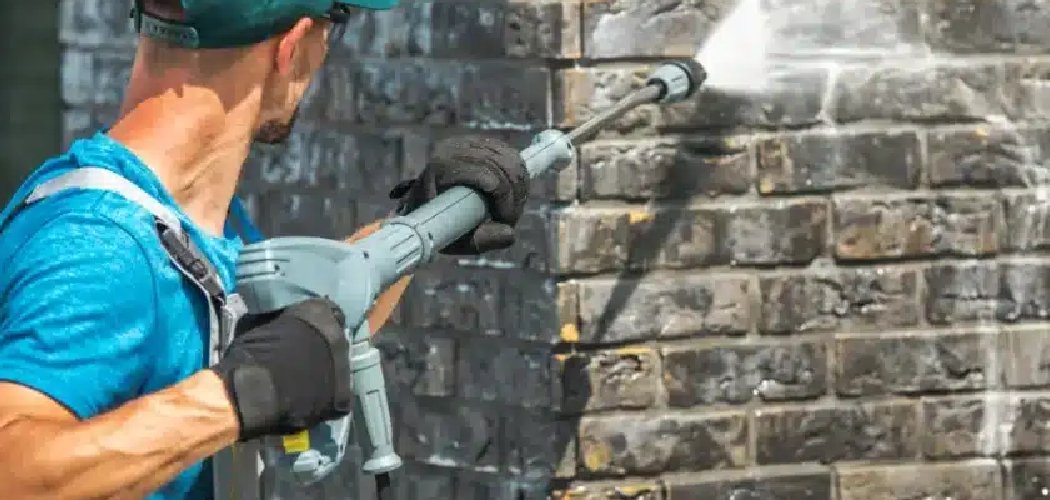
A homeowner once hired me after he’d rented a gas pressure washer and blasted his limestone garden wall at full pressure to knock off the green algae. It worked — for about a week. Then chunks of the soft face started flaking off where the water jet had chewed into the stone, and the joints between the blocks had washed out enough that a whole section leaned. He turned a $40 weekend clean into a stonemason’s repair bill.
That’s the number one lesson here: you can’t muscle your way through it. Learning how to clean exterior stone walls the right way means matching the method to the stone, starting gentle, and giving biological growth time to die before you scrub. Rush it with high pressure or harsh acid and you’ll damage the surface faster than the weather ever could.
What You’ll Need
- Garden hose with an adjustable nozzle (or a pressure washer with a wide-angle tip, used low)
- Stiff nylon-bristle brush and a smaller detail brush
- Bucket
- pH-neutral stone cleaner or mild dish soap
- Biocide or dedicated algae/moss remover for masonry
- Plastic sheeting and painter’s tape (to protect plants and windows)
- Garden sprayer or watering can for applying solution
- Safety goggles, chemical-resistant gloves, and old clothing
- Sturdy ladder or scaffold for tall walls
- Baking soda or a poultice powder (for stubborn stains)
Keep muriatic acid and any acidic “brick and patio” cleaner away from limestone, marble, travertine, and sandstone. Those acids dissolve the stone itself, not just the dirt sitting on it.
Identify Your Stone Before You Touch It
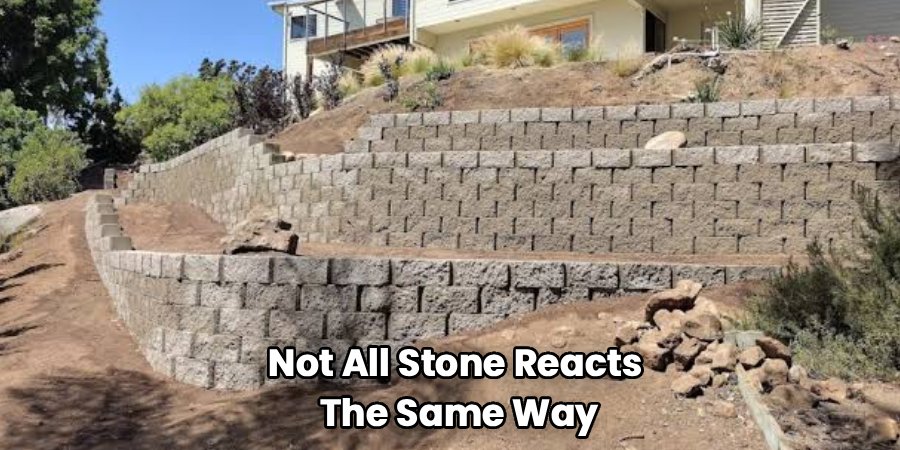
Not all stone reacts the same way, and this is where most people go wrong. Limestone, sandstone, and travertine are soft and acid-sensitive. Granite and slate are hard and far more forgiving. Brick sits somewhere in the middle, and old lime mortar joints are fragile on any wall.
Do a quick test: drip a little water on the surface. If it soaks in fast and darkens the stone, you’ve got a porous, softer type that needs a gentle touch and low water pressure. If it beads or sits on top, the stone is denser and can handle a bit more scrubbing. When in doubt, treat it as the softest option — you can always step things up, but you can’t undo etching.
Protect the Surroundings and Wet the Wall Down
Before any cleaner comes out, tape plastic sheeting over nearby windows, doors, light fixtures, and outlets. Drape it over garden beds and shrubs at the base too — most masonry biocides will scorch foliage if they run off undiluted.
Then soak the wall with plain water from top to bottom. A pre-wet surface stops the stone from drinking your cleaning solution straight into its pores, which keeps the product working on the grime instead of staining the stone. It also loosens the top layer of loose dirt before you’ve done a thing.
Wash With a Gentle Solution First
Mix a pH-neutral stone cleaner or a few drops of mild dish soap into a bucket of warm water. Working in sections from the bottom up — yes, up — apply the solution with your brush and let it sit a couple of minutes. Cleaning bottom to top sounds backward, but it stops dirty streaks from running down over dry stone and drying into hard-to-remove tracks.
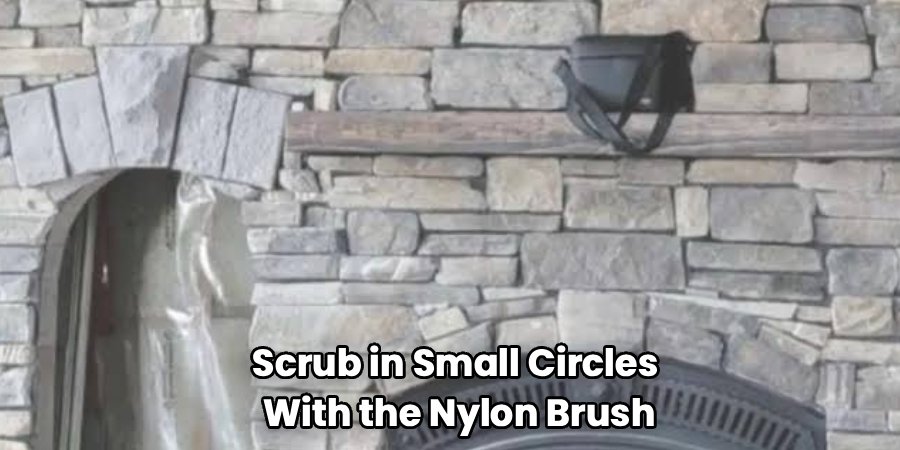
Scrub in small circles with the nylon brush, using the detail brush to work into carved edges and deep joints. Let the solution and the bristles do the lifting instead of leaning your whole weight in. Then rinse each section thoroughly with the hose before the soap dries.
Tackle Algae, Moss, and Lichen With a Biocide
Green and black growth is the most common complaint on shaded, north-facing walls, and scrubbing alone won’t fix it — you’ll knock off the surface but leave the roots behind to grow back in a month. You need to kill it.
Spray a masonry biocide or dedicated algae remover over the affected areas and, here’s the part people skip, walk away. Give it the full dwell time on the label, usually anywhere from a few hours to several days. The product keeps killing spores long after it looks dry, and many are designed to be left on rather than rinsed. Only then does a light brush-down clear the dead growth.
I used to tell clients the same thing every autumn: the best time to hit algae is a dry spell in late spring or early fall, not the middle of a wet winter. Apply it dry, let it work, and you’ll get months of clean wall instead of weeks.
Lift Stubborn Stains and Efflorescence
That chalky white bloom on brick and stone is efflorescence — mineral salts pushed to the surface by moisture. Don’t reach for acid. Let the wall dry fully, then brush the powder off with a dry stiff brush. If it keeps returning, you’ve got a moisture problem behind the wall to solve first.
For oil, rust, or deep organic stains, use a poultice. Mix baking soda or poultice powder with water into a peanut-butter-thick paste, spread a quarter-inch layer over the stain, cover with plastic, and leave it 24 to 48 hours. As it dries it draws the stain up out of the pores. Scrape it off with a plastic scraper, rinse, and repeat if needed.
Safe vs. Damaging Methods
| Safe on Exterior Stone | Will Damage the Stone |
| pH-neutral cleaner or mild dish soap | Muriatic or any acidic masonry acid on soft stone |
| Low-pressure rinse or wide-angle tip | High-pressure jet held close |
| Nylon-bristle brushes | Wire brushes and steel wool |
| Masonry biocide with full dwell time | Scrubbing live algae without killing it first |
| Pre-wetting the wall | Applying cleaner to bone-dry stone |
| Cleaning bottom to top | Letting dirty water streak down dry stone |
| Baking soda poultice for stains | Sandblasting soft or historic stone |
| Testing in a hidden spot | Guessing the stone type |
The theme runs through all of it: gentle and patient wins. Anything aggressive — high pressure, acid, wire — does damage you can’t take back.
Common Mistakes to Avoid
- Pressure washing on full power. High pressure erodes soft stone, blasts out mortar joints, and forces water deep into the wall. Use the widest tip, the lowest setting that works, and keep the nozzle well back.
- Using acid on the wrong stone. Muriatic and other acids dissolve limestone, sandstone, marble, and travertine. Even on brick, acid needs heavy dilution and a pre-wet surface, or it burns the face.
- Scrubbing algae without killing it. Skip the biocide and the growth comes straight back from the roots. Kill it, wait, then brush.
- Cleaning top to bottom. Dirty runoff streaks the dry stone below and dries in. Always work upward.
- Skipping the plant protection. Biocide runoff scorches shrubs and grass. Sheet the beds and rinse foliage if any drifts.
- Cleaning in direct sun or freezing weather. Solutions dry too fast in heat, leaving residue, and trapped water cracks stone in a freeze.
Safety and Warnings
Outdoor stone work brings real hazards — chemicals, ladders, and slick surfaces — so don’t treat it casually.
- Test any cleaner in a hidden spot first. Try a low corner or a section behind a downpipe before committing to the whole wall. Stone varies block to block.
- Wear PPE. Goggles, chemical-resistant gloves, and covered skin are non-negotiable with biocides and any acid product. Splashes happen.
- Never mix cleaning products. In particular, never combine bleach with any acid or ammonia-based cleaner — the reaction releases toxic gas. Rinse the wall fully between different products.
- Read the biocide label. Some need diluting, some don’t; some need rinsing, some are leave-on. Follow it exactly and mind the runoff into drains and gardens.
- Ladder safety matters. Set ladders on firm, level ground, and never overreach — climb down and move it. Wet stone underfoot is slippery, so watch your footing.
- Check for lead paint or asbestos on very old walls before disturbing coatings, and stop if you’re unsure.
Keep Your Stone Walls Clean for Longer
The less moisture and shade your wall holds, the slower dirt and growth return. A little upkeep stretches the years between big cleans.
- Improve drainage and airflow. Cut back overhanging branches and shrubs pressing against the wall. More sun and air means far less algae and moss.
- Clear gutters and downpipes. Overflow soaks the wall and feeds green growth. Keep water moving away from the stone.
- Consider a breathable sealer. A vapor-permeable masonry sealer sheds water while letting the wall breathe. Never use a non-breathable coating — it traps moisture and spalls the face.
- Spot-treat early. Hit small green patches with biocide the moment you see them, before they spread across the wall.
- Rinse dusty walls now and then. In dry, exposed spots, a plain hose-down a couple of times a year stops grime from building into a hard crust.
- Fix leaks and repoint failing mortar. Water getting in is behind most staining and efflorescence. Solve the source and the surface stays cleaner.
Frequently Asked Questions
Can you pressure wash exterior stone walls?
You can, but only carefully. Use a wide-angle tip, the lowest effective pressure, and keep the nozzle well back from the surface. High pressure held close erodes soft stone and blows out mortar joints, so on limestone, sandstone, or old walls, a gentle scrub and hose rinse is usually safer.
What is the best cleaner for exterior stone walls?
For general grime, a pH-neutral stone cleaner or mild dish soap in warm water is safest across all stone types. For algae, moss, and lichen, use a dedicated masonry biocide and give it the full dwell time. Avoid acidic cleaners on soft stone entirely — they dissolve the surface.
How do you remove green algae from stone walls?
Spray a masonry biocide or algae remover over the growth and let it work for the full time on the label, which kills the roots as well as the surface. Then brush off the dead growth with a stiff nylon brush and rinse. Scrubbing without killing it first just clears the top and lets it regrow within weeks.
Will vinegar or acid clean stone walls?
Keep both away from soft stone. Vinegar and stronger acids like muriatic dissolve limestone, sandstone, marble, and travertine, leaving etched, pitted damage that won’t wash off. Only dense stone like granite tolerates mild acid, and even then a neutral cleaner is the smarter choice.
How often should you clean exterior stone walls?
Most walls need a proper clean every one to three years, sooner on shaded, damp, north-facing sides where algae thrives. Spot-treating small patches as they appear and rinsing off dust a couple of times a year keeps the gap between big cleans as long as possible.
What time of year is best to clean stone walls?
Aim for a dry spell in late spring or early fall. Solutions and biocides work best applied to a wall that stays dry afterward, and you avoid the freeze risk of trapped water cracking the stone. Skip both scorching midday sun and freezing weather.
Final Word
Match the method to your stone, kill biological growth before you scrub it, and never let a pressure washer do the thinking for you. The walls that stay beautiful are the ones cleaned gently and kept dry — patience protects the stone far better than force ever will.
