
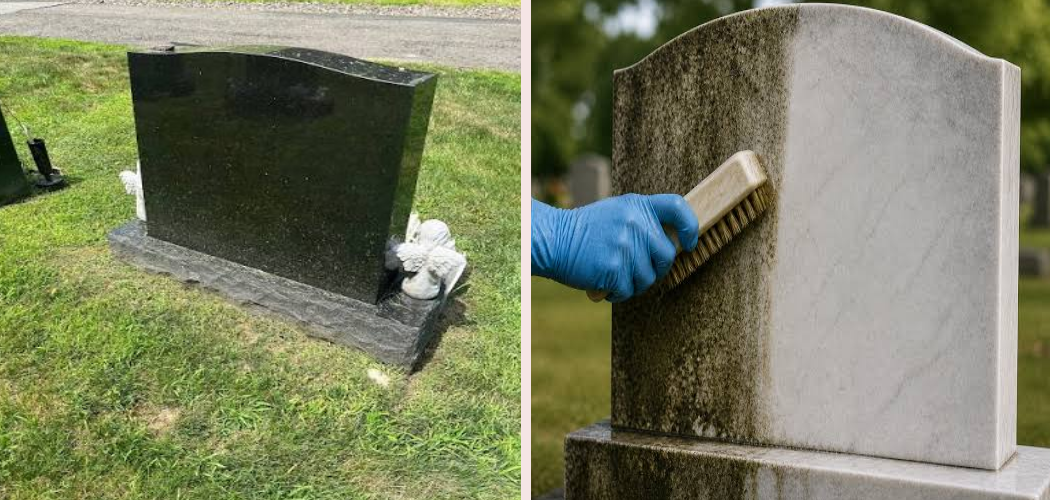
Someone once handed their grandmother’s white marble headstone over to a “quick fix” — a stiff wire brush and a jug of bleach. Two weekends of scrubbing left the surface pitted, the carved lettering shallow and soft, and a rusty orange stain bleeding down from where the metal bristles had shed into the stone. The grime came off, sure. So did decades of the marble itself.
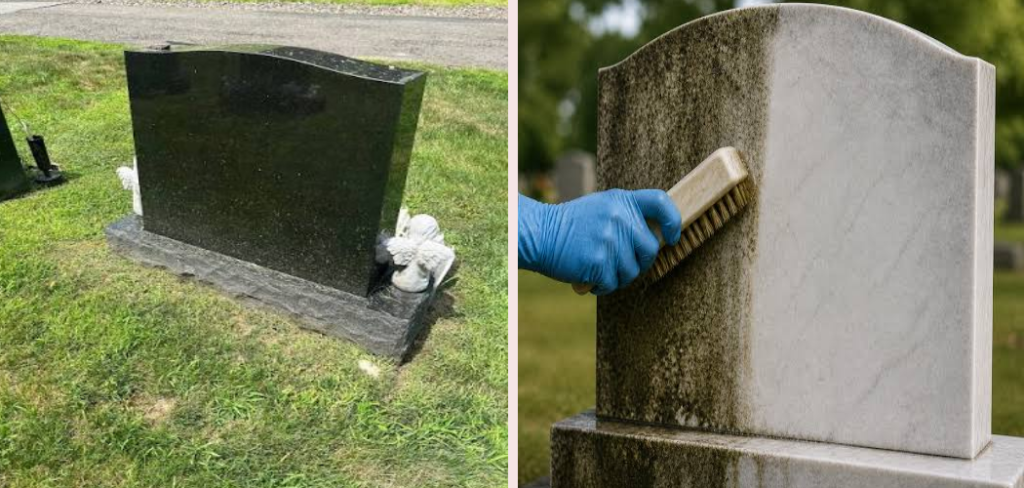
That’s the hardest part of learning how to clean a marble headstone without damaging it: marble is soft, porous, and reactive, and most of what people reach for does permanent harm you can’t undo. The good news is that gentle, patient cleaning almost always works better than aggressive scrubbing.
What You’ll Need
- Clean water (bring plenty — a few gallons if there’s no tap nearby)
- A soft-bristled nylon or natural-fiber brush
- A soft toothbrush or wooden craft stick for lettering and crevices
- Non-ionic detergent (or a stone-safe biological cleaner made for monuments)
- Two clean buckets — one for cleaner, one for rinse water
- A garden sprayer or spray bottle
- Soft, lint-free cloths or natural sponges
- Wooden or plastic scrapers (never metal)
- Gloves and safety glasses
- Optional: a photo of the headstone before you start, for reference
Skip the bleach, the vinegar, the pressure washer, and anything with wire or metal in it. I’ll explain exactly why below.
Check the Stone’s Condition Before You Touch It
Walk around the headstone and look closely first. Marble that’s flaking, crumbling at the edges, or holding a deep crack shouldn’t be cleaned with water at all — soaking a fragile stone can push the damage further, especially before a freeze. If pieces are lifting or the surface feels sugary and loose under a fingertip, leave it and call a monument conservator instead.
If the stone is sound, take a quick photo. You’ll want a record of the lettering depth and any existing chips so you know you didn’t cause them.
Soak the Marble With Plain Water First
Start by wetting the entire headstone thoroughly with clean water, top to bottom. A saturated stone won’t drink up your cleaner and pull it deep into the pores, which is exactly what you want to avoid. Let it sit wet for a few minutes.
This soak also loosens the surface layer of dust and loose dirt before any scrubbing begins. Half the grime on a neglected marker comes off with water alone if you’re patient enough to let it work.
Wash Gently From the Bottom Up
Here’s the counterintuitive part: always work from the bottom of the headstone upward, not the top down. When you clean top-down, dirty runoff streaks over the dry, dirty stone below and leaves stubborn tracks that are nearly impossible to lift later. Working upward keeps everything below your work area already wet, so the runoff has nothing to stain.

Dip your soft brush in the diluted non-ionic detergent and work in small circles with light pressure. Rinse the brush often. Keep the whole surface wet as you go, re-wetting sections that start to dry.
Clean the Carved Lettering With a Soft Brush
The engraved names and dates trap the most dirt and take the most patience. Use a soft toothbrush or a wooden craft stick wrapped in cloth to ease grime out of each letter. Never dig with anything metal — one slip gouges the stone permanently, and shallow old lettering can’t take the abuse.
Work letter by letter and rinse as you clean so you can see your progress. This is slow work, and rushing it is how people damage the most historically important part of the marker.
Rinse Thoroughly and Let It Air-Dry
Rinse every trace of cleaner off with clean water from your second bucket or sprayer, again working bottom to top. Leftover detergent attracts dirt and can leave a film that looks worse than what you started with, so flush it well.
Don’t towel the stone bone-dry or buff it. Marble outdoors does fine air-drying, and rubbing a gritty surface just adds micro-scratches. Let the sun and air finish the job.
Safe vs. Damaging Products and Methods
| Safe to Use | Will Damage the Marble |
| Plain water (lots of it) | Bleach (etches, stains, weakens stone) |
| Non-ionic detergent | Vinegar, lemon, any acid |
| Stone-safe biological monument cleaner | Household all-purpose sprays |
| Soft nylon or natural-fiber brush | Wire brushes and metal tools |
| Wooden or plastic scrapers | Pressure washers |
| Soft toothbrush for lettering | Sandblasting or grinding |
| Air-drying | Abrasive powders and scouring pads |
The pattern is the same as with any soft stone: anything acidic or abrasive that saves you time on the dirt costs you the surface itself.
Common Mistakes to Avoid
- Reaching for bleach. It’s the number-one killer of marble markers. It etches the surface, can leave lasting stains, and breaks the stone down over repeated use.
- Using acids because they’re “natural.” Vinegar and lemon dissolve marble on contact. One pass dulls it; regular use eats the detail.
- Wire brushes and metal scrapers. They shed rust into the stone and scratch it. That orange staining you see on old headstones is almost always leftover metal.
- Pressure washing. The force blasts away the soft surface and drives water deep into cracks. On a cold night that trapped water freezes and splits the stone.
- Cleaning top to bottom. Dirty runoff streaks the dry stone below and sets stains you can’t remove.
- Scrubbing dry. Grit plus pressure equals sandpaper. Keep everything wet.
- Cleaning too often. Every cleaning removes a tiny bit of surface. Once every couple of years is plenty for most stones.
Safety and Warnings
Cleaning a headstone is low-toxicity work, but it isn’t risk-free — for you or the stone.
- Test in a hidden spot first. Try your cleaner low on the back of the stone, wait, and check for any dulling or discoloration before you do the face.
- Never mix cleaning products. The safest habit is water and a single stone-safe detergent, nothing combined. Bleach and ammonia together release toxic gas — another reason to keep both away entirely.
- Wear gloves and eye protection. Even mild cleaners irritate skin over a long session, and you’ll be at eye level with splashes.
- Watch your footing. Cemetery ground is uneven, and older markers can be unstable. Don’t lean on or push against a headstone to steady yourself — some are set loosely and can tip.
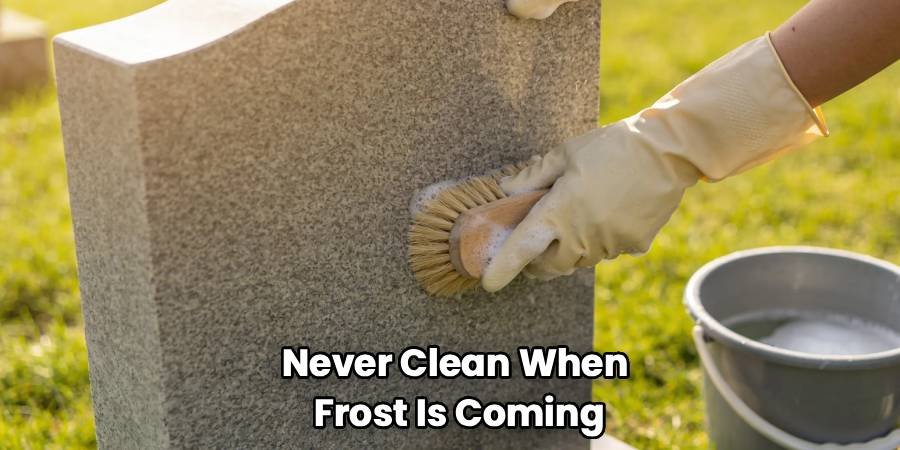
- Mind the weather. Never clean when frost is coming. Water left in the stone freezes, expands, and cracks it. Warm, dry days give the marble time to dry out fully.
- Get permission if it’s not your plot. Many cemeteries have rules about cleaning, and historic markers may need approval. A quick call to the office saves trouble.
Keep the Headstone Clean for Longer
You don’t keep a marble marker clean by cleaning it more — you keep it clean by cleaning it right and rarely. Here’s what actually stretches the time between cleanings:
- Clear vegetation around the base. Grass, weeds, and low branches trap moisture against the stone and feed the black and green growth that stains it. Trim back a small buffer.
- Rinse with plain water on visits. A quick water-only rinse lifts fresh dirt and pollen before it sets, no scrubbing needed.
- Don’t leave offerings that stain. Metal vases, coins, and cut flowers left to rot all leave marks. Rust from a cheap vase is one of the hardest stains to remove.
- Skip sealers unless advised. Most conservators recommend leaving marble unsealed outdoors so it can breathe and dry. A trapped sealer can do more harm than good.
- Clean only every few years. Let the stone tell you. If a plain-water rinse handles it, you don’t need a full wash.
One thing I always noticed: the black crusting people assume is dirt is usually biological — algae and lichen that thrive on the shaded, north-facing side of a stone. It comes back on its own schedule no matter how hard you scrub, which is why a gentle biological cleaner and patience beat any amount of muscle. Clients used to ask me why one side “got dirtier” than the other, and it almost always came down to which way the stone faced and how much sun it got.
Frequently Asked Questions
Can you use bleach to clean a marble headstone?
No. Bleach etches marble, can leave lasting stains, and weakens the stone over time. It may brighten things briefly, but you’re trading a clean look now for permanent surface damage. Plain water and a non-ionic detergent are far safer and work better long-term.
What is the safest cleaner for a marble grave marker?
Plenty of clean water plus a non-ionic detergent covers most jobs. For stubborn black or green biological growth, a stone-safe biological monument cleaner designed for marble is the gentlest effective option. Avoid anything acidic, abrasive, or household-strength.
How do you remove black or green stains from marble headstones?
That discoloration is usually algae, moss, or lichen rather than dirt. Wet the stone, apply a stone-safe biological cleaner, and let it work with light brushing — many of these cleaners keep acting for days after you leave. Never gouge lichen off with metal; you’ll take the stone surface with it.
Is it safe to pressure wash a headstone?
No. The pressure strips the soft marble surface, erodes lettering, and forces water into cracks where it can freeze and split the stone. Low-pressure rinsing from a garden sprayer or hose is the strongest water pressure marble should ever see.
How often should you clean a marble headstone?
Once every few years is enough for most markers. Every cleaning removes a little surface, so more often does more harm than good. Between washes, a plain-water rinse during visits keeps fresh dirt from setting in.
Do you need permission to clean a headstone in a cemetery?
Often, yes. Many cemeteries have rules about approved methods, and historic or shared markers may need sign-off. A quick call to the cemetery office confirms what’s allowed before you start.
Final Word
Go slow, keep it wet, and let gentle cleaners and plenty of water do the work your muscle never should. Treat the marble as the soft, irreplaceable stone it is, clean only when it truly needs it, and you’ll protect both the surface and the lettering for generations to come.
