

Water pools in a shallow puddle right in the middle of your cover, and instead of pumping it off, you let it sit “just for a few days.” By the weekend, that puddle has turned into a green slick of algae and pollen that stains the vinyl and clogs the tracks. That standing water is the number one thing that wrecks these covers, and it’s completely avoidable.

The good news is that keeping the surface clean isn’t complicated once you know the routine. Learning how to clean automatic pool cover the right way protects the fabric, keeps the mechanism sliding smoothly, and adds years to a part that isn’t cheap to replace. Set aside about an hour and you’ll have it looking sharp again.
What You’ll Need
- A submersible cover pump or a wet/dry shop vac for standing water
- Soft-bristle push broom
- Garden hose with a spray nozzle
- Two buckets (one for soapy water, one for rinse)
- Mild dish soap or a cover-specific cleaner
- Soft cloths or a large sponge
- Silicone-based lubricant (for the tracks)
- Small brush or old toothbrush for track grooves
- Work gloves
- Leaf blower (optional, but handy for dry debris)
Skip anything abrasive. Steel wool, stiff scrub brushes, and harsh degreasers will scratch or dry out the vinyl faster than you’d think.
Pump Off Standing Water First
Before you scrub anything, get rid of any water sitting on top of the cover. A cover pump is the easiest tool here, but a shop vac works fine for smaller puddles. Rest the pump in the lowest spot where water collects and let it run until the surface is nearly dry.
Never drag a heavy puddle toward the edge to drain it. That extra weight can pull the cover out of alignment or strain the motor. Pump it off from the center instead, and check that the discharge hose points well away from the pool so the water doesn’t run straight back in.
Clear Loose Debris With a Broom or Blower
Once the surface is dry, sweep off leaves, twigs, grass clippings, and pollen with a soft-bristle broom. Work from the middle outward toward the edges so nothing falls into the water when you open the cover later. A leaf blower on a low setting speeds this up if you’ve got a lot of dry debris.

Pay attention to the seams and the edges near the tracks. Debris loves to gather there, and if it works its way into the mechanism, you’ll hear it grinding the next time the cover moves. Getting it out now saves you a headache later.
Wash the Vinyl Surface
Mix a few drops of mild dish soap into a bucket of lukewarm water. Dip your sponge or soft cloth and wipe the cover in long, overlapping strokes. For a larger cover, a soft push broom dipped in the soapy water lets you cover ground without crawling across the vinyl.
Here’s something I learned on the job: work on the vinyl in the morning or on an overcast day whenever you can. In direct afternoon sun, the surface heats up and soapy water dries into streaky spots before you get a chance to rinse it off. Clients used to ask me why their cover looked cloudy after cleaning, and nine times out of ten they’d washed it at high noon in July.
Tackle Stubborn Stains and Algae
For green algae patches or ground-in pollen, let the soapy water sit on the spot for a couple of minutes to loosen it. Then work it gently with a soft cloth or the toothbrush. Resist the urge to scrub hard, patience beats pressure on vinyl every time.
If a stain won’t budge, a cover-specific cleaner is worth the money. Avoid bleach and any all-purpose spray with strong solvents. They can bleach the color unevenly and break down the vinyl’s protective coating, which leads to cracking down the road.
Rinse Thoroughly and Let It Dry
Rinse the entire surface with your garden hose until the water runs clear and you see no soap film. Leftover soap attracts dirt and can get slippery, so don’t cut this step short. Tilt or sweep any pooled rinse water off toward the discharge side.
Let the cover air-dry before you retract it. Rolling up a damp cover traps moisture in the housing, and that’s a recipe for mildew and that musty smell nobody wants greeting them at the next pool day.
Clean and Lubricate the Tracks
The tracks are where covers actually fail, so give them attention. Use the toothbrush or a small brush to clear grit, sand, and debris from the grooves on both sides. A quick pass with the hose flushes out what the brush loosens.
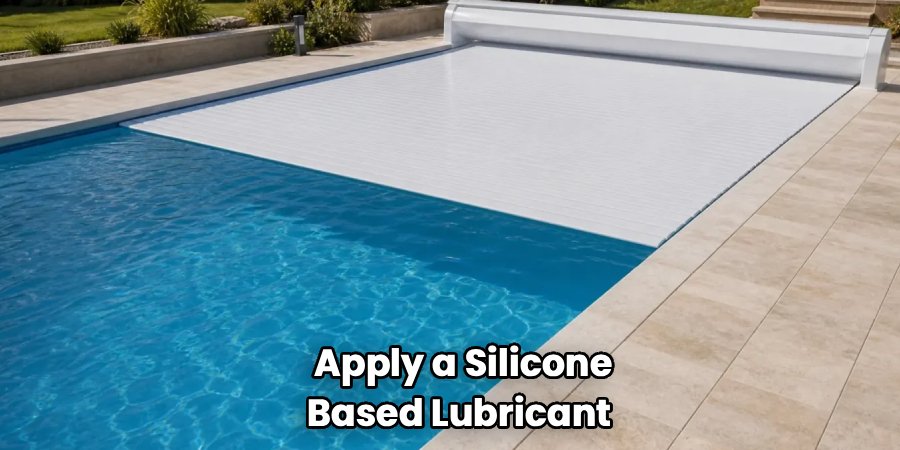
Once the tracks are clean and dry, apply a silicone-based lubricant along the length of both rails. This keeps the cover gliding smoothly and cuts strain on the motor. Steer clear of petroleum-based products here, they gum up over time and attract more dirt than they repel.
Dos and Don’ts of Cover Cleaning
| Do This | Don’t Do This |
| Pump off standing water regularly | Let puddles sit for days |
| Use mild dish soap or cover cleaner | Use bleach or harsh solvents |
| Wash on a cool, overcast morning | Clean in direct afternoon sun |
| Sweep debris with a soft broom | Scrub with steel wool or stiff brushes |
| Let the cover dry before retracting | Roll up a wet cover |
| Lubricate tracks with silicone | Use petroleum-based grease |
| Rinse until water runs clear | Leave soap film behind |
Common Mistakes to Avoid
- Ignoring standing water. It’s the fastest way to stain the vinyl and overload the mechanism. Pump it off the moment you notice it pooling.
- Reaching for bleach. It seems like a quick fix for algae, but it fades the color and weakens the fabric. Mild soap and a little patience do the job safely.
- Skipping the tracks. A spotless cover that grinds every time it moves means you missed the grooves. Grit in the tracks wears out the motor.
- Retracting a wet cover. Trapped moisture breeds mildew inside the housing. Always let it dry first.
- Pressure washing. The force can tear seams and drive water into the mechanism. A garden hose gives you plenty of rinse power.
Safety and Warnings
There’s nothing wildly hazardous about this job, but a few precautions keep it that way. Wear work gloves when you’re clearing tracks, since debris hides sharp edges and the occasional bit of broken glass that blew in on the wind.
Stick to mild soap or a product made for pool covers, and never mix cleaning products together. Combining bleach with anything ammonia-based creates toxic fumes, which is reason enough to keep bleach off your cover entirely. If you do try a new cover cleaner, test it on a small, hidden corner first and wait a few minutes to make sure it doesn’t discolor the vinyl.
One more thing: never walk out onto an automatic cover to clean it, even the sturdy-looking ones. They’re built to hold weight in an emergency, not to be used as a walkway. Clean from the poolside or the deck, and keep kids and pets off the surface while you work.
How to Keep Your Cover Clean Longer
A little upkeep between deep cleans means you’ll rarely face a stained, gunky mess.
- Pump off water after every heavy rain. Don’t wait. Standing water is the root of most cover problems, so clear it the same day when you can.
- Sweep debris weekly. A quick pass with the broom keeps leaves and pollen from building into stains.
- Rinse the surface every couple of weeks. A plain water rinse washes away dust and pollen before it has a chance to settle in.
- Check and clear the tracks monthly. Keeping grit out of the grooves protects the motor and keeps movement smooth.
- Lubricate the tracks each season. A fresh coat of silicone at spring startup and again in fall keeps everything gliding.
- Trim nearby trees and shrubs. Less overhanging foliage means less debris landing on the cover, especially heading into fall.
- Inspect for tears at each season change. Catching a small rip early lets you patch it before it spreads across a seam.
Build these into your normal pool routine and the cover practically takes care of itself.
Frequently Asked Questions
How often should I clean my automatic pool cover?
Give the surface a quick sweep and rinse every couple of weeks, and pump off standing water any time it collects after rain. Plan a deeper wash a few times a season, more often if you’re under heavy tree cover or dealing with lots of pollen. Staying on top of it beats scrubbing off set-in stains later.
Can I use bleach to clean algae off my pool cover?
Skip the bleach. It fades the vinyl unevenly and breaks down the protective coating, which leads to cracking over time. Mild dish soap, a soft cloth, and a little patience clear algae without wrecking the fabric. For tougher spots, use a cleaner made specifically for pool covers.
Why does water keep pooling on my automatic cover?
Some pooling is normal after rain, but persistent puddles usually mean the cover has lost a little tension or the pool’s water level dropped too low. Keep your water at the recommended level so the cover stays properly supported. If pooling gets worse, the mechanism may need a tension adjustment.
Is it safe to walk on an automatic pool cover to clean it?
No. These covers are rated to hold weight in an emergency, but they aren’t designed as walkways, and stepping on one can damage the fabric or the tracks. Always clean from the deck or poolside using a long-handled broom to reach the middle.
What’s the best way to remove pollen from a pool cover?
Rinse it off early, before it clumps and stains. A plain water rinse handles fresh pollen, and mild soapy water with a soft cloth tackles anything that’s started to stick. In heavy pollen season, a quick rinse every few days keeps it from building into that stubborn yellow film.
How do I keep my cover tracks from getting stuck?
Clear grit and debris from the grooves regularly with a small brush and a hose flush, then apply a silicone-based lubricant. Avoid petroleum products, which gum up and trap dirt. Clean, lubricated tracks are the single biggest thing you can do to keep the cover moving smoothly.
Final Word
Standing water and harsh cleaners cause nearly every cover problem I’ve seen, and both are easy to sidestep. Pump off the puddles, wash gently on a cool morning, and keep those tracks clear, and your cover will keep doing its job season after season.
