
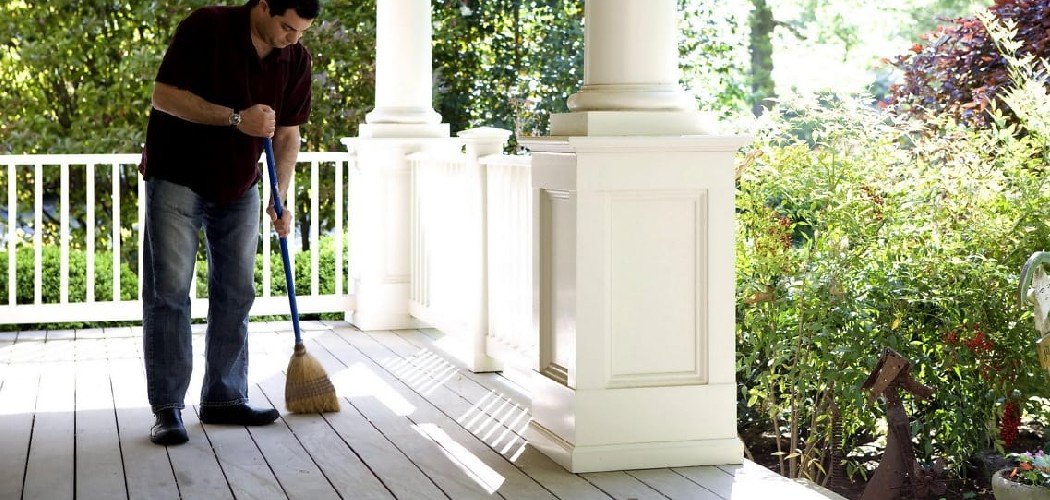
A homeowner drags a garden hose out, blasts the porch on full pressure to save time, and ends up with fuzzy, splintered boards and paint peeling in strips within a week. That single shortcut has wrecked more porch floors than years of foot traffic ever could. Wood porches don’t need brute force — they need the right cleaner, a soft brush, and a bit of read-the-weather timing.
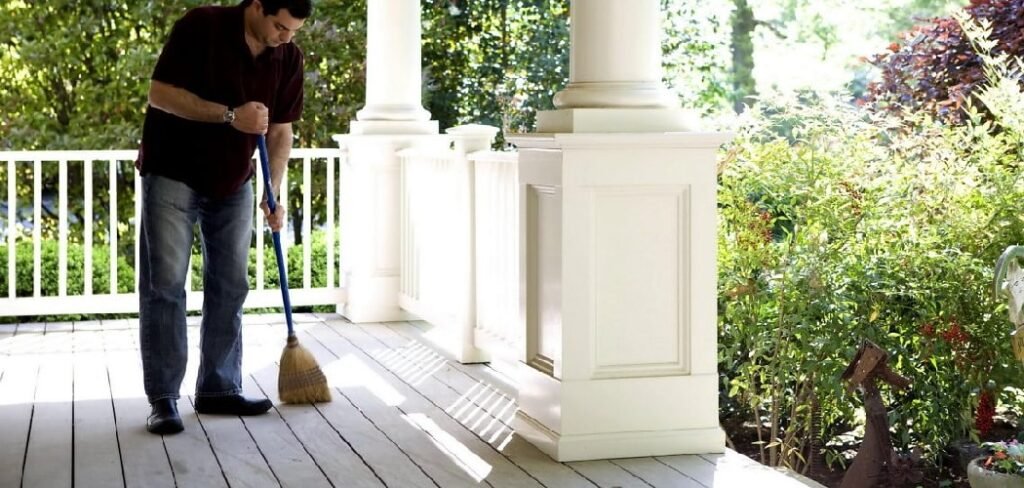
Knowing how to clean front porch wood starts with figuring out what you’re actually dealing with: everyday grime, black mildew in the shady corners, or gray weathering from sun and rain. Match your method to the mess, and you’ll lift the dirt without chewing up the finish. Painted, stained, and bare wood each want a slightly different touch, and I’ll walk you through all three.
What You’ll Need
- A stiff-bristle push broom for dry sweeping
- A soft- to medium-bristle deck brush (skip the wire brush)
- A garden hose with an adjustable spray nozzle
- A plastic bucket or a pump sprayer
- Oxygen bleach (sodium percarbonate) for mildew and stains
- Mild dish soap for routine washing
- A dedicated deck or wood cleaner for tougher buildup
- Rubber gloves and safety goggles
- A putty knife or plastic scraper for packed-in debris
- Clean rags or old towels
- Plastic sheeting or drop cloths to protect nearby plants
- Exterior wood sealer or stain (optional, for after cleaning)
If your porch is painted or sealed, lean toward gentler options first. Harsh cleaners strip finish faster than they clean, and you’ll trade a dirty porch for a peeling one.
Sweep and Clear Before You Add Water
Start completely dry. Sweep the whole porch with a stiff push broom, working grit out of the corners, along the baseboards, and into the gaps between boards. Those seams trap pollen, leaf bits, and sand, and any of it left behind turns to mud the moment you wet the floor.
Pull the doormat, planters, chairs, and anything else off the surface so you can reach every board. Use a putty knife to lift packed debris from the joints and the edges where the porch meets the house. A clean sweep now means your cleaner works on the wood instead of on a layer of loose dirt.
Wash Everyday Grime with Soap and Water
For a porch that’s just dusty or lightly soiled, you don’t need anything strong. Squirt a few drops of mild dish soap into a bucket of warm water, dip your soft-bristle brush, and scrub along the grain in sections you can finish before they dry.

Work with the grain, not against it or in circles — scrubbing sideways drives dirt into the fibers and can dull the finish unevenly. Rinse each section with the hose before the soap dries, then move to the next. Most well-kept porches need nothing more than this a few times a season.
Lift Mildew and Black Spots with Oxygen Bleach
Shaded porches and north-facing ones grow mildew fast, showing up as black or green speckling in the corners. Mix oxygen bleach with warm water per the label, brush or spray it onto the affected boards, and let it sit for 10 to 15 minutes. Keep the surface damp the whole time — mist it if it starts drying out.
Oxygen bleach is my first pick because it kills the mildew and lifts the staining without bleaching out paint or stripping the color from wood, which is exactly what chlorine bleach does. After the dwell time, scrub gently, then rinse until the runoff runs clear. Stubborn spots want a second light pass, not harder scrubbing.
Handle Painted, Stained, and Bare Wood Differently
Painted porches take the gentlest approach: soap and water first, oxygen bleach only where mildew insists. Aggressive cleaners lift paint at the edges and leave you with touch-up work.

Stained or sealed wood tolerates oxygen bleach well and cleans up nicely, but rinse thoroughly so no residue dulls the finish. Bare, weathered wood is the most forgiving — you can use a wood cleaner and, if you want the color back, follow with a brightener before you seal it. Whatever the surface, test your cleaner on a hidden patch first.
Rinse, Dry, and Decide on Sealing
Rinse the entire porch from the house side outward so dirty water carries off the edge instead of back across clean boards. Don’t leave puddles standing in low spots — push them off with the broom.
Let the wood dry fully, usually a day of dry weather, before you walk on it much or add any finish. If the porch is bare or the old sealer has worn thin, a fresh coat of exterior sealer or stain now locks out moisture and slows the next round of grime. Apply it thin, wipe off the excess, and give it the cure time the can specifies.
Do vs. Don’t: Cleaning Front Porch Wood
Most ruined porch floors I saw came from the wrong tool or the wrong day, not from the dirt itself. Keep this handy.
| Do | Don’t |
| Use oxygen bleach for mildew | Use chlorine bleach on wood |
| Scrub with a soft or medium brush | Use a wire brush |
| Scrub along the grain | Scrub across or in circles |
| Use mild dish soap for routine dirt | Reach for harsh solvents first |
| Sweep and clear before wetting | Hose down over loose debris |
| Test cleaner on a hidden spot | Coat the whole porch untested |
| Rinse fully and let it dry | Leave standing puddles |
| Clean on a dry, mild day | Clean in blazing midday sun |
Chlorine bleach is the mistake I saw most on porches. It looks fast because it lightens stains in minutes, but it strips color from stain and wood alike, weakens the fibers over time, and can leave a chalky cast. Oxygen bleach does the same cleaning work without the fallout.
Common Mistakes to Avoid
- Blasting it with a pressure washer. Full pressure raises fuzz, gouges soft grain, and peels paint. If you use one, keep it low with a wide tip and hold it well back.
- Grabbing chlorine bleach. It fades stain and paint, dries out the wood, and can leave residue. Oxygen bleach is the safer swap.
- Scrubbing with a wire brush. Metal bristles scratch the surface and shred softwood porch boards. Soft or medium is all you need.
- Skipping the pre-sweep. Wetting a dirty porch just smears mud into the grain.
- Letting cleaner dry on the boards. Dried oxygen bleach leaves a film that shows once the porch dries. Keep it wet, then rinse.
- Cleaning in direct sun. The solution evaporates before it can work, and you get streaks.
- Sealing over damp wood. Trapped moisture leads to peeling and mildew under the finish.
Safety and Warnings
Cleaning a wood porch means handling chemical cleaners and working on a surface that gets slick, so a few precautions genuinely matter.
- Wear gloves and eye protection. Oxygen bleach and wood cleaners irritate skin and eyes. Rubber gloves and goggles are non-negotiable, and long sleeves keep splashes off your arms.
- Never mix cleaning products. Don’t combine bleach with ammonia, vinegar, or any other cleaner — some mixes release toxic gas. Use one product at a time and rinse well between them.
- Test in a hidden spot first. Try any new cleaner on an out-of-sight board before treating the whole porch, especially on painted or stained surfaces, so you know how the finish reacts.
- Protect your plants. Cover shrubs and flower beds near the porch, or wet them down before and after so runoff dilutes. Even oxygen bleach stresses plants in concentration.
- Mind your footing. Wet, soapy wood gets genuinely slippery. Wear closed-toe shoes with grip and move deliberately, especially near the steps.
- Ventilate covered porches. On a screened or enclosed porch, open it up and keep air moving while you work with any cleaner.
Maintenance and Prevention Tips
Keeping a porch clean is far less work than reviving a neglected one. These habits stretch the gap between deep cleans:
- Sweep weekly. A quick pass clears the pollen, grit, and leaves that feed mildew and pack into the seams.
- Rinse a few times each season. A plain hose-down knocks off dust and early algae before it sets in.
- Shake out and move the doormat. The spot under a mat stays damp and dark — the perfect mildew nursery. Lift it, let the boards breathe, and rotate its position now and then.
- Put feet under heavy furniture and planters. Anything sitting flat traps moisture and leaves a dark ring. Pads or risers let air move underneath.
- Reseal on schedule. A fresh coat of exterior sealer every couple of years keeps water out and grime from soaking in. Do the water-drop test — if water beads, you’re fine; if it soaks in, it’s time.
- Keep gutters and downspouts clear. Overflow that splashes onto the porch keeps it wet and speeds up rot and mildew.
Clients used to ask me why the boards right under their porch swing or a hanging planter stayed dingy no matter how often the rest got cleaned. Almost every time it was constant drip or shade holding moisture on that one patch — a swing that dripped after rain, or a planter that never fully drained. Moving the source, or adding a drip tray, fixed the recurring stain far better than scrubbing the same spot over and over.
Frequently Asked Questions
What is the best cleaner for a wood porch?
Oxygen bleach (sodium percarbonate) mixed with warm water is the best all-around choice for mildew, algae, and general grime. It cleans thoroughly without stripping paint or fading stain the way chlorine bleach does. For everyday dirt, mild dish soap and warm water is plenty.
Can you pressure wash a wood porch?
You can, but carefully. Full pressure raises fuzz, gouges softwood, and peels paint. If you use one, keep it under about 1,500 PSI with a wide fan tip, hold it well back, and move with the grain. Honestly, a soft brush and oxygen bleach is safer and usually enough.
How do you get black mildew off porch wood?
Treat it with oxygen bleach: mix it per the label, brush it onto the black spots, let it dwell 10 to 15 minutes while keeping it wet, then scrub gently and rinse. Then hunt down the moisture source — a dripping planter, shade, or gutter overflow — so the mildew doesn’t just grow back.
How often should you clean a front porch?
A light sweep weekly and a hose rinse a few times a season handle routine upkeep. Give it a deeper cleaning with oxygen bleach once a year, ideally in spring or early summer when you’ll get a stretch of dry weather to let the wood fully dry afterward.
Should you seal porch wood after cleaning?
Seal it if the wood is bare or the old finish has worn thin — a fresh coat locks out moisture and slows future grime. Wait until the porch is completely dry, then apply a thin coat of exterior sealer or stain and wipe off any excess so it doesn’t stay tacky.
Will vinegar clean a wood porch?
Diluted vinegar can tackle light dirt and some mildew, but it’s weaker than oxygen bleach and its acidity can dull certain finishes over time. For a quick freshen-up it’s fine; for real mildew and set-in grime, reach for oxygen bleach instead — and never mix the two.
Clean your porch gently, keep water from lingering on it, and reach for oxygen bleach over chlorine every time. Do a light sweep and rinse through the season, reseal when the water stops beading, and those boards will stay handsome for years.
