
A neighbor once dragged his heater out of the garage in October, filled it, and lit it — and within minutes the house smelled like a diesel truck idling in the living room. The wick had sat soaked in last winter’s fuel all summer, turned to a gummy, varnished mess, and no amount of trimming was going to save it. That one skipped step at the end of the season cost him a new wick and a very unhappy spouse.
Most of the smoke, smell, and weak flame people blame on the heater itself traces back to gunk you can actually clean off. Knowing how to clean kerosene heater parts the right way keeps the flame blue, the burn odorless, and the wick lasting years instead of one season. It takes about an hour and mostly comes down to patience and letting things dry.
What You’ll Need
- Fresh, water-clear 1-K kerosene (never colored or off-road fuel)
- A manual siphon pump or hand siphon
- An empty, clearly labeled fuel container for old kerosene
- Lint-free cloths or clean rags
- A soft brush and an old toothbrush
- Cotton swabs
- Compressed air or a shop vac with a brush attachment
- Fine-grit sandpaper or emery cloth (only if your manual allows wick sanding)
- Scissors, if your wick is the trimmable type
- Nitrile gloves
- Safety glasses
- A well-ventilated workspace — a garage with the door open or an outdoor patio
Work outside if the weather lets you. Kerosene fumes are strong in a closed room, and you’ll be handling open fuel and loose soot.
Burn the Tank Dry Before You Start
Cleaning starts the day before, not the moment you sit down with a rag. Run the heater until it burns completely out of fuel, ideally down to a dead flame. A dry tank means less fuel to siphon, and a fully burned wick sheds carbon far easier than one still damp with kerosene.
Let the unit cool all the way down. The burn chamber holds heat for a long time after the flame dies, and you don’t want to touch it or breathe near it while it’s still warm. Give it a couple of hours at minimum.
Drain and Dry the Fuel Tank
Old kerosene is the silent killer of these heaters. Fuel that’s sat more than a few months absorbs water and breaks down, and that degraded fuel is what clogs wicks and fouls the flame.
- Move the heater outdoors or to an open garage.
- Slide the siphon pump into the tank and pump the old fuel into your labeled waste container.
- Tip the heater gently to reach the last inch in the corners.
- Wipe the inside of the tank with a lint-free cloth wrapped around your finger or a clean brush.
- Pour in a small splash of fresh kerosene, swirl it around to lift settled sludge, then siphon that out too.
- Leave the cap off and let the tank air out until it’s dry and odor-faded.
Never pour old kerosene down a drain or onto the ground. Take it to a household hazardous waste facility — most towns run collection days for exactly this.
Clean the Wick Without Damaging It
The wick is where most of the trouble lives, and it’s the part people handle worst. How you clean it depends entirely on the type, so check your manual first.
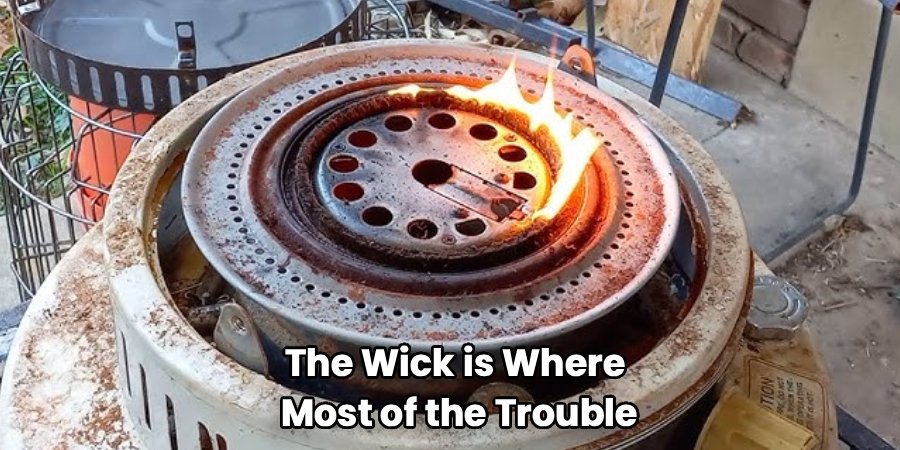
For a fiberglass wick, you don’t wash it — you dry-burn it. Run the heater dry (that last step you already did) so the flame burns off the carbon deposits until it self-extinguishes. Fiberglass wicks are meant to last the life of the heater if you burn them clean instead of scrubbing them.
For a cotton or trimmable wick, gently scrape or lightly sand the crusted carbon off the top edge with fine emery cloth, then even out the top with scissors so it burns level. Don’t hack away at it — you only want the charred crust gone, not fresh wick.
A wick that’s saturated with old, varnished fuel is done. If it feels stiff, sticky, or smells sour even after a dry burn, replace it. I used to tell clients the same thing every autumn: a wick costs a few dollars, and a ruined heating season costs a lot more.
Raise and Inspect the Wick Mechanism
Turn the adjustment knob through its full range and watch the wick rise and lower. If it sticks, catches, or won’t seat evenly, brush away carbon flakes around the wick sleeve with a toothbrush. Loose debris in that channel is what makes a wick sit crooked and burn with a smoky peak on one side.
Remove Soot from the Burn Chamber
Lift off the burn chamber (also called the flame spreader or combustion cylinder) — most lift straight up once the grille is open. This is the perforated metal cylinder that sits over the wick.
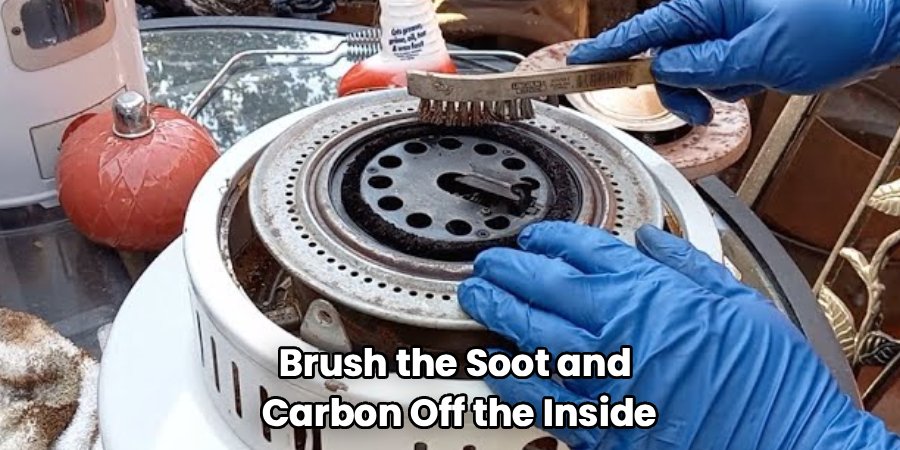
Brush the soot and carbon off the inside and outside with a soft brush, then work the toothbrush into the perforations. Those tiny holes control airflow, and when they clog with carbon the flame starves and starts smoking. Blow it out with compressed air to clear anything the brush missed. Wipe it down with a dry cloth — no water, no solvent.
Check the igniter tip while you’re in there. A carbon-crusted igniter won’t spark reliably, and a quick swipe with a cotton swab usually brings it back.
Wipe Down the Cabinet and Grille
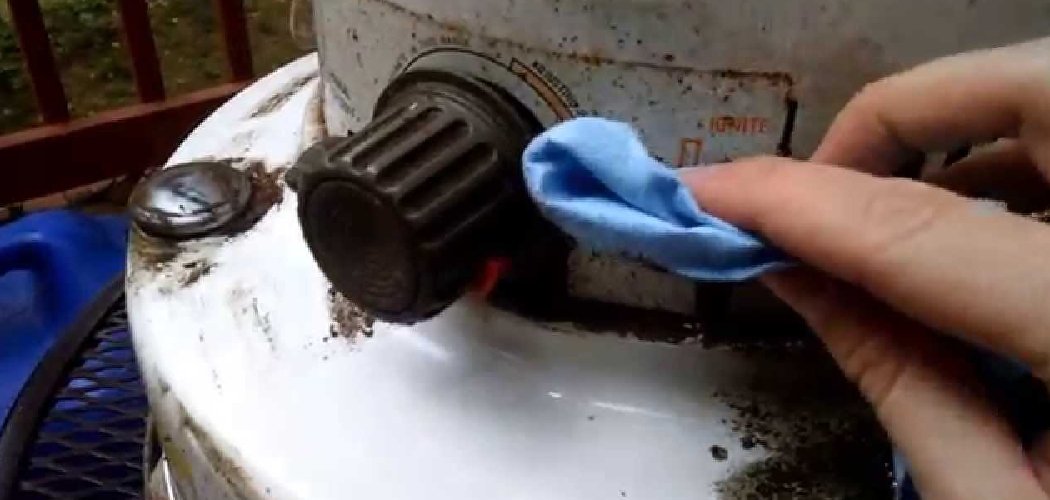
The outside is the easy part. Vacuum dust out of the rear grille and vents, then wipe the painted cabinet with a barely damp cloth. Keep water away from the wick, tank opening, and any electrical parts. Dry everything before you reassemble.
Dos and Don’ts
| Do This | Don’t Do This | Why It Matters |
| Use fresh, water-clear 1-K kerosene | Use colored, off-road, or old fuel | Degraded and dyed fuel clogs the wick and fouls the flame |
| Dry-burn a fiberglass wick clean | Scrub or wash a fiberglass wick | Water and scrubbing shred the fibers and shorten wick life |
| Let the tank fully air-dry | Reassemble while damp | Trapped moisture rusts the tank and ruins the next fill |
| Brush and air out the burn chamber holes | Soak the chamber in water or solvent | Clogged perforations starve the flame and cause smoking |
| Store empty and dry over summer | Leave fuel in over the off-season | Stale fuel varnishes the wick solid by fall |
| Clean in ventilated space | Clean near any open flame or pilot light | Kerosene vapor is flammable and builds up fast indoors |
Common Mistakes to Avoid
These are the errors I saw again and again, and every one of them is avoidable:
- Leaving fuel in over summer. This is the number one heater killer. Old kerosene turns to varnish and welds the wick stiff.
- Cleaning while the unit is still warm. The burn chamber holds heat long after the flame’s out, and warm fuel vapor is a hazard.
- Washing a fiberglass wick. These wicks self-clean by dry-burning. Water and scrubbing destroy them.
- Topping off old fuel with new. Mixing fresh kerosene into degraded fuel just dilutes the problem — it doesn’t fix the water and sludge already there.
- Skipping the burn chamber holes. People wipe the surface and miss the clogged perforations, then wonder why the flame still smokes.
- Using the wrong fuel. Gasoline, diesel, or lamp oil in a kerosene heater is dangerous and gums up everything. Only 1-K kerosene belongs in it.
Safety and Warnings
This job involves flammable fuel and fine soot, so treat it with respect.
Never clean near an open flame, pilot light, or lit cigarette. Kerosene vapor is flammable, and it pools invisibly around an open tank. Kill any nearby ignition source before you uncap anything.
Ventilate the whole time. Work outdoors or in a garage with the door up. You’ll be breathing fuel fumes and stirring up carbon dust, and neither belongs in a closed room.
Wear gloves and safety glasses. Kerosene dries and irritates skin, and soot flakes love to find their way into eyes when you’re blowing out the burn chamber.
Let the heater cool completely. No cleaning, no draining, no touching the chamber until it’s cold to the hand — at least two hours after the flame dies.
Handle and store fuel safely. Keep kerosene in an approved, labeled container away from living spaces, and dispose of old fuel at a hazardous waste site — never down a drain or onto soil.
Don’t mix fuels. Kerosene only. Gasoline in a kerosene heater can cause a fire or explosion.
How to Keep Your Kerosene Heater Clean Longer
A little end-of-use routine saves you the big cleanup and the wick replacements.
- Empty the tank before summer storage. Burn it dry, siphon the last of it, and store the heater completely empty. This single habit prevents the varnished-wick disaster.
- Buy only what you’ll burn in a season. Kerosene degrades in storage, so smaller, fresher supply beats a stockpile that goes stale.
- Dry-burn the wick every few weeks in season. Letting it burn out fully now and then keeps carbon from building on the top edge.
- Wipe the tank cap and neck after each fill. Spilled fuel there attracts dust and grime that works its way inside.
- Store it covered and off the floor. A cover keeps dust out of the grille, and keeping it off a damp concrete floor prevents tank rust.
- Keep a spare wick on hand. They’re cheap, and having one means a bad wick never ends your heating week.
Frequently Asked Questions
How often should you clean a kerosene heater?
Do a deep clean once at the start of the heating season and once before you store it for summer. During heavy use, brush the burn chamber and dry-burn the wick every few weeks. Wipe up any fuel spills as they happen.
Can you wash a kerosene heater wick?
It depends on the type. Fiberglass wicks should never be washed — you clean them by dry-burning until the flame goes out on its own. Cotton or trimmable wicks can have the charred top edge sanded or trimmed, but you don’t soak or wash them either.
Why does my kerosene heater smoke and smell?
The most common causes are old or degraded fuel, a carbon-clogged wick, and blocked holes in the burn chamber. Start with fresh 1-K kerosene, dry-burn or trim the wick, and brush out the burn chamber perforations. A yellow, smoky flame almost always points to one of these three.
What kind of kerosene should I use?
Use only water-clear 1-K grade kerosene. Avoid colored, dyed, or off-road fuel, which contains additives that clog the wick and produce more odor and smoke. Never substitute gasoline, diesel, or lamp oil.
How do I store a kerosene heater over the summer?
Burn the tank completely dry, siphon out any remaining fuel, and let the tank air out fully. Store the empty heater covered, off a damp floor, in a dry spot. Leaving fuel in over the off-season is what ruins wicks by fall.
Why won’t my kerosene heater ignite?
Check the igniter tip for carbon buildup and clean it with a cotton swab, since a fouled igniter won’t spark. Also confirm the wick is at the right height and not soaked in stale fuel. A degraded wick or bad batteries in an electric igniter are the usual holdups.
Final Thoughts
Nearly every kerosene heater problem — smoke, smell, weak flame, a stuck wick — comes back to fuel and carbon, and both are easy to stay ahead of. Burn it dry before summer, clean the wick and burn chamber the right way, and always start with fresh kerosene. Do that and the heater will run clean and odorless for many winters.
