
Someone I knew once dragged their coir doormat out to the driveway, blasted it with a garden hose on full pressure, then left it flat on the concrete to dry. Two days later the mat still squelched underfoot, the bristles had gone soft and floppy, and a musty smell hung around the front step for a week.
Coir is coconut husk fiber, and while it looks tough enough to survive anything, it hates staying wet and it hates being soaked more than almost any dirt you’ll ever throw at it.
The secret to how to clean a coir doormat is treating it as a dry-first job. You knock the loose grit out before any water touches it, use minimal moisture when you do wash, and dry it fast in moving air. Get that order right and the mat stays stiff, scratchy, and effective for years.
What You’ll Need
- A stiff-bristled brush or scrubbing brush
- A vacuum with a hose attachment
- A dustpan or a hard surface to beat the mat against
- A bucket
- Warm water
- Mild dish soap or a gentle all-purpose cleaner
- White vinegar
- Baking soda
- A garden hose or watering can (optional)
- Rubber gloves
- A dry towel or old rag
Shake and Beat Out the Loose Grit First
Most of what’s trapped in a coir mat is dry — sand, grit, dried mud, crumbs, dead leaves. If you wet that before removing it, you turn loose dirt into paste that grinds deeper into the fibers.
Take the mat outside, grip one edge, and give it a hard shake. Then flip it face down and beat the back with your hand or against a fence, a step, or a wall. You’ll be surprised how much falls out. Do this over grass or a spot you can sweep, because it makes a mess.
For a mat that’s been down a while, this alone can lift out a shocking amount of buried grit that a vacuum misses.
Vacuum Both Sides
Once you’ve knocked out the loose debris, vacuum the mat to pull out what’s still lodged between the bristles. Use a hose attachment rather than the floor head so you can work the nozzle into the pile.
Run it over the top in a few directions, since coir fibers cross at angles and dirt hides on the sides of each strand. Then flip the mat and vacuum the back too. Grit sinks to the base of the weave, and clearing it there stops it working its way back up every time someone steps on the mat.
Brush Out Stubborn, Caked-On Dirt
Dried mud and packed-in dirt cling to the fiber and won’t shake or vacuum free. This is where a stiff brush earns its place.
Work the brush firmly along the pile, then across it, breaking up the crust and knocking it loose. Coir can handle aggressive brushing — it’s one of the toughest natural fibers you’ll find in a doormat, so don’t be gentle. Vacuum or shake again after brushing to clear whatever you’ve dislodged.
Spot-Treat Stains Before a Full Wash
If there’s a specific mark — a coffee spill, a muddy paw drag, something greasy — deal with it before you wet the whole mat. Mix a few drops of dish soap into warm water, dip your brush, and scrub just that spot.
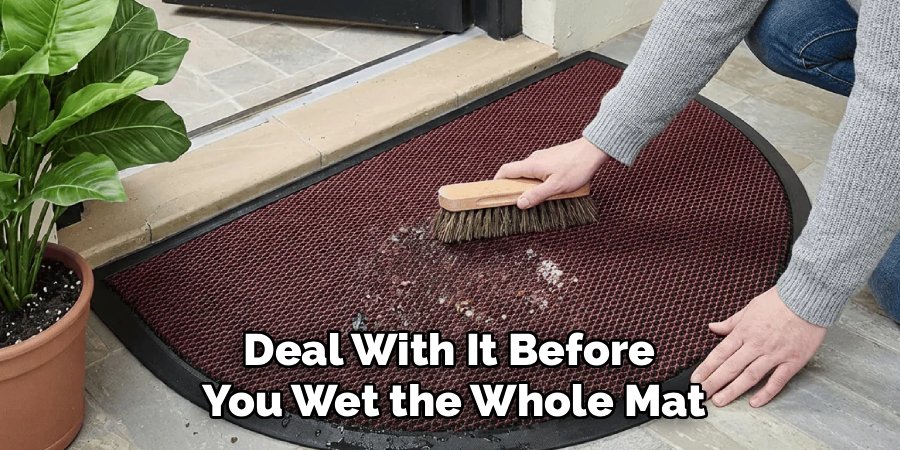
Blot the area with a dry towel to lift the moisture and loosened dirt. Handling stains individually means you’re not soaking the entire mat when only one patch needs attention.
Wash With Minimal Water When It Needs It
If the mat is genuinely grimy after all the dry work, it’s time for a light wash — but “light” is the key word. Coir soaks up water like a sponge and holds it forever, so you want the least amount of moisture that gets the job done.
Mix warm water with a little dish soap in a bucket. Dip your stiff brush, shake off the excess so it’s damp not dripping, and scrub the mat section by section along the fibers. Rinse your brush in clean water and go over it again to lift the soap. Skip filling a tub and submerging the mat — that’s the fastest way to a soggy, smelly mess that takes days to dry.
Knock Down Odor With Baking Soda or Vinegar
Coir that’s been damp or sitting in a shady doorway can start to smell musty. Sprinkle baking soda generously over the dry mat, leave it for a few hours or overnight, then vacuum or shake it off. It pulls odor straight out of the fibers.
For a lingering smell, mist the mat lightly with a solution of one part white vinegar to two parts water, then let it air dry fully. The vinegar scent fades as it dries and takes the mustiness with it.
Dry It Fast in Moving Air
This is the step that saves your mat. Stand the mat on its edge or hang it over a railing so air reaches both sides, and put it somewhere with good airflow. A breezy, shaded outdoor spot is ideal.
A bit of direct sun helps a damp coir mat dry faster and freshens it, but don’t leave it baking in full sun for days — prolonged UV makes the fibers brittle and fades the color. Never lay a wet mat flat on the ground to dry, because the underside traps moisture and that’s exactly how the musty smell and rot start.
Coir Doormat Cleaning: Do’s and Don’ts
| Do This | Avoid This |
| Shake and beat out dry grit first | Wetting the mat before removing loose dirt |
| Use a damp brush, section by section | Submerging or soaking the whole mat |
| Scrub firmly along the fibers | Being timid — coir handles hard brushing |
| Dry on edge or hanging, both sides exposed | Drying flat on the ground |
| Use a little sun to freshen and speed drying | Leaving it baking in full sun for days |
| Deodorize with baking soda or diluted vinegar | Masking musty smell with fragrance sprays |
| Vacuum both top and back | Cleaning only the surface you can see |
Common Mistakes to Avoid
Hosing it down first thing. The number one error. Blasting a dry mat with water turns loose grit into mud that packs deep into the weave, and now you’ve made the job harder and the mat wetter than it ever needed to be.
Soaking the whole thing. Coir holds water like nothing else. Submerge it and you’re looking at two or three days of drying, plus the mustiness that creeps in while it sits damp.
Drying it flat. Lay a wet mat on the ground and the underside can’t breathe. That trapped moisture is where the smell and rot begin.
Being too gentle. People baby coir because it’s “natural,” but it’s genuinely rugged. Timid brushing leaves the caked dirt right where it is.
Ignoring the back. Grit sinks to the base of the weave and hides on the underside. Clean only the top and it keeps resurfacing under foot traffic.
Safety and Warnings
Cleaning a coir doormat is low-hazard work — you’re mostly dealing with a tough natural fiber, mild soap, and elbow grease. Still, a few sensible precautions apply.
- Wear rubber gloves. Doormats collect whatever people track in, from lawn chemicals to animal waste. Protect your hands, especially if you’re scrubbing anything questionable.
- Never mix cleaning products. Don’t combine vinegar with bleach or any product containing bleach — the mix releases toxic chlorine gas. Stick to one cleaner at a time.
- Skip harsh chemicals and pressure washers. Bleach and strong solvents break down the natural fiber and strip the color, and a pressure washer will blow the bristles loose and waterlog the mat. Mild soap and a brush do everything you need.
- Watch your footing. A damp coir mat on a smooth floor or step can slide. Set it to dry somewhere it won’t become a trip hazard.
- Let it dry completely before use. Putting a still-damp mat back down invites mold underneath and defeats the whole cleaning effort.
Keep Your Coir Doormat Clean Longer
A quick routine keeps the deep cleans rare and the mat working the way it should.
- Shake it out weekly. A ten-second shake stops grit building up in the weave and doubles the time between real washes.
- Vacuum every couple of weeks. A fast pass with the hose attachment keeps the base of the fibers clear before dirt packs in.
- Keep it under cover. A mat sitting in the open catches every rainstorm. Under a porch roof or overhang, it stays dry and lasts far longer, since constant wetting is what breaks coir down fastest.
- Use a mat pad underneath. A rubber pad lifts the mat slightly, lets air circulate below, and stops moisture pooling against the underside.
- Flip and rotate it. Turn the mat end to end every so often so one section doesn’t take all the wear and foot traffic.
- Bring it in for winter, or swap it out. Coir handles a wet season poorly. In snowy or constantly damp months, a synthetic or rubber mat outdoors and the coir mat stored dry keeps it in good shape for spring.
- Act on spills fast. Blot and spot-clean a spill the day it happens instead of letting it dry into the fiber and become a scrubbing job later.
FAQ
Can you wash a coir doormat with water?
Yes, but use as little as possible. A damp brush and a light scrub with soapy water works fine. What ruins coir is soaking or hosing it down — the fiber holds water for days, and staying wet leads to a musty smell and eventually rot.
How do you get the musty smell out of a coir mat?
First make sure the mat is fully dry, since dampness is usually the cause. Then sprinkle baking soda over it, leave it a few hours, and vacuum it off. For a stubborn smell, mist it lightly with diluted white vinegar and let it air dry completely.
Can a coir doormat get wet in the rain?
It can handle the occasional shower, but constant wetting is its enemy. A mat left exposed to rain never fully dries, which breaks down the fiber and breeds odor. Keep it under a porch or overhang, and it’ll last much longer.
How often should you clean a coir doormat?
Give it a quick shake weekly and a vacuum every couple of weeks. A deeper wash only needs to happen every month or two, or whenever it looks visibly grimy. Regular shaking is what keeps the deep cleans infrequent.
Can you put a coir doormat in the washing machine?
No. The machine’s water and agitation soak the fiber, loosen the weave, and can shed coarse bristles that clog your drain. Coir needs dry cleaning first and only a light hand-wash when it’s truly dirty.
How do you dry a coir mat quickly?
Stand it on edge or hang it over a railing so air reaches both sides, and put it somewhere breezy. A little sun and a light breeze dry it fastest. Never leave it flat on the ground, where the underside stays wet.
Final Word
Coir rewards a dry-first approach — shake it, vacuum it, brush it hard, and only then reach for a damp brush and the least water you can get away with. Dry it fast on its edge in moving air, keep it under cover between cleans, and that scratchy little mat will scrape boots clean for years.
