
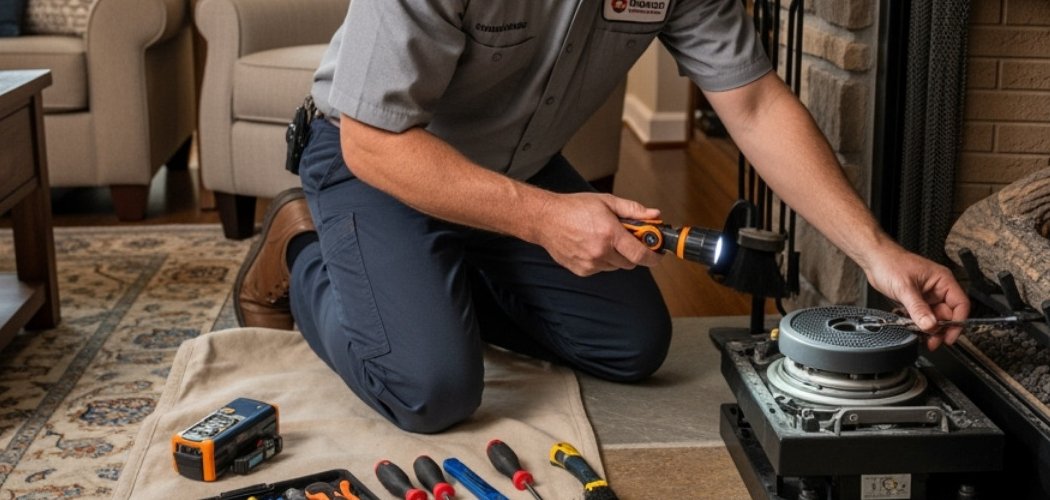
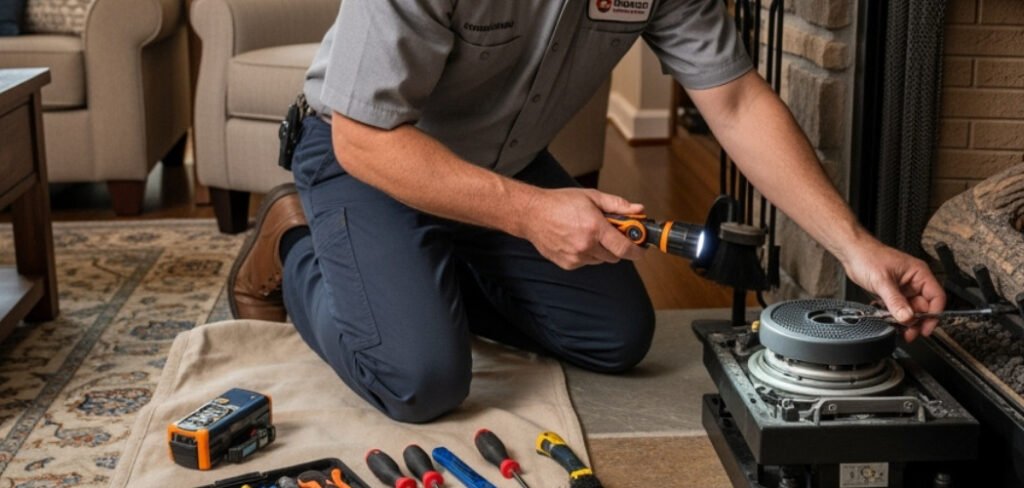
A client once called me in a panic because her vent-free fireplace had started throwing off a sharp, chemical smell and the once-golden flames had gone a sickly blue-orange. She’d been “cleaning” it by wiping the ceramic logs down with a damp rag every couple of weeks. That water soaked into the porous logs, and the trapped dust turned to grime that clogged the burner ports. The logs weren’t dirty — they were waterlogged and out of position, and that alone was enough to throw off the whole burn.
That’s the single most common way people damage these units. Learning how to clean a ventless gas fireplace the right way comes down to knowing what to touch, what to leave alone, and when to keep water far away from it. Get those three things straight and the job takes twenty minutes, tops.
What You’ll Need
Gather everything before you shut the gas off, so you’re not wandering the house mid-job with dusty hands:
- Soft paintbrush or a clean, dry makeup brush
- Vacuum with a soft brush attachment and crevice tool
- Several microfiber cloths (dry)
- Compressed air canister
- Cotton swabs or pipe cleaners
- Glass cleaner rated for fireplace glass (or vinegar-water for a metal-framed screen only)
- Dust mask (N95 preferred)
- Nitrile gloves
- A soft towel or drop cloth to lay logs on
- A phone with a camera
That last one isn’t a joke. Snap a photo of the log layout before you move anything — I’ll come back to why that matters more than almost any tool on this list.
Cut the Gas and Let Everything Cool Completely
Turn the fireplace off at the control valve and let it sit for at least an hour, longer if it’s been running hard. Ceramic logs hold heat far longer than they look like they should, and I’ve seen people grab one thinking it was cool and end up with a burn across three fingers.
Once it’s cold, shut off the gas supply at the valve — usually a small lever on the gas line near the unit. Don’t skip this. You do not want an accidental spark or gas flow while your hands are down near the burner. Open a window or two now, too, so any faint gas odor clears while you work.
Photograph and Remove the Ceramic Logs
Before you lift a single log, take that photo. Vent-free logs sit in a precise arrangement the manufacturer designed to keep the flame pattern clean and the burn efficient. Nudge them out of place and you’ll get sooting, weak flames, or that ugly blue-orange color my client had.
Lift each log straight up and out, gently. These are ceramic fiber, not stone — they’re lighter and more brittle than they appear, and the coating chips if you knock them together. Set each one on your towel in the same order you pulled it. If your unit has a decorative ember bed or glowing embers made of mineral wool, note where those sit as well.
Dust the Logs Dry — Never Wet
Here’s the rule that trips up almost everyone: you never wash ventless gas logs with water or cleaner. They’re porous. Moisture soaks in, and when you fire the unit back up, that trapped water creates the odor, discoloration, and even cracking.
Instead, take each log outside if you can. Brush it gently with your soft paintbrush to lift the surface dust, then follow with a light pass of compressed air to clear the recesses. Hold the can upright and keep short bursts a few inches back so you don’t blast the coating. Wipe nothing wet across them. Dust only.
Vacuum the Burner and Firebox
With the logs out, you’ve got clear access to the burner and the firebox floor. Fit the soft brush attachment on your vacuum and work slowly across the burner assembly, lifting dust, lint, and any crumbled ember material.
Switch to the crevice tool for the corners and the gap behind the burner where debris loves to settle. Go easy directly over the burner ports — those are the small holes the gas flows through. Suck up loose dust, but don’t jam the nozzle into them.
Clear the Burner Ports
Blocked ports are the usual reason flames turn patchy or lean orange. Run a cotton swab or pipe cleaner lightly along the port row to dislodge anything the vacuum missed, then hit it with a quick burst of compressed air. If a port is packed with something stubborn, don’t dig at it with anything metal or sharp — you’ll widen or deform it and change the flame. A wooden toothpick is the hardest tool that should ever go near a port.
Clean the Pilot and Oxygen Depletion Sensor
Every vent-free unit has an Oxygen Depletion Sensor (ODS) built into the pilot assembly. It’s a safety device that shuts the fireplace down if oxygen in the room drops too low, and dust on it is the number one cause of a pilot that won’t stay lit.
Give the pilot area a gentle puff of compressed air — that’s it. No cloth, no cleaner, no poking. The ODS is calibrated at the factory and it’s delicate. If air alone doesn’t fix a stubborn pilot, that’s a call for a technician, not more scrubbing.
Wipe Down the Glass and Surround
If your unit has a glass front, spray fireplace-rated glass cleaner onto your cloth — not directly onto cold glass — and wipe in straight lines. For light haze, a cloth dampened with vinegar-water works on the glass, but let it dry fully before reassembly.
For the metal or stone surround, a dry or barely damp microfiber cloth handles everyday dust. Keep any moisture on the surround and glass only, well away from the logs and burner.
Reassemble Using Your Photo
Pull up that picture and set every log back exactly where it came from, embers included. This is the step that decides whether the fireplace burns clean or sooty when you relight it. Once everything’s seated, turn the gas back on, relight per your manual, and watch the first few minutes. You’re looking for steady flames — some blue at the base with soft yellow tips is normal.
Dos and Don’ts at a Glance
Vent-free units break the rules you’d use on almost any other fireplace, so this is worth pinning up:
| Do This | Avoid This | Why It Matters |
| Dust logs dry with a soft brush | Washing logs with water or cleaner | Porous ceramic soaks up moisture, causing odor and cracks |
| Photograph the layout first | Rearranging logs “close enough” | Wrong placement causes sooting and poor flame color |
| Puff compressed air on the pilot/ODS | Wiping the ODS with a cloth | The sensor is delicate and calibrated; contact throws it off |
| Vacuum ports gently | Poking ports with metal tools | Deforming ports permanently changes the burn |
| Spray cleaner onto the cloth | Spraying directly on cold glass | Overspray drifts onto logs and the burner |
| Shut off the gas valve first | Cleaning with gas still live | Removes any spark or leak risk while you work |
Common Mistakes to Avoid
These are the repeat offenders I ran into on service calls, and each one either hurts the burn or creates a hazard:
- Washing the logs. The top mistake by far. Water ruins ceramic fiber logs and causes the smell people blame on “gas.”
- Rearranging logs by guesswork. Even a small shift changes the flame pattern and creates soot.
- Cleaning the ODS with anything but air. A wiped or bumped sensor means a pilot that won’t stay lit.
- Using a shop vac aggressively over the burner. Too much suction and pressure can dislodge port settings or crack a log.
- Skipping the gas shut-off. Cleaning around a live burner is a needless risk.
- Spraying glass cleaner near the logs. Overspray soaks in and defeats the whole dry-cleaning approach.
- Digging at clogged ports with a pin or knife. You’ll widen them and get flames that lick where they shouldn’t.
Safety and Warnings
Vent-free fireplaces burn indoors without a chimney, so respect the safety side more than you would with a vented unit.
Shut off the gas at the valve before you start. Not just the control knob — the supply valve on the line. This is non-negotiable.
Ventilate the room. Crack a window while you clean and during the first relight. If you ever smell gas that doesn’t clear, leave the space and call your gas company from outside.
Wear a dust mask and gloves. A season’s worth of trapped dust and ember particles lifts into the air the moment you start brushing, and you don’t want to breathe that in.
Never mix cleaning products. You need next to nothing here — dry brushing and a mild glass cleaner. Skip bleach entirely, and never combine bleach with any ammonia-based glass cleaner; those fumes are genuinely dangerous in an enclosed space.
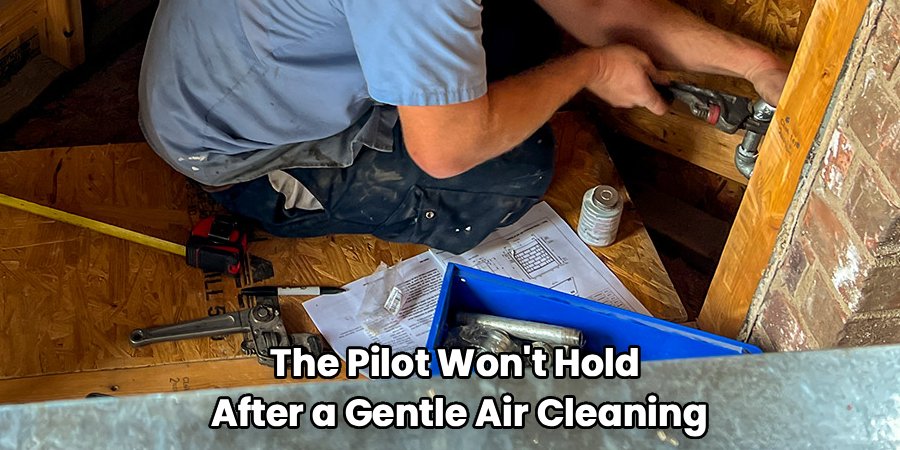
Leave the ODS and gas connections to a pro if in doubt. If the pilot won’t hold after a gentle air cleaning, or you spot corrosion on the gas fittings, stop and book an annual service. These sensors are a life-safety feature, not something to improvise on.
Maintenance and Prevention Tips
A light rhythm keeps each clean quick and your flames burning the right color:
- Dust the logs and firebox monthly during burning season. A quick brush-and-vacuum stops buildup before it reaches the ports.
- Do the deep clean in early fall. Right before you start using it for winter, clear out a full off-season of settled dust. I always told clients to make it a late-September ritual, same weekend they test the smoke alarms.
- Cover it in the off-season. A simple screen or cover keeps household dust and pet hair off the logs all summer.
- Book a professional service once a year. A tech checks the gas connections, ODS function, and port condition — things you shouldn’t tackle yourself.
- Watch the flame color as your early warning. Steady blue-to-yellow is healthy. Lots of lazy orange, sooting, or a sooty smell means dust is building and it’s time to clean.
- Keep the room’s air fairly clean. Running the fireplace right after heavy vacuuming or sanding pulls that fine dust straight onto the burner.
Frequently Asked Questions
How do you clean the logs on a ventless gas fireplace?

Dust them dry — never wet. Lift each log out gently after the unit is cold and the gas is off, brush the surface with a soft paintbrush, and finish with a light burst of compressed air. Water and cleaners soak into the porous ceramic and cause odor, discoloration, and cracking.
Why does my ventless gas fireplace smell when I clean it?
Almost always because moisture got into the logs. If you’ve wiped them with a damp cloth or sprayed cleaner nearby, that trapped water burns off as an odor when you relight. Dust buildup on the burner can also give off a smell as it heats, which is why dry cleaning matters.
Can you use water to clean gas fireplace logs?
No. Ventless ceramic logs are porous and absorb water, which leads to smells, discoloration, and eventually cracks. Keep all moisture on the glass and surround only, and clean the logs themselves with a dry brush and compressed air.
Why won’t my pilot light stay lit after cleaning?
Usually the Oxygen Depletion Sensor near the pilot got dust on it or was bumped. Give it a gentle puff of compressed air and nothing else — no cloth, no poking. If it still won’t hold, the sensor may need a technician, since it’s a calibrated safety device.
How often should you clean a ventless gas fireplace?
A quick dusting once a month during the months you use it, plus one deep clean in early fall before heating season. Pair that with a professional service once a year to check the gas connections and ODS.
Why is the flame on my gas fireplace orange instead of blue?
Dust on the burner ports or logs sitting out of position are the two usual causes. A lazy, mostly orange flame with soot means it’s time to clean the ports and double-check your log layout against the manufacturer’s arrangement.
The Bottom Line
Treat a vent-free fireplace as a dry-clean-only job and you’ll dodge the odor, sooting, and pilot trouble that send most people scrambling for a technician. Keep water off the logs, put every piece back exactly where the photo shows, and let air do the work around the pilot. Do that, and you’ll get years of clean, golden flames out of it.
