
You tossed a garlicky Caesar, left the bowl soaking in a sink full of soapy water, and came back an hour later to a bowl that felt fuzzy and smelled like a damp basement. That single soak does more damage than a year of daily use, because wood swells, cracks, and holds onto that funk long after the salad’s gone.
Knowing how to clean a wooden salad bowl comes down to speed and gentleness — quick wash, quick dry, no drowning it. Do that, and one good bowl outlasts every plastic and glass one in your cupboard. Ignore it, and you’ll be tossing a warped, split bowl within a season.
What You’ll Need
- Warm water (not hot)
- A few drops of mild dish soap
- A soft sponge or dishcloth
- A soft-bristle brush or old toothbrush (for grooves)
- Coarse salt (for deodorizing and light scrubbing)
- Half a lemon
- White vinegar (for occasional deep cleaning)
- Food-grade mineral oil or a wood-conditioning butter (mineral oil + beeswax)
- A clean, dry towel
Nothing on that list has a scary warning label. This is a soap-and-cloth job, not a chemistry experiment.
Step-by-Step: Washing a Wooden Salad Bowl the Right Way
Scrape and Rinse Before Soap Ever Touches It
Empty out any leftover greens, croutons, and dressing first. Give the inside a quick rinse under warm running water to flush loose bits away. You want the bulk of the mess gone before you start scrubbing, so you’re not grinding oily residue deeper into the grain.
Wash Fast With Mild Soap and a Soft Sponge
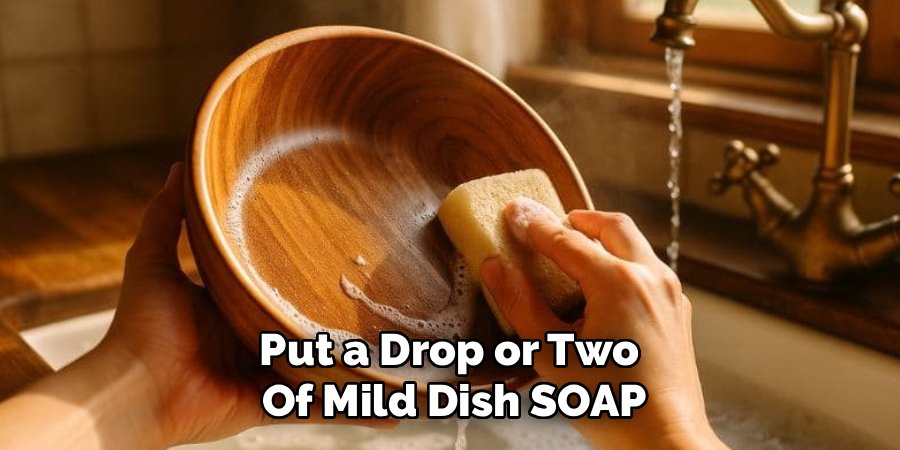
Put a drop or two of mild dish soap on a damp sponge and wash the bowl in gentle circles, inside and out. Keep it quick — a wooden bowl should spend seconds in contact with water, not minutes. This is the opposite of how you’d treat a stainless pot, and it’s the habit most people struggle to break.
Work Into the Grooves and Base
The rim, the foot, and any carved detailing trap dressing and crumbs. A soft-bristle brush or an old toothbrush gets in there without gouging the wood. Go with the grain wherever you can feel it.
Rinse Quickly and Never Let It Soak
Rinse under warm running water until the soap is gone, then get it out of the sink immediately. Standing water is the enemy here. Wood is full of tiny open pores that drink up moisture and swell, and that swelling is exactly what leads to the hairline cracks that eventually split a bowl in two.
Dry by Hand, Then Air-Dry Standing Up
Towel-dry the bowl right away — don’t let it drip-dry in a rack. Once the surface is dry to the touch, stand it on its side or upside down on a rack so any trapped moisture escapes evenly. Lay it flat and one side stays damp longer, which is how you get a bowl that dries warped on one edge.
Deodorize a Smelly or Oniony Bowl
Onions, garlic, and vinaigrettes leave lingering smells. Sprinkle a spoonful of coarse salt into the bowl, then scrub it around with the cut side of half a lemon. The salt scours gently while the lemon neutralizes odor. Rinse quickly, dry, and the funk is gone.
Safe vs. Unsafe: What to Use on a Wooden Salad Bowl
| Do This | Avoid This |
| Warm water and mild dish soap | Long soaks in the sink |
| Quick hand wash, seconds not minutes | The dishwasher — heat and water warp and crack wood |
| Soft sponge or dishcloth | Steel wool or abrasive scouring pads |
| Coarse salt and lemon for odor | Bleach or strong disinfectant sprays |
| Diluted white vinegar for deep cleaning | Boiling water or very hot rinses |
| Food-grade mineral oil to condition | Olive, vegetable, or nut oils (they go rancid) |
| Towel-dry, then air-dry standing up | Leaving it wet in a dish rack overnight |
Common Mistakes to Avoid
Soaking it. This is the big one, so I’ll keep hammering it. Even a “quick” 20-minute soak forces water deep into the grain, and the drying that follows pulls the fibers apart.
Putting it in the dishwasher. The combination of prolonged water, blasting heat, and drying cycles is brutal on wood. A bowl that survives one wash rarely survives ten. Clients used to swear their bowl was “dishwasher safe” because the label said so — it wasn’t, and I’d get the cracked bowl handed to me a few months later.
Using kitchen oils to condition. Olive oil feels natural, but it turns rancid inside the pores and leaves a sticky, sour-smelling film. Only food-grade mineral oil or a proper wood butter stays stable.
Scrubbing with steel wool. It scratches the surface, opens the grain, and gives bacteria and moisture more places to hide.
Skipping the oil entirely. A dry, un-conditioned bowl goes pale, rough, and thirsty, and it absorbs water and stains far faster than a well-oiled one.
Safety and Warnings
Good news — washing a wooden salad bowl is about as low-risk as kitchen tasks get. No harsh chemicals, no fumes, no gloves required. Still, a few points keep both you and the bowl safe:
- Keep it out of the dishwasher and away from bleach. These aren’t dangerous to you, but they’ll ruin a food-safe surface, and a stripped, cracked bowl harbors bacteria you don’t want near your food.
- Use only food-grade mineral oil, sold as such or labeled “butcher block” or “cutting board” oil. Regular hardware-store mineral oil is fine only if it’s marked food-safe; skip anything meant for machinery.
- Dry the bowl fully before storing. A bowl put away damp can grow mold in the grain, which is the one genuine hygiene risk here.
- If a bowl develops deep cracks or splits, retire it from food use. Those crevices trap food and moisture where you can’t clean them properly.
That’s the whole hazard list — mild soap, food-safe oil, and thorough drying cover you completely.
Maintenance and Prevention: Keeping Your Bowl in Great Shape
The washing routine matters, but conditioning is what actually makes a wooden bowl last for decades. A little upkeep beats replacing a cracked bowl every year.
Oil it regularly. Rub a thin coat of food-grade mineral oil over the whole bowl with a soft cloth, let it soak in for a few hours or overnight, then wipe off any excess. Do this once a month for a new or heavily used bowl, and every couple of months once it’s well seasoned.
Watch for the water test. Drip a little water on the surface. If it beads up, the bowl is still protected. If it soaks in and darkens the wood fast, it’s asking for oil. I always told clients to re-oil at the start of winter — indoor heating dries the air out, and that’s exactly when wooden bowls, boards, and spoons start looking thirsty and cracking at the rim.
Wash and dry it promptly after every use. Don’t let dressing sit in the bowl for hours. Acids in vinaigrette and citrus can dull and stain the surface over time.
Store it somewhere with airflow. Cramming it into a tight, damp cabinet traps moisture. A cupboard with a little breathing room keeps it dry between uses.
Keep it out of direct heat and sun. A sunny windowsill or a spot next to the oven dries wood unevenly and speeds up cracking.
FAQ
Can you wash a wooden salad bowl with soap?
Yes. A few drops of mild dish soap and warm water are perfectly fine — the old myth that soap ruins wood comes from harsh detergents and long soaks, not a quick wash. The real rules are to wash fast, rinse quickly, and never let the bowl soak or sit wet.

Can a wooden salad bowl go in the dishwasher?
No, even if the label claims it’s dishwasher safe. The long exposure to water, high heat, and aggressive drying cycles warps, cracks, and splits the wood. Always hand wash and dry it right away.
How do you get rid of the smell in a wooden salad bowl?
Sprinkle coarse salt into the bowl and scrub it with the cut side of half a lemon. The salt lifts residue while the lemon neutralizes garlic, onion, and vinaigrette odors. Rinse quickly, dry thoroughly, and the smell disappears.
What oil should you use on a wooden salad bowl?
Food-grade mineral oil is the safest, most reliable choice, or a wood butter made from mineral oil and beeswax. Avoid olive, coconut, vegetable, and nut oils — they turn rancid in the wood and leave a sticky, sour film.
How do you remove stains from a wooden salad bowl?
For light stains, make a paste of coarse salt and lemon juice, rub it in with the grain, then rinse and dry quickly. For stubborn marks, wipe the spot with a cloth dampened in diluted white vinegar, rinse, dry fully, and finish with a coat of mineral oil to restore the surface.
How often should you oil a wooden salad bowl?
Roughly once a month for a new or frequently used bowl, and every two to three months once it’s well seasoned. Let the water test guide you — if water soaks in instead of beading up, it’s time to re-oil.
Final Word
Treat your bowl like it hates baths and loves quick showers — fast wash, immediate dry, a little oil now and then. Get that rhythm down and you’ll be tossing salads in the same beautiful bowl long after everything else in the kitchen has been replaced.
