
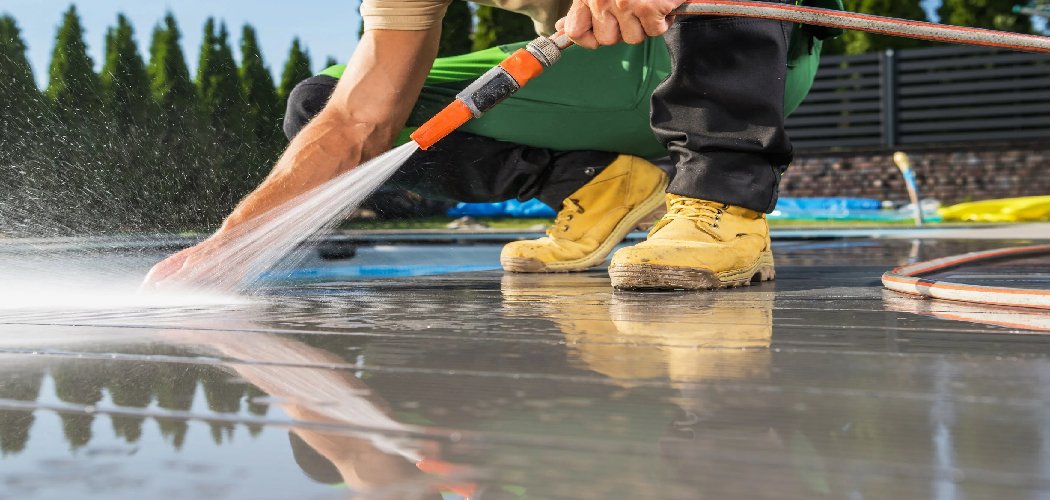
You spray a big blob of degreaser on that oil stain by the steps, get distracted by a phone call, and come back an hour later to a bleached-out pale patch on your concrete that stands out worse than the stain ever did. Letting a cleaner dry on the surface is the fastest way to trade one problem for a permanent one.

The secret to how to clean front porch isn’t a stronger chemical — it’s working in the right order and never letting anything sit long enough to dry. Sweep first, treat stains second, and rinse before the sun does the drying for you. Do that and even a neglected porch comes back to life in a couple of hours.
What You’ll Need
- Stiff push broom for sweeping
- Garden hose with an adjustable nozzle
- Two buckets — one for cleaning solution, one for clean rinse water
- Stiff-bristle scrub brush on a pole (nylon, not wire)
- Mild dish soap or an all-purpose outdoor cleaner
- Oxygen bleach (oxygen-based, not chlorine) for stains and mildew
- White vinegar for mineral spots and light film
- Degreaser or cat litter for oil and grease stains
- Microfiber cloths for railings and light fixtures
- Rubber gloves and safety glasses
- Drop cloth to protect nearby plants
- A cool, overcast day with no rain in the forecast
Clear Everything Off and Sweep First
Pull the doormat, planters, chairs, and any decor completely off the porch. Cleaning around a rocking chair just means you clean the same spot twice and still miss what’s underneath it. Shake out the doormat while you’re at it — that thing holds more grit than you’d think.
Now sweep the whole surface with a stiff push broom, working from the house outward toward the steps. Get into the corners and the edge where the floor meets the wall, since that’s where leaves rot and stain over time. Knock down cobwebs from the ceiling and light fixtures with the broom too, before any water comes out.
Pre-Treat Oil, Grease, and Rust Spots
Hit stains before you do the full wash, because a general soaping won’t touch them. For fresh oil or grease, sprinkle cat litter over the spot, press it in, and leave it 15 minutes to pull up the oil, then sweep it away and scrub what’s left with degreaser. Rust stains respond better to a dedicated rust remover — vinegar works on light ones if you catch them early.
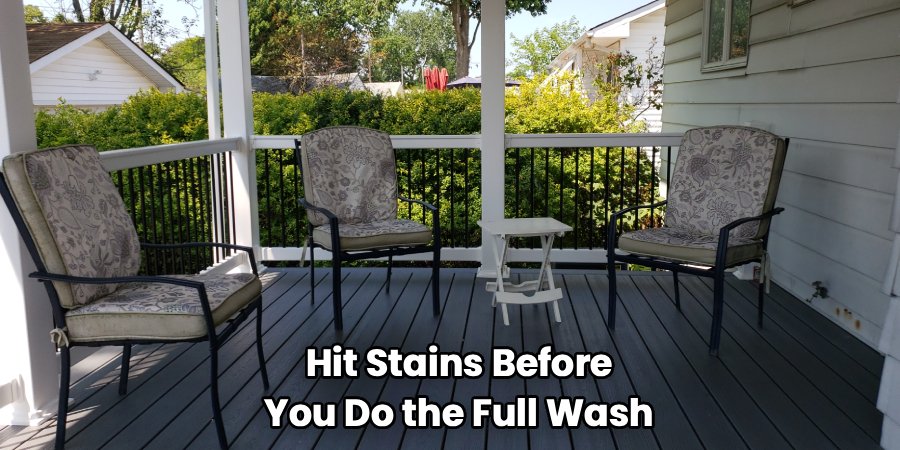
Here’s something clients used to ask me every fall: why does one corner keep getting a dark ring? Nine times out of ten it’s a planter that traps moisture underneath and never dries. Set your pots on little feet or risers and that ring stops coming back.
Mix Your Cleaning Solution
Fill one bucket with warm water and a good squirt of dish soap for routine dirt. For a porch with mildew or years of grime, mix oxygen bleach into warm water following the label — it foams up, breaks down organic gunk, and won’t strip color or kill your landscaping the way chlorine bleach can. Keep your second bucket full of plain water for rinsing your brush.
Wet the whole floor with the hose first. A dry surface soaks up cleaner unevenly and leaves you with streaks, so a quick pre-rinse gives you a more even clean.
Scrub the Floor in Sections
Work in manageable sections, maybe four feet at a time, so no area dries before you rinse it. Pour or spread the solution, let it sit two to three minutes to loosen the dirt, then scrub in overlapping strokes with your pole brush. Put your weight into it on concrete; ease off on painted wood so you don’t lift the finish.
Pay attention to the high-traffic path from the door to the steps — that’s where the buildup is worst and where a little extra scrubbing shows the biggest difference.
Clean Railings, Posts, and Light Fixtures
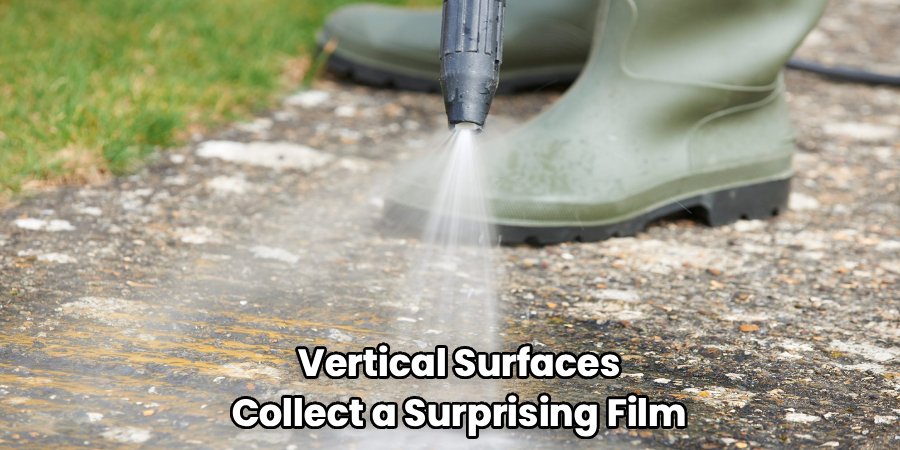
Wipe down the railings, posts, and any window trim with a microfiber cloth and your soapy water. These vertical surfaces collect a surprising film of pollen and road dust, especially at hand height on the rail. Do them before your final floor rinse so the drips wash away instead of drying into spots.
For light fixtures, cut the power at the switch first, then wipe the glass and housing with a barely damp cloth. Bugs and dust cake up in there and dim the light more than you realize.
Rinse Toward the Steps and Let It Dry
Set the hose to a firm fan spray and rinse each section from the house wall out toward the steps, pushing all the dirty water off the edge. Rinse until the runoff comes clean and no suds are left, because leftover soap dries into a haze and grabs dirt fast. Let the porch air-dry fully before you drag the furniture and mats back on.
Cleaning Methods Compared
| Method | Best For | Effort | Notes |
| Dish soap + water + brush | Routine dirt, dust, pollen | Low | Safe on almost every surface |
| Oxygen bleach solution | Mildew, gray grime, set-in dirt | Medium | Color-safe, plant-friendly |
| Vinegar-water mix | Mineral spots, light film | Low | Great on stone and glass |
| Degreaser or cat litter | Oil and grease stains | Medium | Pre-treat before full wash |
| Chlorine bleach | Avoid on wood and near plants | Medium | Strips color, harms landscaping |
| Pressure washer | Bare concrete only | Low | Too harsh for wood or painted surfaces |
Common Mistakes to Avoid
- Letting cleaner dry on the surface. It streaks, bleaches, and etches. Work in small sections and rinse before it dries.
- Cleaning in direct sun. Everything dries too fast. Pick a cool, overcast day.
- Pressure washing painted wood. It peels the paint and gouges soft boards. Save the washer for bare concrete.
- Reaching for chlorine bleach near plants. Runoff scorches your landscaping and can discolor the porch itself.
- Skipping the pre-treat step. A general wash won’t lift oil, rust, or set-in mildew.
- Rinsing toward the house. You push dirty water back over clean areas. Always rinse toward the steps.
- Putting the furniture back wet. Trapped moisture under mats and pots is exactly what causes those dark rings.
Safety and Warnings
The biggest chemical rule here: never mix bleach with vinegar, ammonia, or any acidic cleaner. That combination releases toxic gas. Pick one product for a job and rinse thoroughly before trying another. This is a real reason to reach for oxygen bleach instead — it’s far more forgiving to work with than chlorine.
Wear rubber gloves and safety glasses, especially when scrubbing overhead railings or fixtures where drips run back down your arms and toward your face. Test any new cleaner on a small, hidden corner first, particularly on painted or sealed wood, and wait a few minutes to make sure it doesn’t lift the finish or discolor the surface. Watch your footing too — wet tile, painted boards, and smooth concrete get slick fast, so move deliberately and keep the hose from pooling where you’re standing. And always cut the power before wiping electrical fixtures.
Maintenance and Prevention Tips
A few minutes of upkeep beats a half-day scrub-down every time. Stay ahead of the buildup and each cleaning gets shorter.
- Sweep weekly, more often in fall when leaves pile up and stain as they break down.
- Rinse the floor with the hose every couple of weeks during heavy pollen season.
- Shake out the doormat regularly so it stops grinding grit into the surface underneath.
- Raise your planters on feet or risers so moisture can escape and no dark rings form.
- Wipe railings and fixtures monthly to keep pollen and dust from caking on.
- Seal bare concrete or wood every year or two — a sealed surface resists stains and rinses clean far easier.
- Deal with mildew the moment you see it, before it spreads into the pores of the surface and needs a full oxygen-bleach treatment.
Frequently Asked Questions
What is the best way to clean a front porch?
Sweep the whole surface first, pre-treat any oil, rust, or mildew stains, then scrub in sections with warm soapy water or an oxygen-bleach solution. Let the cleaner sit a couple of minutes, scrub with a stiff nylon brush, and rinse toward the steps before anything dries. Working in order and never letting cleaner dry is what gives you an even, streak-free result.
How do you clean a concrete porch without a pressure washer?
A stiff push broom, a pole scrub brush, and a bucket of oxygen-bleach solution do the job cleanly. Wet the concrete, apply your solution, let it dwell a few minutes, scrub in overlapping strokes, and rinse with a firm hose spray. You get most of a pressure washer’s result with none of the risk of etching or blasting mortar loose.
How do you get oil stains off a porch?
For fresh spills, cover the stain with cat litter, press it in, and let it soak up the oil for 15 minutes before sweeping it away. Then scrub the spot with degreaser and rinse. Older, set-in oil may need a couple of rounds, so be patient rather than reaching for something harsh that could bleach the surface.
Can you use bleach to clean a front porch?
You can, but oxygen bleach is the smarter pick. Chlorine bleach strips color from wood and stone and its runoff scorches nearby plants. Oxygen bleach lifts mildew and grime while staying color-safe and landscaping-friendly. If you do use chlorine bleach, never mix it with any other cleaner and rinse everything well.
How often should you clean your front porch?
Sweep weekly, give the floor a quick hose rinse every couple of weeks in pollen season, and do a full scrub-down once or twice a year. Bump that up if you’re under heavy tree cover or in a humid, mildew-prone area. Small regular passes keep grime from setting in and make the deep cleans much easier.
Will vinegar damage a wood porch?
Diluted vinegar is fine for the occasional cleaning of sealed wood and is great on mineral spots and glass. Don’t let it pool or sit on bare or waxed wood for long, since the acid can dull the finish over time. Rinse it off after use and stick to oxygen bleach for bigger mildew jobs.
Closing
Work top to bottom, house to steps, and never let a cleaner dry before you rinse it — that rhythm alone separates a fresh porch from a streaky one. Set a weekly sweep reminder now and next season’s deep clean will be a quick afternoon instead of a dreaded chore.
