
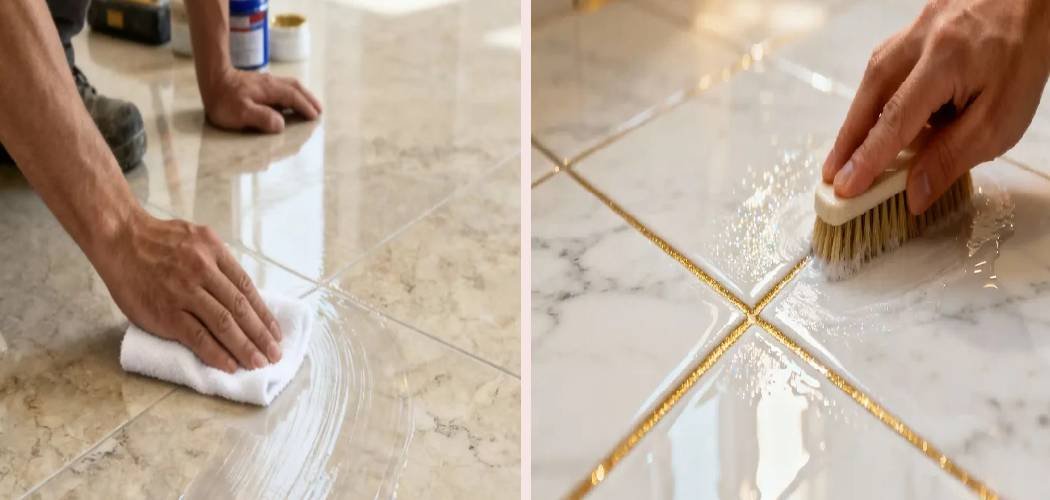
A homeowner once called me in a panic after “deep cleaning” the grout on a white marble bathroom floor with a spray bottle of vinegar and a stiff scrub brush. The grout lines looked cleaner, sure — but the marble around every line had gone dull and cloudy, with faint etched halos tracing each joint. She’d spent an afternoon scrubbing a permanent stain into her own floor.
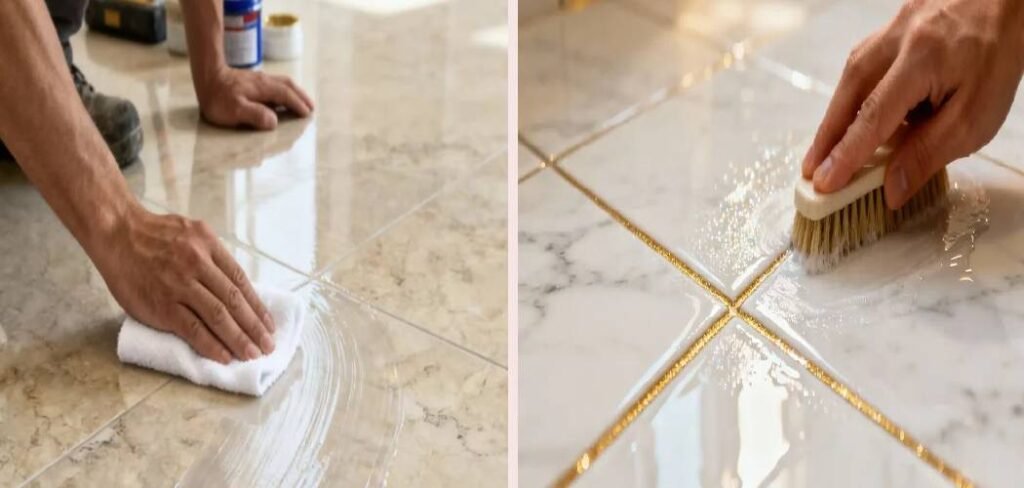
That’s the trap with marble grout: the grout itself can take more punishment than the stone around it, but almost everything strong enough to blast the grout will eat the marble. Learning how to clean marble grout is really about cleaning the lines without touching the stone with anything acidic or gritty. Get that balance right and it’s an easy, low-risk job.
What You’ll Need
- pH-neutral stone cleaner (or a few drops of mild dish soap in warm water)
- Baking soda (yes — it’s safe on marble grout when used right)
- Hydrogen peroxide (3%, the drugstore kind) for stubborn stains
- A soft grout brush or an old soft-bristled toothbrush
- A small detail brush for corners and edges
- Two clean cloths — one for cleaning, one for drying
- A spray bottle
- Warm water and a bucket
- Gloves
- Painter’s tape (optional, to protect the marble edges)
- A soft towel to kneel on and blot with
Skip the vinegar, lemon, bleach-based bathroom sprays, and any “grout pen” or acidic tile cleaner. I’ll explain exactly why below.
Test a Hidden Spot and Protect the Marble First
Before anything touches the floor, find an out-of-the-way grout line — inside a closet doorway, behind the toilet, under a vanity — and test your cleaner there. Marble varies wildly batch to batch, and what’s fine on one slab can dull another. Wait ten minutes and check for any change in the stone’s shine.
If you’re nervous about slipping onto the marble with your brush, run a strip of painter’s tape along the stone right up to the grout edge. It won’t make the job faster, but it stops a stray scrub stroke from etching the surface while you learn the rhythm.
Sweep and Pre-Rinse the Grout Lines
Dry dirt is the enemy here. Grit sitting in the grout turns your brush into sandpaper the moment you add water, and that grit is what scratches marble. Sweep or vacuum the whole area first, paying attention to the corners where debris collects.
Then wipe the grout lines with a cloth dampened in plain warm water. This lifts the loose surface film and lets you see what you’re actually dealing with — light discoloration or a deeper set-in stain.
Clean the Lines With a pH-Neutral Solution
Mix a few drops of pH-neutral stone cleaner or mild dish soap into warm water. Dip your soft grout brush, and work one line at a time using short back-and-forth strokes directly along the grout — not across it onto the stone. Light pressure does the work; you’re loosening dirt, not sanding it out.

Keep the marble wet around your work area as you go. A damp surface is far more forgiving of a slipped stroke than a dry one. Rinse the brush often so you’re not just pushing dirty water around.
Handle Stubborn Stains With a Baking Soda Paste
When plain soap won’t lift a set-in stain, make a paste of baking soda and water — about three parts powder to one part water, thick enough to stay put. Baking soda is mildly abrasive but soft enough not to scratch marble, and it’s alkaline rather than acidic, so it won’t etch the stone.
Dab the paste onto the stained grout only, keeping it off the marble face as much as you can. Let it sit for five to ten minutes, then gently scrub the line with your soft brush. For grease or mildew stains, mix the baking soda with 3% hydrogen peroxide instead of water for a little more lifting power.
Reach the Corners and Edges
The perimeter of a room and the corners around fixtures are where grime hides and where most people quit early. Switch to a small detail brush or a cotton swab for these tight spots. Work slowly — this is exactly where a big brush tends to skid up onto the marble and cause etching.
Rinse Thoroughly and Dry the Marble
Rinse every trace of cleaner and paste off with a cloth and clean warm water. Leftover baking soda dries to a chalky haze on grout, and any cleaner residue attracts dirt right back, so flush the lines well and wipe the whole surface down.
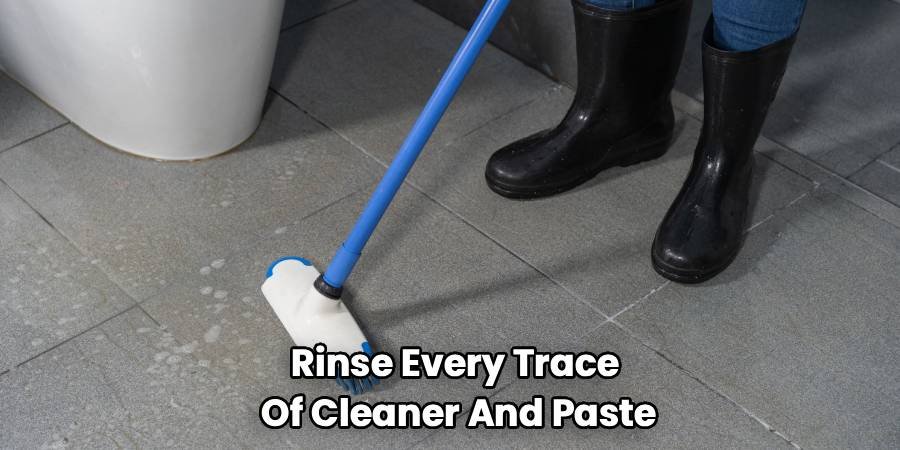
Then dry the marble with a clean, soft cloth rather than letting it air-dry. Marble is porous, and standing water is how you get water spots and dull patches over time. Buffing it dry keeps the shine even.
Safe vs. Damaging Products and Methods
| Safe on Marble Grout | Will Damage the Marble |
| pH-neutral stone cleaner | Vinegar (etches marble on contact) |
| Mild dish soap and warm water | Lemon juice or any citrus cleaner |
| Baking soda paste | Bleach and bleach-based sprays |
| 3% hydrogen peroxide | Acidic tile or grout cleaners |
| Soft grout brush or toothbrush | Stiff wire or hard-bristle brushes |
| Soft microfiber cloths | Abrasive scouring powders |
| Detail brush for corners | Steam cleaners on hairline-cracked grout |
The rule is simple: anything acidic dulls and etches the stone, and anything gritty or stiff scratches it. Everything on the safe side is either pH-neutral or gently alkaline.
Common Mistakes to Avoid
- Reaching for vinegar. It’s the number-one marble killer. Vinegar dissolves the calcium in marble, leaving dull, etched halos along every grout line you clean.
- Using bleach or “whitening” grout sprays. Most are acidic or harsh enough to etch the stone, and the fumes aren’t worth it for a bathroom-sized job.
- Scrubbing across the grout onto the marble. Cross-strokes drag brush and grit straight onto the vulnerable stone. Always work along the line.
- Skipping the sweep. Cleaning over dry grit turns your brush into an abrasive pad and scratches the marble.
- Letting cleaner sit on the stone. A paste that’s fine on grout can still dull marble if it dries on the surface. Keep it on the lines and rinse promptly.
- Air-drying. Standing water spots porous marble. Dry it by hand.
- Cleaning too aggressively, too often. Grout doesn’t need weekly deep scrubbing. Over-cleaning wears the sealer and the stone.
Safety and Warnings
This is low-toxicity work, but a few rules keep both you and the floor safe.
- Test in a hidden spot first. Always confirm your cleaner won’t dull the stone before you do the visible floor.
- Never mix cleaning products. Don’t combine hydrogen peroxide with vinegar, and never mix bleach with anything containing ammonia — that combination releases toxic gas. The safest habit is one gentle cleaner at a time.
- Ventilate the room. Even mild cleaners and peroxide are better used with a window open or the fan running, especially in a closed bathroom.
- Wear gloves. A long scrubbing session dries and irritates skin, and peroxide can sting small cuts.
- Mind your footing. Wet marble is slick. Work in sections, dry as you go, and don’t leave puddles behind you.
- Store peroxide in the dark. It breaks down in light — if it’s been sitting open on a sunny shelf, it may have lost its punch.
Keep Marble Grout Clean for Longer
The best way to avoid deep-scrubbing sessions is to stop grime from setting in. Here’s what actually stretches the time between cleanings:
- Seal the grout — and the marble. Both are porous. A stone-safe penetrating sealer on the grout lines and the surrounding marble is your single biggest defense against stains soaking in. Reseal roughly once a year.
- Wipe up spills fast. Coffee, wine, and anything acidic will stain grout and etch marble if it sits. Blot, don’t wipe, so you don’t spread it.
- Do a weekly pH-neutral wipe. A quick pass with stone cleaner keeps surface film from building into the grout lines.
- Use mats at entry points. Most of the grit that scratches floors walks in on shoes. A mat catches it before it reaches the marble.
- Skip the acidic bathroom sprays entirely. If it’s not marble-safe, don’t spray it anywhere near the floor — overspray lands on the stone.
One thing I noticed on every marble job: grout stains that look permanent are usually just unsealed grout that’s been drinking up dirty water for months. Clients used to swear their grout had “gone gray forever,” but nine times out of ten a proper cleaning plus a fresh seal brought it right back. Sealed grout stays lighter because the dirt sits on top instead of soaking in — and that’s most of the battle.
Frequently Asked Questions
Can you use vinegar to clean marble grout?
No. Vinegar is acidic and will etch the marble around the grout lines, leaving dull, cloudy spots that don’t buff out. The grout itself might come cleaner, but you’ll trade it for permanent damage to the stone. Use a pH-neutral cleaner or a baking soda paste instead.
What is the best cleaner for grout between marble tiles?
For everyday cleaning, a pH-neutral stone cleaner or a few drops of mild dish soap in warm water covers most jobs. For set-in stains, a baking soda paste — or baking soda mixed with 3% hydrogen peroxide — lifts grime without harming the stone. Anything acidic or bleach-based is off the table.
Is baking soda safe to use on marble grout?
Yes, when used correctly. Baking soda is alkaline, not acidic, so it won’t etch marble the way vinegar does, and it’s soft enough not to scratch. Keep the paste on the grout lines, avoid grinding it into the stone, and rinse it off fully so it doesn’t dry to a haze.
How do you whiten dingy grout without damaging marble?
Skip the acidic whitening sprays. Use a baking soda and 3% hydrogen peroxide paste on the grout lines, let it sit for a few minutes, then gently scrub with a soft brush and rinse. If the grout still looks gray afterward, it’s usually unsealed and holding old stains — cleaning plus resealing does more than any harsh product.
Why does my marble grout keep getting dirty so fast?
Almost always because the grout isn’t sealed. Unsealed grout is porous and soaks up every bit of dirty mop water and spill, so it grays quickly. Clean it properly, let it dry fully, then apply a stone-safe penetrating sealer to keep dirt sitting on top where it wipes away.
How often should you deep clean marble grout?
For most homes, a light pH-neutral wipe weekly and a full grout scrub every few months is plenty. Over-cleaning wears down the sealer and stone. If you’re sealing the grout and wiping spills quickly, you’ll rarely need an aggressive deep clean at all.
Final Word
Keep everything pH-neutral, work along the lines instead of across them, and dry the marble by hand when you’re done. Seal the grout once it’s clean and you’ll spend far less time on your knees with a brush next time around.
