
You spot a coffee ring on the mesh back of your chair, grab a soaked sponge, and press it in hard to work the stain out. An hour later the mesh is still damp, the stain has spread into a wider gray halo, and now there’s a faint musty smell you can’t place. Mesh doesn’t hold dirt the way padded fabric does — it strains it, and drowning it in water only pushes the grime deeper into the weave.
Learning how to clean office chair mesh comes down to using less water than you think, working the surface gently, and letting air do most of the drying. Get those three things right and you lift the dust and stains without stretching the weave or leaving a stiff, crusty patch behind. The mesh stays taut, breathable, and looks like new.
What You’ll Need
- Two soft microfiber cloths — one for cleaning, one for drying
- A soft-bristle brush or an old, clean toothbrush
- Mild dish soap or a gentle upholstery cleaner
- Warm water
- A small bowl or spray bottle
- A vacuum with an upholstery or brush attachment
- White vinegar, for odor and mild stains
- A clean, dry towel
- A fan or open window for drying
Skip the stiff scrub brushes, the abrasive scouring pads, and anything with bleach. Mesh is a tensioned synthetic weave, and rough tools snag the fibers or leave them fuzzy and loose where they used to sit tight.
Vacuum the Dry Dust First
Run your vacuum’s upholstery or brush attachment over both sides of the mesh before anything gets wet. Mesh acts like a sieve, so it traps a surprising amount of fine dust, skin flakes, and crumbs in the weave — and if you spray cleaner onto that dry grit, you turn it into a muddy paste that smears sideways instead of lifting out.
Hold the mesh steady with one hand so the suction doesn’t overstretch it, and work in short passes across the grain of the weave. Get into the seams where the mesh meets the frame, too. That edge collects a dark line of buildup that most people never notice until the chair is clean everywhere else.
Mix a Light Cleaning Solution
Add just a few drops of mild dish soap to a bowl of warm water and stir until it’s barely sudsy. You want a light solution, not a foamy bath — heavy suds dry into a stiff residue that clogs the tiny holes in the weave and actually attracts more dust later.
For odors or mild stains, mix equal parts white vinegar and warm water instead. The vinegar smell fades as it dries and takes the musty note with it. I had office clients who swore their chairs “just smelled like the office” until we hit the mesh with a vinegar solution — turned out years of trapped sweat and dust were living in that weave the whole time.

Blot and Brush the Mesh Gently
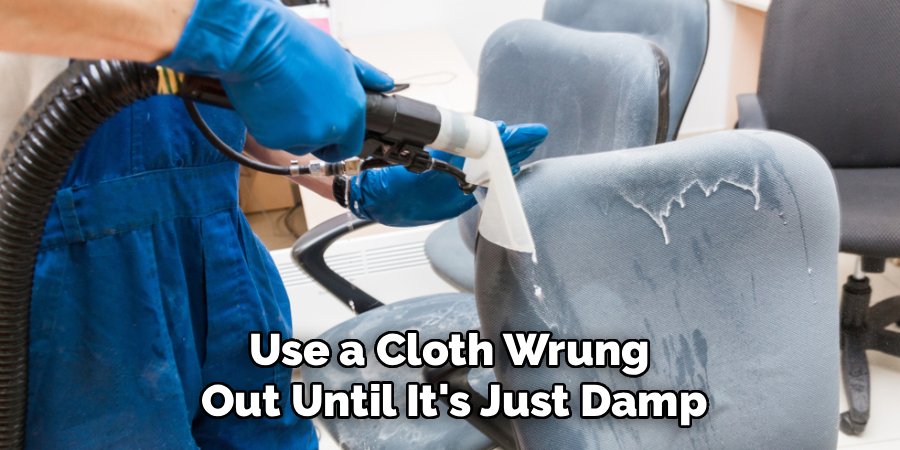
Dip a microfiber cloth in your solution and wring it out until it’s just damp, then wipe the mesh with light, even strokes following the direction of the weave. Don’t press hard or scrub in circles — that stretches the fibers and grinds dirt further in. Let the damp cloth do the lifting.
For spots that need more, dip your soft brush in the solution and stroke it lightly across the surface in one direction. Keep the brush moving and never dig into a single spot, since concentrated pressure on tensioned mesh can leave a permanent slack patch that sags.
Spot-Treat Stubborn Stains
For a set-in stain like coffee, ink, or grease, dab a small amount of solution directly onto the mark with a corner of your cloth and let it sit for a minute before blotting. Work from the outside of the stain inward so you don’t spread the edges into a wider ring.
Blot — don’t rub — with a clean, damp section of cloth, lifting the stain out in stages. Grease responds best to a touch more dish soap in the mix, while ink often needs a second gentle pass rather than harder pressure. Patience beats force every time on mesh.
Wipe Down the Frame and Base
While the mesh dries, wipe the plastic or metal frame, armrests, and base with a fresh damp cloth. These edges collect oil from hands and a greasy film that transfers right back onto clean mesh if you leave it.
Get into the joint where the mesh clips into the frame with a cotton cloth or your toothbrush. Dry the frame right away so no water drips down onto the mesh you just cleaned.
Rinse Lightly and Dry Completely
Go over the mesh once more with a cloth wrung out in plain warm water to lift any soap or vinegar residue. Leftover cleaner dries stiff and dulls the weave, so this quick pass matters more than people expect. Change your rinse water the moment it looks cloudy.
Blot the mesh with a dry towel to pull out as much moisture as you can, then let the chair air-dry fully before sitting in it. Point a fan at it or set it near an open window — mesh dries fast because air passes right through it, usually within an hour or two. Sitting on damp mesh presses the fibers out of shape while they’re still soft and vulnerable.
Safe vs. Unsafe Products and Methods for Mesh
Mesh is less forgiving than padded upholstery. The wrong product doesn’t just fail to clean — it warps the weave or leaves it stiff. Here’s what keeps mesh taut and breathable versus what wrecks it.
| Safe for Office Chair Mesh | Avoid — Damages the Weave |
| Mild dish soap and warm water | Bleach or bleach-based cleaners |
| Diluted white vinegar for odors | Undiluted harsh solvents |
| Soft microfiber cloths | Abrasive scouring pads |
| Soft-bristle or toothbrush | Stiff wire or scrub brushes |
| Damp cloth, wrung nearly dry | Soaking or drenching the mesh |
| Vacuum with brush attachment | Steam cleaners on synthetic mesh |
| Air-drying with a fan | Hair dryers or direct heat |
| Light, single-direction strokes | Hard circular scrubbing |
Steam cleaners deserve a specific warning. The heat can soften and warp synthetic mesh, leaving it permanently loose and wavy where it used to sit flat — and once mesh loses its tension, no amount of cleaning brings it back.
Common Mistakes to Avoid
- Soaking the mesh. Too much water pushes dirt deeper and takes forever to dry, inviting mildew. Damp, not wet, always.
- Scrubbing hard in circles. This stretches tensioned fibers and leaves a slack, saggy patch. Wipe gently in one direction.
- Skipping the vacuum step. Spraying cleaner onto dry grit makes a smeary paste. Dry-dust first, every time.
- Using bleach to brighten. Bleach weakens synthetic fibers and can discolor them unevenly. It’s the wrong tool for mesh.
- Applying direct heat to dry it faster. Hair dryers and radiators warp the weave. Let air do the work.
- Sitting down before it’s fully dry. Damp mesh molds to your weight and holds the dent. Wait it out.
- Ignoring the frame. A greasy frame re-soils clean mesh within days. Wipe it while the mesh dries.
Safety and Warnings
Cleaning mesh is low-risk overall — you’re mostly using mild soap and water — but a few precautions protect both the chair and you.
- Test in a hidden spot first. Try any cleaner on the underside or a low corner of the mesh before doing the whole chair, since colored mesh can lighten or bleed.
- Never mix cleaning products. Don’t combine vinegar with bleach or any other cleaner — some mixes release harmful fumes. Use one solution at a time and rinse between them.
- Keep bleach off mesh entirely. Beyond weakening the fibers, bleach fumes irritate the eyes and lungs in a closed office.
- Ventilate when using vinegar. Crack a window or run a fan, especially in a small room, so the smell clears as you work.
- Don’t over-wet the mechanism. Water dripping into the chair’s tilt mechanism or gas cylinder can cause rust or squeaking over time.
- Let it dry fully before use. Beyond warping, damp mesh against clothing can transfer moisture and any leftover cleaner.
Maintenance and Prevention Tips
A quick routine keeps mesh clean and taut far longer between deep cleans:
- Vacuum monthly. A fast pass with the brush attachment pulls out dust and skin flakes before they settle into the weave and turn gray.
- Wipe the frame and armrests weekly. These high-touch spots pick up hand oil that migrates onto the mesh. A ten-second damp wipe stops the transfer.
- Blot spills immediately. Fresh coffee or drink spills lift with plain water in seconds. Left overnight, they set into a stain that needs real work.
- Keep it out of direct sun. Constant sunlight fades and weakens synthetic mesh over time, so angle the chair away from a bright window if you can.
- Address odors early. A light vinegar-water mist every few months keeps trapped sweat and dust from building into that stale office smell.
- Don’t overload the back. Draping heavy bags or coats over the mesh back stretches it, so hang them elsewhere.
Frequently Asked Questions
How do you clean a mesh office chair without ruining it?
Vacuum the dry dust first, then wipe with a barely damp microfiber cloth and a light dish-soap solution, working gently in the direction of the weave. Blot stains rather than scrubbing, rinse with a clean damp cloth, and let the chair air-dry fully before sitting in it. Keep water to a minimum and skip bleach, stiff brushes, and steam.
Can you use water on office chair mesh?
Yes, but sparingly. Use a cloth wrung out until it’s just damp, never a soaked sponge — too much water pushes dirt deeper into the weave and takes ages to dry, which invites mildew. A little water with mild soap lifts most grime just fine.
How do you get stains out of mesh chairs?
Dab a small amount of soapy solution directly on the stain, let it sit a minute, then blot from the outside inward with a clean damp cloth. Grease responds to a touch more dish soap; ink usually needs a second gentle pass rather than harder pressure. Work in stages and resist the urge to scrub.
How do you get rid of the smell in a mesh office chair?
Mist the mesh lightly with a mix of equal parts white vinegar and warm water, then let it air-dry with a fan or open window. The vinegar smell fades as it dries and takes trapped sweat and musty odors with it. Repeat every few months if the chair sees heavy daily use.
Can you steam clean an office chair mesh?
Better not to. The heat can soften and warp synthetic mesh, leaving it permanently loose and wavy where it once sat flat. Stick to a damp cloth and mild soap, which cleans just as well without risking the weave’s tension.
How often should you clean a mesh office chair?
Vacuum it monthly and wipe the frame weekly to stay ahead of buildup, with a fuller damp clean every couple of months. Heavy daily use — or eating at your desk — means spot-cleaning stains as they happen and a deeper clean more often.
Use less water than feels right, wipe gently along the weave, and let the mesh air-dry before you sit back down. Do that and your chair stays taut, fresh, and breathable instead of stretched out and stained.
