
A homeowner once called me out because his water heater sounded like a popcorn machine every time it kicked on. He’d been meaning to flush it for six years, and when we finally drained it, out came a slurry of gritty white sediment that filled half a bucket. That crunchy noise was water trying to boil its way up through a thick crust of mineral scale sitting on the bottom of the tank, and it had already knocked his heating efficiency down noticeably.
Scale like that is exactly why you should learn how to clean a hot water heater with vinegar. The acetic acid in plain white vinegar dissolves the calcium and lime buildup that a plain water flush leaves behind, and it does it without the harsh chemicals that can damage the tank lining. Done right, this one job restores hot water flow, quiets the tank, and stretches its lifespan by years.
What You’ll Need
Get everything laid out before you shut off any power or water. Once the tank is draining, you don’t want to be digging through the garage for a hose fitting.
- A few gallons of undiluted white vinegar (1 gallon for a light job, up to 3 for heavy scale)
- A garden hose that reaches a drain, driveway, or floor drain
- A bucket for catching sediment and checking the runoff
- Channel-lock pliers or an adjustable wrench
- A flathead screwdriver
- Teflon tape (for resealing the anode rod or drain fittings)
- A shop vacuum (optional, for stubborn sediment)
- Rubber gloves and safety goggles
- A socket wrench with a 1‑1/16″ socket if you plan to pull the anode rod
- Old towels for the inevitable drips
Shut Down Power and Water Before You Touch Anything
This step is not optional, and skipping it is how people get hurt. For an electric heater, flip the breaker that feeds it at your panel. For a gas heater, turn the gas control knob to “pilot” so the burner won’t fire on an empty or low tank.
Next, close the cold water supply valve at the top of the tank. Then open a hot water tap somewhere in the house — a nearby bathroom sink works — and leave it running. This breaks the vacuum so the tank drains smoothly, and it tells you the moment fresh water starts flowing again later.
Let the Tank Cool if It’s Been Running
Here’s something I learned the hard way early on: a tank that’s been heating all morning holds water hot enough to scald you badly at the drain valve. Give it a couple of hours to cool, or at minimum run that hot tap until the water turns lukewarm. I’ve seen impatient DIYers blister their forearms because they cracked the drain valve on a fully heated tank. Patience here is cheap insurance.
Drain the Tank Completely

Screw your garden hose onto the drain valve at the base of the tank and run the other end to a safe drain point. Keep in mind the water will still be warm and full of grit, so don’t send it across a lawn you care about.
Open the drain valve and let the tank empty. To speed the flow, lift the lever on the temperature and pressure relief valve at the top, which lets air in. Watch the runoff in a bucket — clear water means light sediment, while cloudy or sandy water tells you there’s real scale to deal with. Let it run until the flow stops completely.
Do a Quick Water-Only Flush First
Before the vinegar goes in, briefly open the cold supply in short bursts with the drain still open. The rush of incoming water stirs up loose sediment and carries a good chunk of it out the hose. Repeat until the water clears a little. This saves your vinegar for the scale that’s actually stuck.
Fill the Tank With Vinegar and Let It Soak
Now for the part that does the real work. Close the drain valve and disconnect the hose. You have two ways to get vinegar in, and which you pick depends on how much scale you’re fighting.
For a light job, remove the anode rod at the top of the tank with your socket wrench and pour vinegar in through that opening using a funnel. For a full soak, you can also feed it through the cold water inlet if you’ve got the plumbing apart. Pour in your vinegar — a gallon for maintenance, two to three gallons for a badly scaled tank.
Reseal whatever opening you used with fresh Teflon tape. Then open the cold supply just long enough to top the tank off with water, mixing it with the vinegar. Leave the power OFF. You want this solution sitting cold, not heated.
Give It Real Soak Time
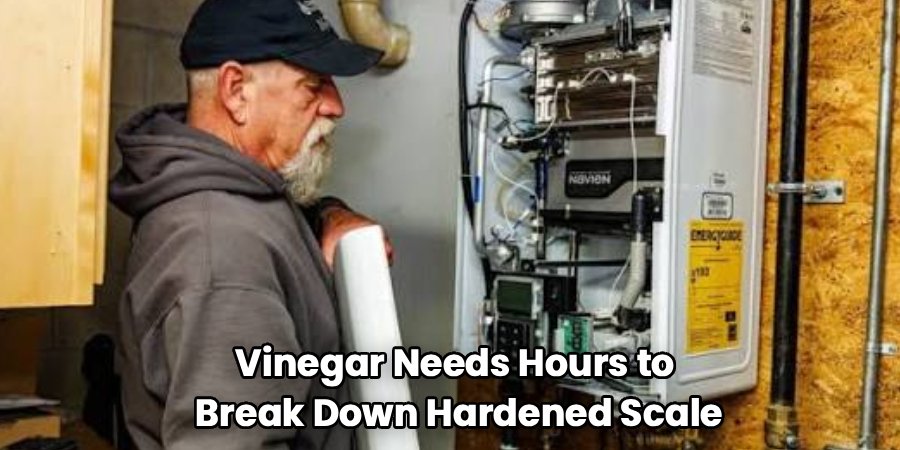
Vinegar needs hours to break down hardened scale, not minutes. Let it sit for at least 6 hours, and overnight for heavy buildup. If your tank is one big crust, a full 24-hour soak isn’t overkill. The acid slowly eats into the mineral deposits and loosens their grip on the tank walls and heating elements.
Flush Out the Dissolved Scale
Once the soak is done, reconnect your hose to the drain valve and open it up. The water coming out should look milky or carry visible flecks — that’s dissolved scale leaving the tank. Let it drain fully.
Now flush with clean water until every trace of vinegar is gone. Open the cold supply with the drain still open and let fresh water run through for several minutes. You’ll smell the vinegar fading. Keep going until the runoff is clear and odorless, because leftover vinegar will give your hot water a sour tang for a day or two otherwise.
Compare Your Descaling Options
Vinegar isn’t the only way to tackle scale, but for a home tank it hits the best balance of safe, cheap, and effective. Here’s how the common approaches stack up.
| Method | Best For | How Well It Works | Watch Out For |
| White vinegar soak | Regular scale, safe DIY descaling | Excellent — dissolves lime without harsh chemicals | Needs long soak time; sour smell if under-rinsed |
| Plain water flush | Light, loose sediment | Fair — moves grit but leaves stuck scale | Does nothing for hardened mineral crust |
| Commercial descaler | Very heavy industrial buildup | Strong and fast | Harsh; can damage lining; strict rinse rules |
| Muriatic acid | — skip for home tanks | Aggressive but risky | Dangerous fumes; can eat the tank and fittings |
| Doing nothing | — not a plan | Poor; scale keeps building | Popping noise, higher bills, early tank failure |
Common Mistakes to Avoid
These are the errors I saw turn a simple flush into a repair bill.
- Leaving the power on during the drain. An electric element that fires with no water around it burns out in seconds. Always cut the breaker or set gas to pilot first.
- Cracking the drain valve on a scalding tank. Let it cool. Hot water at that valve can put you in the ER.
- Rushing the soak. Vinegar poured in and drained ten minutes later barely touches hardened scale. Give it hours.
- Skipping the final rinse. Under-rinsed tanks leave a vinegar taste and smell in your hot water for days.
- Forgetting to reopen the cold supply and refill fully before restoring power. Firing a half-empty tank damages the elements. Confirm a steady, air-free stream at a hot tap first.
- Never checking the anode rod. While the tank’s open, look at it. A rod eaten down to the wire means your tank is next in line to corrode.
Safety and Warnings
You’re dealing with scalding water, pressurized tanks, and gas or electricity, so respect the risks here.
- Scald hazard is real. Water in a heated tank can exceed 120°F, hot enough to cause serious burns fast. Cool the tank and wear gloves before opening the drain valve.
- Never fire the heater on an empty or partially filled tank. For electric units, the elements will burn out; for gas, you risk overheating. Refill completely before restoring power or gas.
- Respect the temperature and pressure relief valve. This valve prevents dangerous pressure buildup. Test it by lifting the lever, but never plug it, cap it, or leave it stuck open. If it leaks continuously afterward, replace it.
- Ventilate for gas heaters. Work in an open, airy space and make sure the pilot and burner are fully off. If you smell gas at any point, stop and leave.
- Don’t mix vinegar with bleach or any other cleaner. Vinegar plus bleach releases toxic chlorine gas. Use vinegar on its own, and rinse fully before anything else touches the tank.
- Wear goggles and gloves. Even mild acetic acid stings in the eyes, and sediment water is gritty and unpleasant on skin.
Handle the shutdown and the heat carefully, and the rest of this job is genuinely low-risk — mostly patience, vinegar, and clean water.
How to Keep Scale From Coming Back
A freshly descaled tank will crust right back up if the conditions that caused it stay the same. These habits stretch the time between flushes and protect the tank.
- Flush yearly, twice a year in hard-water areas. A quick water flush every year keeps loose sediment from settling into a solid crust.
- Lower the thermostat to around 120°F. Scale forms faster at high temperatures. Dropping the setting slows mineral deposits and saves energy at the same time.
- Install a water softener or a whole-house filter. Clients used to ask me why their tanks scaled up twice as fast as a neighbor’s, and it almost always came down to hard local water. A softener is the single biggest fix.
- Check the anode rod every couple of years. This sacrificial rod corrodes so your tank doesn’t. Replacing a $30 rod is far cheaper than replacing a tank.
- Listen for the popcorn sound. Rumbling or popping when the heater runs is your early warning that sediment is building on the bottom. Don’t wait six years like my popcorn-machine client did.
Frequently Asked Questions
How often should I clean my water heater with vinegar?
For most homes, a vinegar descale once a year keeps scale under control. If you have hard water or notice popping sounds, bump it to twice a year. In soft-water areas, a plain flush yearly with a vinegar soak every two years is usually enough.
Can I use apple cider vinegar instead of white vinegar?
Stick with plain white vinegar. Apple cider vinegar works chemically, but it carries sugars and residues that can leave a film and a lingering smell in the tank. White vinegar is cheaper, cleaner, and rinses out completely.
How long should vinegar sit in a water heater?
At least 6 hours for routine maintenance, and overnight for moderate scale. For a tank you’ve never descaled or one that’s badly crusted, let it soak a full 24 hours so the acid can fully break down the buildup.
Will vinegar damage my water heater?
No — white vinegar is mild enough that it dissolves mineral scale without harming the tank’s glass lining or fittings, which is exactly why it’s the go-to over harsh acids. The only real risk is under-rinsing, which leaves a temporary sour taste, not damage.
Why does my water heater make a popping or rumbling noise?
That sound is water trapped and boiling underneath a layer of sediment on the tank bottom. The scale insulates the water from the heat source, forcing it to bubble up violently through the crust. A vinegar descale usually clears it and quiets the tank.
Do I need to drain the whole tank to clean it with vinegar?
Yes. You need the tank empty first so the vinegar isn’t diluted by a full tank of water, and so you can flush the loosened scale out completely afterward. A partial job leaves both the acid and the sediment behind.
Final Thoughts
The real work here is dissolving hardened scale, not just moving loose grit around, and that’s where a good vinegar soak beats a plain flush every time. Shut it down safely, give the acid real time to work, and rinse until the smell is gone. Do that once a year and your tank stays quiet, efficient, and out of the landfill for a lot longer.
